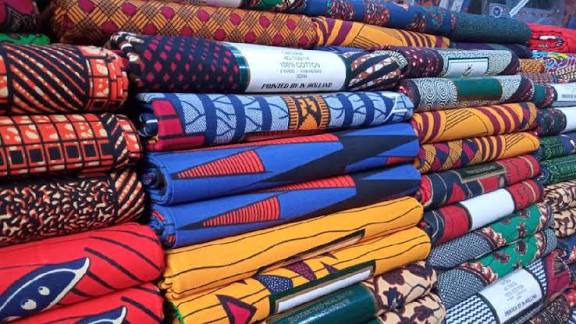
Nigeria’s textile, apparel and footwear subsector has contracted for a ninth straight quarter, National Bureau of Statistics (NBS) data shows, a once-thriving manufacturing pillar still losing ground even as other industry segments post double- and triple-digit growth.
The subsector shrank by 1.23% year-on-year in real terms in the second quarter of 2026, the NBS said, extending an unbroken run of negative growth that stretches back to Q2 2024. It is a streak that has now outlasted two full years, spanning shifting exchange-rate regimes, fuel subsidy reforms, and repeated government pledges to revive local manufacturing.
The numbers tell a story of a sector that has struggled to find its footing at any point since mid-2024. The contraction first took hold in Q2 2024, when real output fell 1.41% year-on-year.
Rather than stabilising, the decline accelerated through the back half of that year, with output dropping 3.09% in Q3 2024 and then 3.39% in Q4 2024, the steepest quarterly fall of the entire nine-quarter run.
There was a brief reprieve in early 2025. The pace of contraction eased to 1.63% in Q1 and 1.32% in Q2, offering a glimmer of hope that the worst had passed. That hope proved short-lived: the downturn widened again in the second half of 2025, hitting 2.41% in Q3 and 2.68% in Q4.
The subsector carried that weakness into the new year, contracting 1.22% in Q1 2026 before posting the latest 1.23% decline in Q2, a result that, while marginally milder than the 2025 lows, confirms the sector has yet to find any sustained path back to growth.
Beyond the headline growth figures, the NBS data points to a sector whose weight in the national economy is steadily eroding. Textile, apparel and footwear’s share of real GDP slipped to 1.77% in Q2 2026, down from 1.87% in the same quarter a year earlier a decline of a full percentage point in relative terms that reflects not just weak output, but the sector losing ground relative to faster-growing parts of the economy.
Even in nominal terms, where inflation would typically be expected to push reported figures higher, the subsector posted a 0.49% year-on-year contraction.
Nominal output came in at ₦1.506 trillion for the quarter, down slightly from ₦1.514 trillion in Q2 2025, a rare instance of a Nigerian industrial subsector actually producing less in naira terms than it did a year prior, despite the naira’s continued depreciation and elevated domestic price levels.
The contrast with other manufacturing activities in the same GDP release is stark. While textile, apparel and footwear contracted 1.23%, Oil Refining expanded by a striking 43.94%, Cement grew 12.75%, and Chemical and Pharmaceutical Products rose 7.70% over the same quarter.
The divergence places textiles among the clear laggards of Nigerian manufacturing at a moment when several other subsectors are posting some of their strongest performances in years, driven in large part by new refining capacity and import-substitution gains in cement and chemicals.
The Q2 2026 figures are the latest data point in what industry observers describe as a decades-long unravelling of Nigeria’s domestic textile manufacturing base.
The Federal Government said in February 2025 that Nigeria spends roughly $6 billion annually importing textiles, a figure that industry executives have pointed to as both cause and consequence of local manufacturers’ inability to compete.
Those same executives have noted that employment across the sector has collapsed from about 250,000 workers spread across more than 250 companies in the 1985–1990 period to fewer than 10,000 workers today.
Import pressure shows no sign of relenting. Nairametrics reported in March 2026 that Nigeria’s imports of textiles and related products climbed to ₦1.06 trillion in 2025, reinforcing how dependent the domestic market remains on foreign-produced fabric and finished garments even as local output continues to shrink.
Efforts to reverse the decline are not new, but they have gained fresh momentum. In June 2025, Afreximbank unveiled plans for a $5 billion integrated textile facility in Nigeria, a project billed as capable of employing roughly 250,000 people, producing 350,000 tonnes of garments annually, and cutting the country’s textile import bill by an estimated $4.7 billion.
If realised at that scale, the project would represent one of the most ambitious industrial interventions in the sector’s recent history.
The policy conversation took a sharper turn in June 2026, when the Senate called for an outright ban on textile imports as a way to force demand back toward domestic producers. The proposal has proven contentious.
The Centre for the Promotion of Private Enterprise (CPPE) pushed back, warning that a blanket ban risks destabilising the broader fashion and garment ecosystem that has grown up around imported fabric, an informal economy the group estimates sustains the livelihoods of about 10 million Nigerians, from tailors and designers to retailers and market traders.
With nine straight quarters of contraction now on the books, the coming quarters will test whether announced interventions from the Afreximbank facility to any import restrictions that emerge from the Senate’s push can translate into an actual turnaround in the NBS data, or whether textile, apparel and footwear will continue to cede ground within a manufacturing sector that, on the whole, is currently expanding briskly.
For now, the sector’s trajectory remains one of the clearest examples of uneven recovery within Nigeria’s industrial base: pockets of rapid expansion in refining, cement and chemicals, set against a textile industry still searching for its floor.
WHAT YOU SHOULD KNOW
Nigeria’s textile, apparel and footwear subsector has now contracted for nine straight quarters, a two-year slide since Q2 2024 that shows no sign of reversing.
This isn’t a manufacturing-wide problem; it’s a textile-specific one. While oil refining, cement, and chemicals posted double- to triple-digit growth in the same quarter, textiles shrank again, its share of GDP kept slipping, and it even posted a rare nominal decline in naira terms.
The root cause remains: structural cheap imports (₦1.06 trillion in 2025 alone) continue to outcompete a domestic industry that has shed over 95% of its workforce since the late 1980s. Big fixes are on the table (Afreximbank’s $5 billion facility, a proposed Senate import ban), but until one actually moves the needle, the sector will likely keep losing ground.