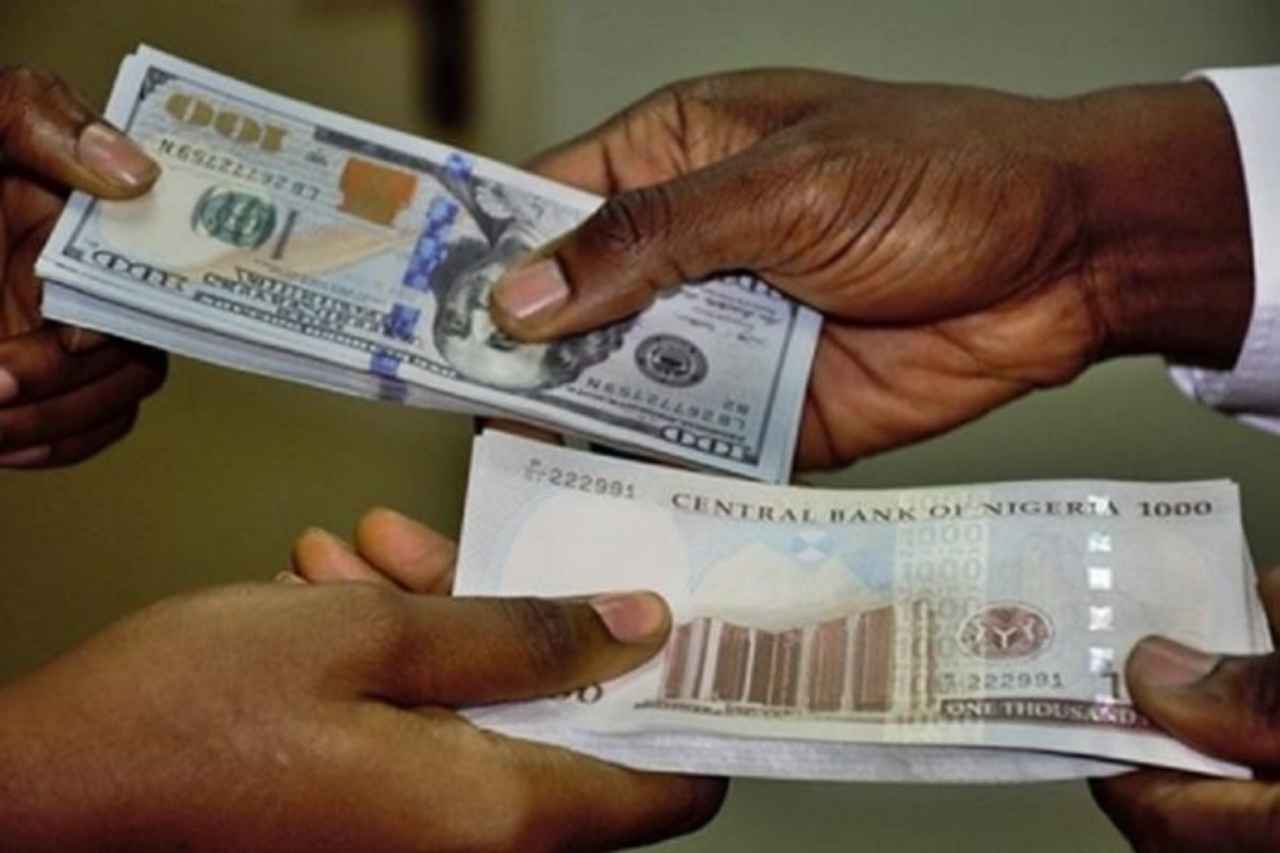
The naira opened the trading week on a stable footing against the US dollar, with both the official and parallel foreign exchange windows showing only modest movement as the market settled into a familiar pattern of relative calm.
According to figures released by the Central Bank of Nigeria (CBN), the naira closed at ₦1,368.22 per dollar at the Nigerian Foreign Exchange Market (NFEM) as of Sunday, August 2, the most recent available session data ahead of Monday’s trading.
The apex bank has explained that this figure represents the volume-weighted average of all eligible foreign exchange transactions completed within the official window, a methodology designed to reflect the true depth and breadth of market activity rather than a single quoted price.
The latest print continues a trend of tight, incremental movement that has characterized the official market in recent sessions. Historical NFEM data show the naira closing at ₦1,365.12/$1 on July 31 and ₦1,365.53/$1 on August 1 a shift of roughly ₦3 over three trading days, underscoring the currency’s relative resilience compared with the sharper swings recorded in previous years.
Away from the official window, the parallel market, commonly referred to as the black market, told a similar story of steadiness, if at a persistently higher price point. Dollar transactions in Lagos were quoted at around ₦1,410 for buying and ₦1,425 for selling, leaving street-level demand for hard currency largely unchanged from prior sessions.
Perhaps the more consequential detail for policymakers is the spread between the two markets. At current rates, the gap between the official and parallel windows stands at approximately ₦57, a premium that, while still present, is a fraction of the chasm that opened up during the peak of Nigeria’s foreign exchange crisis in 2024, when official and street rates diverged by hundreds of naira.
Analysts attribute the narrowing spread to a combination of factors: improved liquidity in the formal market, reduced speculative hoarding of dollars, and a growing confidence among market participants that the CBN’s unification efforts are holding.
A tighter premium is typically read as a signal of a healthier, more credible exchange rate regime, one where fewer transactions are pushed into informal channels simply because the official market cannot meet demand.
For ordinary Nigerians and businesses converting dollars, the difference between the two windows is far from academic. At today’s rates, $100 converts to roughly ₦136,822 through the official NFEM channel, compared with about ₦142,500 at the parallel market’s selling rate a gap of nearly ₦5,700 on a relatively modest transaction, which widens considerably for larger sums typically involved in trade, tuition payments, or medical bills abroad.
Market watchers say the naira’s trajectory over the coming weeks will hinge on the usual pillars of Nigeria’s forex supply side: earnings from crude oil exports, the steady flow of diaspora remittances, appetite among foreign portfolio investors for naira-denominated assets, and perhaps most critically, the CBN’s continued management of liquidity in the official market.
Any disruption to these inflows, analysts caution, could quickly test the stability the naira has managed to sustain through the early days of August.
WHAT YOU SHOULD KNOW
The naira’s real story right now isn’t the rate itself; it’s the shrinking gap between official and parallel markets. That ₦57 spread, down sharply from 2024’s crisis-level divergence, is the clearest sign that Nigeria’s forex system is functioning more credibly, with the official window actually able to meet demand instead of pushing people to the street market.
Whether this holds depends on one thing: sustained dollar inflows from oil, remittances, and portfolio investment. If those slow, the stability seen this week could unravel quickly.