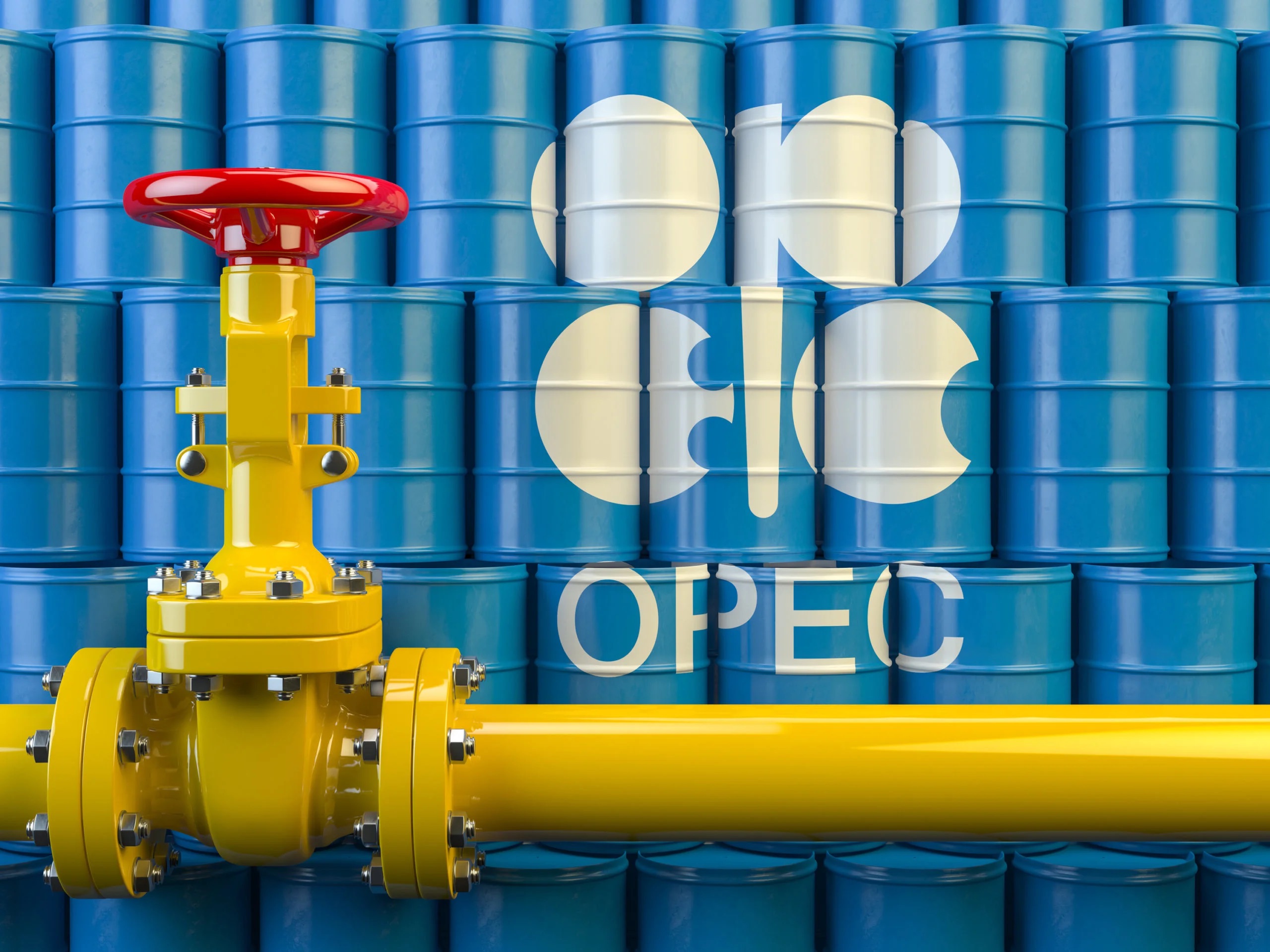
OPEC+ moved on Sunday to raise its collective oil production quota by roughly 188,000 barrels per day for September, marking the fourth consecutive month the alliance has enacted an identical increase and formally closing out one of the toughest chapters of its multi-year effort to unwind pandemic-era production restraint.
The decision came out of a virtual gathering of the group’s seven core members — Saudi Arabia, Russia, Iraq, Kuwait, Kazakhstan, Algeria and Oman, who have driven the bulk of OPEC+’s supply strategy since the United Arab Emirates’ departure from the cartel in May.
In a joint statement, the seven countries said they had agreed to implement a production adjustment of 188,000 barrels per day.
The move is more symbolic than seismic in one important respect: it finishes, at least on the ledger, the phased reversal of a 1.65 million bpd supply cut originally agreed in 2023, back when the UAE was still part of the group.
Analysts frame it as the wrap-up of the second of three distinct cut packages OPEC+ rolled out between 2022 and 2023 to head off a feared global glut.
As Rystad Energy’s Jorge Leon put it, having completed the restoration campaign, OPEC+ now has little incentive to rush into further supply changes a view that sets up expectations for a quieter stretch ahead.
Indeed, officials briefed on the deliberations say the group is leaning toward standing pat through the final months of the year.
The alliance is expected to pause output hikes in the fourth quarter, leaving in place roughly two million barrels per day of cuts dating back to 2022.
Even so, the formal communiqué issued Sunday stopped short of locking that in: its statement made no explicit reference to what might be agreed for the last three months of 2026, leaving the door open should market conditions shift.
The more consequential story, though, is how little of this “increase” is actually reaching tankers. Successive monthly OPEC+ hikes through most of this year have remained largely theoretical, doing little to move the market, as wars involving Iran and Ukraine have disrupted exports from the Gulf, Russia and Kazakhstan.
The mismatch between quota and reality runs deeper than geopolitics alone.
UBS analyst Giovanni Staunovo noted that many OPEC+ members simply cannot pump up to their official targets because of an underlying decline in production capacity, meaning that raising the headline number has become less and less meaningful as a market signal.
That leaves Saudi Arabia, which holds the bulk of the alliance’s spare capacity, as the only producer realistically positioned to translate the new quota into actual barrels and only once Gulf export routes, including the Strait of Hormuz, return to normal.
Rystad’s Leon was blunt about the near-term implications: he cautioned that Sunday’s decision changes little for now because the Strait of Hormuz remains constrained, and that the real market impact will only show up once export flows return to normal.
In his view, geopolitics is currently masking the true scale of the supply increase, a picture that will only sharpen once flows through the region normalise.
Beyond the immediate quota decision, OPEC+ is quietly laying the groundwork for a thornier negotiation.
The group is conducting a review of members’ production capacity that will underpin 2027 output baselines, with countries like Iraq already pushing for higher individual allocations to reflect what they say is greater underlying capacity. That review is expected to fuel difficult horse-trading among members later in the year.
For now, the September increase stands as both a milestone and a caveat: a formal end to one round of pandemic-and-glut-era cuts, delivered against a backdrop where actual supply throttled by sanctions, war, and aging infrastructure refuses to keep pace with what’s written on paper.
WHAT YOU SHOULD KNOW
OPEC+’s September hike may complete the paper rollback of 2023’s cuts, but the key takeaway is this: the increase is largely symbolic for now.
War-related disruptions in the Gulf and Strait of Hormuz mean most of that extra oil isn’t actually reaching global markets and won’t, until export flows normalize.
Watch capacity and shipping routes, not the quota number, for the real signal on supply.