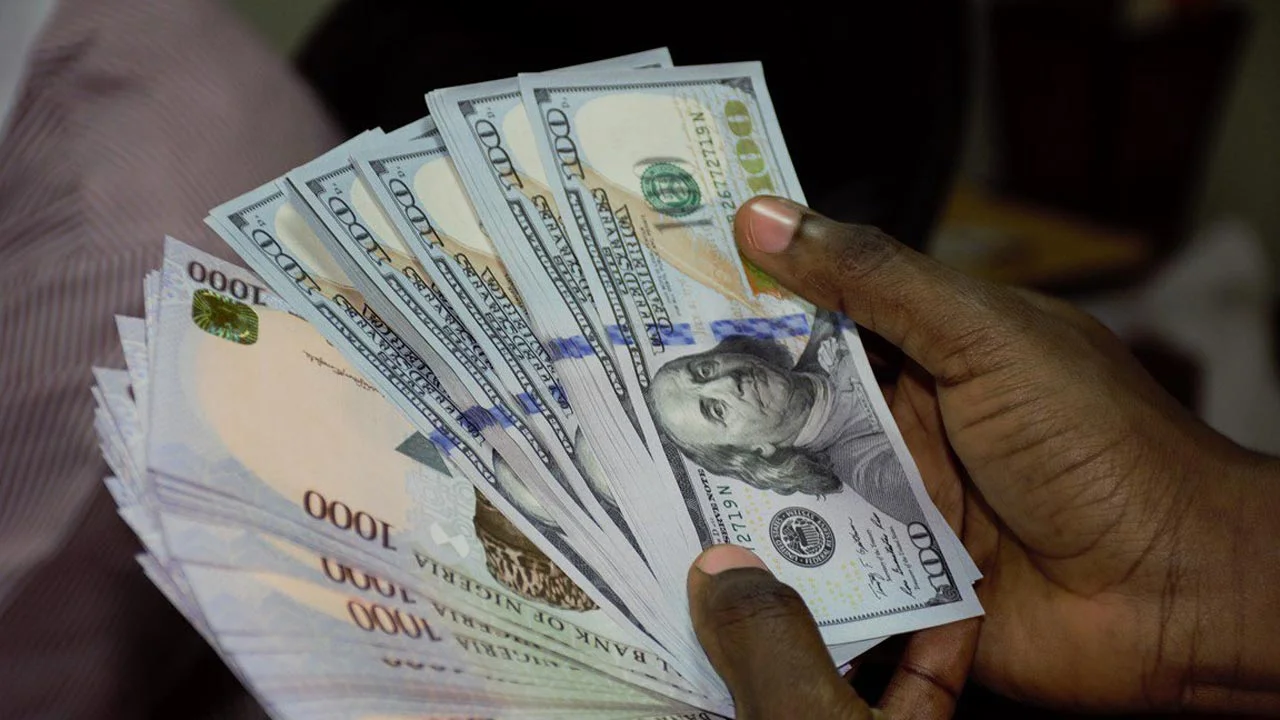
The naira closed out the trading week much as it began it, largely unmoved as the local currency held a tight range against the US dollar across Nigeria’s dual foreign exchange markets on Friday.
At the official Nigerian Foreign Exchange Market (NFEM), the greenback changed hands at around ₦1,379 per dollar, according to figures from the Central Bank of Nigeria.
That represents only a marginal shift from recent sessions, with independent market trackers pegging the day’s official rate somewhere between ₦1,379 and ₦1,384, a band narrow enough to suggest traders are, for now, comfortable with where the currency sits.
The picture was similarly subdued away from the official window. In the parallel market, still widely referred to on the streets as the black market, dollars were changing hands for roughly ₦1,409 on the buy side and as high as ₦1,420 to sell, with rates in Lagos and other major trading hubs fluctuating modestly depending on the size of the transaction and the dealer involved.
Perhaps the most telling detail in Friday’s trading was the spread between the two markets.
At ₦30 to ₦40 per dollar, the gap between official and parallel rates remains far narrower than the chasm that opened during Nigeria’s more acute dollar-shortage episodes in recent years, when black-market premiums dwarfed the official rate and fuelled accusations of arbitrage and speculative hoarding.
Analysts attribute the tighter spread to two forces working in tandem: steadier liquidity flowing through the official market and periodic dollar interventions by the CBN aimed at keeping both windows from drifting too far apart.
Reuters, tracking the broader trend rather than a single day’s print, reported the naira trading in a similarly tight band in recent sessions around ₦1,373 at the official window and near ₦1,405 on the street, reinforcing the sense that day-to-day volatility, while present, has been modest rather than dramatic.
Currency dealers on the ground told a familiar story: demand for hard currency from importers and individuals operating outside the formal banking system remains robust.
Nigeria’s import-heavy economy, combined with a segment of the population that still prefers to source dollars informally, continues to feed steady appetite in the parallel market.
What’s changed, dealers say, is the supply side. Improved dollar liquidity, whether from CBN interventions, remittance inflows, or other sources, has so far been sufficient to absorb that demand without triggering the kind of sharp depreciation that has periodically rattled the naira in years past.
As trading wound down on Friday, the key levels stood at approximately ₦1,379 per dollar at the official NFEM window and between ₦1,409 and ₦1,420 per dollar on the parallel market.
Dealers cautioned that both figures could still see slight adjustment before the close, contingent on last-minute demand and the availability of liquidity, a reminder that even in a “stable” week, Nigeria’s forex market rarely sits entirely still.
WHAT YOU SHOULD KNOW
The naira held steady on July 31, 2026, trading around ₦1,379/$1 officially and between ₦1,409 and ₦1,420/$1 on the parallel market.
The gap between both markets has narrowed to just ₦30–₦40, a sign of improved dollar liquidity and effective CBN intervention, rather than the wide, destabilizing spreads seen during past forex shortages.
In short, demand for dollars remains high, but supply is currently strong enough to keep the naira from depreciating sharply.