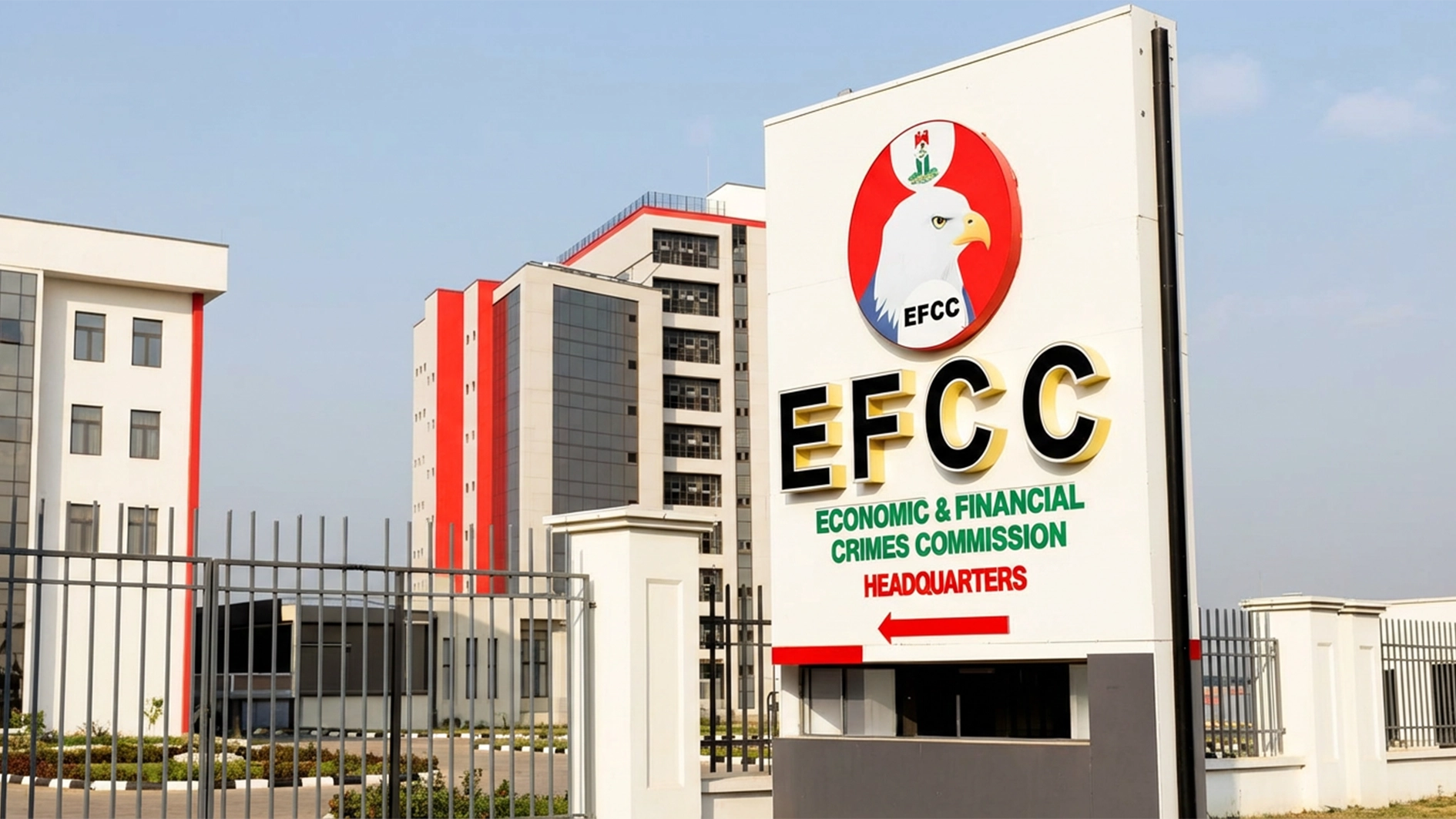
The Economic and Financial Crimes Commission (EFCC) has recovered over N38.66 billion in cash and assets in what investigators describe as one of the most far-reaching financial probes in the country’s oil sector, centered on the botched refinery rehabilitation program.
The Economic and Financial Crimes Commission disclosed that the haul so far comprises N9.4 billion and $21.2 million, the latter equivalent to roughly N29.26 billion at the Central Bank of Nigeria’s official exchange rate of N1,380 to the dollar, alongside a string of landed properties traced to individuals under investigation.
Sources close to the inquiry added that a further $2.32 million was clawed back through the Federal Inland Revenue Service, suggesting the final recovery figure could climb higher still.
At the heart of the matter is the question of where roughly $2.79 billion released between 2021 and 2023 for the rehabilitation of the Port Harcourt, Warri and Kaduna refineries actually went.
The contracts broke down to about $1.56 billion for the Port Harcourt refinery, $740.7 million for the Kaduna refinery and $492.3 million for the Warri refinery, yet investigators say the money spent bears little relationship to the state of the facilities today.
Preliminary findings showed little evidence of corresponding improvements in refinery operations despite the huge sums reportedly expended on the rehabilitation projects, a finding likely to deepen public frustration in a country where, despite decades of investment, the refineries have largely stayed shut while Nigeria imports the bulk of its fuel.
According to sources cited in the investigation, the probe touches officials of the Nigerian National Petroleum Company Limited, its subsidiary NETCO, former and serving managing directors of the Port Harcourt, Warri, and Kaduna refineries, as well as major contractors, including Daewoo Engineering Nigeria Limited and Tecnimont SPA.
The allegations span criminal conspiracy, breach of trust, diversion of public funds, economic sabotage, abuse of office, and money laundering.
Some individual cases offer a glimpse into how investigators say the system was allegedly gamed. One former Port Harcourt refinery managing director is accused of approving direct payment of contractors from provisional sum funds, contrary to contractual provisions requiring such contractors to be engaged and paid by Tecnimont; the EFCC says it has traced N983.9 million, $227,030, and three landed properties to him that he has been unable to account for.
A separate case centers on a senior Warri refinery official accused of approving payments to unqualified third-party contractors, authorizing inflated invoices, and approving contractual markups amounting to more than $10 million and nearly N8 billion, with alleged tax losses running into millions of dollars and billions of naira. Investigators say they have traced more than a billion naira and several properties to him as well.
Over the course of the inquiry, the commission says it has questioned more than 30 officials of the NNPCL and over 50 representatives of contracting firms while combing through procurement documents, payment approvals, and company ownership records. Some of the traced assets are already subject to interim forfeiture orders secured pending the conclusion of legal proceedings, a legal step that typically precedes formal prosecution.
Investigators have also flagged a related strand of the case: a separate alleged revenue-fraud scheme valued at roughly $28.39 million and N665 million linked to the management of the Port Harcourt Refining Company, which the commission says is under active pursuit.
For now, the EFCC insists the matter is far from closed. Officials say recovered funds have already been lodged in the commission’s recovery accounts and that the agency expects the next phase, formal charges and courtroom proceedings against named officials and contractors, to follow as the evidence trail is finalized.
Given the scale of the sums involved and the seniority of those implicated, the case is likely to remain a fixture of Nigeria’s anti-corruption headlines for months to come, testing whether one of the country’s most chronic infrastructure failures can finally yield consequences for those entrusted with fixing it.
WHAT YOU SHOULD KNOW
Despite $2.79 billion spent between 2021 and 2023 to revive Nigeria’s Port Harcourt, Warri, and Kaduna refineries, the facilities show little operational improvement, and the EFCC has now recovered N38.66 billion in cash and assets while investigating dozens of NNPCL officials and contractors for allegedly diverting the funds meant to fix them.