The naira opened Monday’s official NFEM session at ₦1,363.41 to the dollar, a rate that signals the CBN’s sweeping reforms are steadily taking hold.
The official NFEM window has largely remained within the ₦1,360 range in recent weeks, supported by improved foreign exchange liquidity and ongoing market reforms.
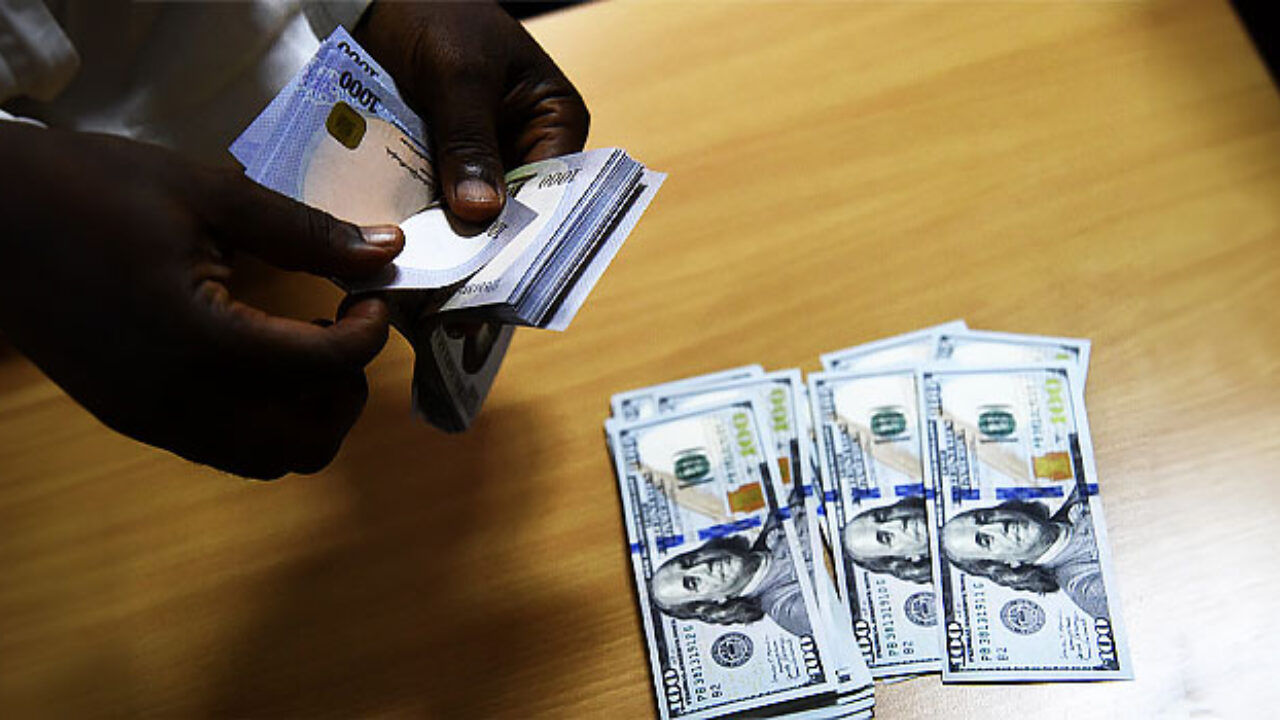
For ordinary Nigerians and businesses conducting cross-border transactions, the practical implication is stark: $100 now costs approximately ₦136,341 through official banking channels and roughly ₦140,000 in the parallel market, a premium that, while still present, has shrunk considerably from the towering gaps of recent memory.
Perhaps the most telling indicator of how far Nigeria’s foreign exchange landscape has shifted is the narrowing gap between the official and black market rates.
CBN Governor Olayemi Cardoso has noted that the naira now trades within a narrow, stable range. The once-substantial gap between the official and parallel markets has shrunk to under two percent, down from over 60 percent.
In practical terms, that convergence has removed a perennial source of arbitrage that for years drained liquidity from the formal banking system and undermined the credibility of official rates.
The reduced spread between the official and parallel market rates reflects greater alignment between the two markets, a trend analysts attribute to the Central Bank’s ongoing foreign exchange reforms and greater market transparency.
The relative calm in today’s trading session did not arrive by accident. It is the product of a deliberate and sustained policy overhaul that began under CBN Governor Cardoso’s administration.
The introduction of the Nigerian Foreign Exchange Code established clear rules for transparency, ethics, governance, and fair dealing among authorised dealers, while the deployment of the Electronic Foreign Exchange Management System (EFEMS), powered by Bloomberg BMatch, transformed FX trading through mandatory order submission, real-time regulatory visibility, and enhanced price discovery.
The apex bank has also moved aggressively to deepen diaspora remittance inflows, long considered an underutilized pillar of Nigeria’s foreign exchange supply.
In a circular dated March 24, 2026, the CBN reminded international money transfer operators and authorized dealer banks of key provisions under the revised remittance guidelines, requiring all IMTOs to open designated naira settlement accounts with authorized dealer banks and to ensure that remittance-related transactions are processed exclusively through these designated accounts.
The intent is clear: funnel more of the billions sent home by Nigerians in the diaspora through official channels, boosting liquidity and transparency in equal measure.
The effort appears to be working. Diaspora remittances rose by approximately 12 percent in 2025 as confidence returned to official channels, aided by better transparency, faster settlement, and the rollout of the Non-Resident Bank Verification Number framework.
The reforms have also helped rebuild Nigeria’s external buffers to levels not seen in years. Nigeria’s external reserves rose from $40.19 billion at the end of 2024 to $45.71 billion at the end of 2025, a $5.52 billion increase driven by robust accretion supported by higher export earnings and increased remittance inflows.
The CBN is now projecting reserves of $51.04 billion by year-end 2026, a target that analysts say is achievable if current momentum holds.
The monetary and fiscal authorities have made significant progress in restoring macroeconomic stability, reducing inflation, improving data analytics, ending monetary financing of deficits, and narrowing the FX market gap to under two percent.
Yet seasoned currency watchers urge caution. Market participants continue to watch foreign portfolio inflows, crude oil earnings, and Central Bank policies, all of which remain key factors influencing the naira’s direction in the coming weeks.
The risk of global oil price weakness looms large. With global oil prices hovering just above $63 per barrel, well below Nigeria’s budget benchmark of $75, analysts warn that revenue shortfalls could widen the fiscal deficit to between six and seven percent of GDP. Any sustained slump in crude prices would exert fresh pressure on Nigeria’s export earnings and, by extension, on the naira.
The policy challenge now is less about announcing reforms and more about sustaining discipline when fiscal and political pressures intensify. With an election cycle looming on Nigeria’s horizon, currency markets may yet face the kind of turbulence that has historically unsettled investor confidence.
For now, however, the naira’s relative stability at Monday’s NFEM session offers a measure of reassurance, a sign that, for all its vulnerabilities, Africa’s largest economy is navigating its foreign exchange challenges with greater dexterity than at any point in recent years.
WHAT YOU SHOULD KNOW
The naira is holding steady at around ₦1,363 to the dollar, and for the first time in years, that stability feels earned rather than manufactured.
The once-glaring gap between official and parallel market rates has collapsed from over 60 percent to under two percent, the clearest proof yet that the CBN’s reforms are working. Rising diaspora remittances, growing external reserves, and improved market transparency are the real engines behind this recovery.
The risk ahead is oil: with crude prices sitting below Nigeria’s budget benchmark, any prolonged slump could quickly undo the gains. The naira’s future depends less on policy announcements and more on the government’s discipline in seeing those policies through.