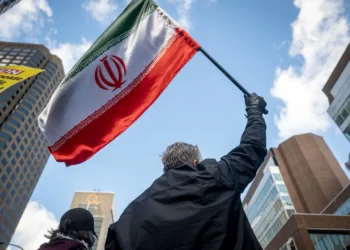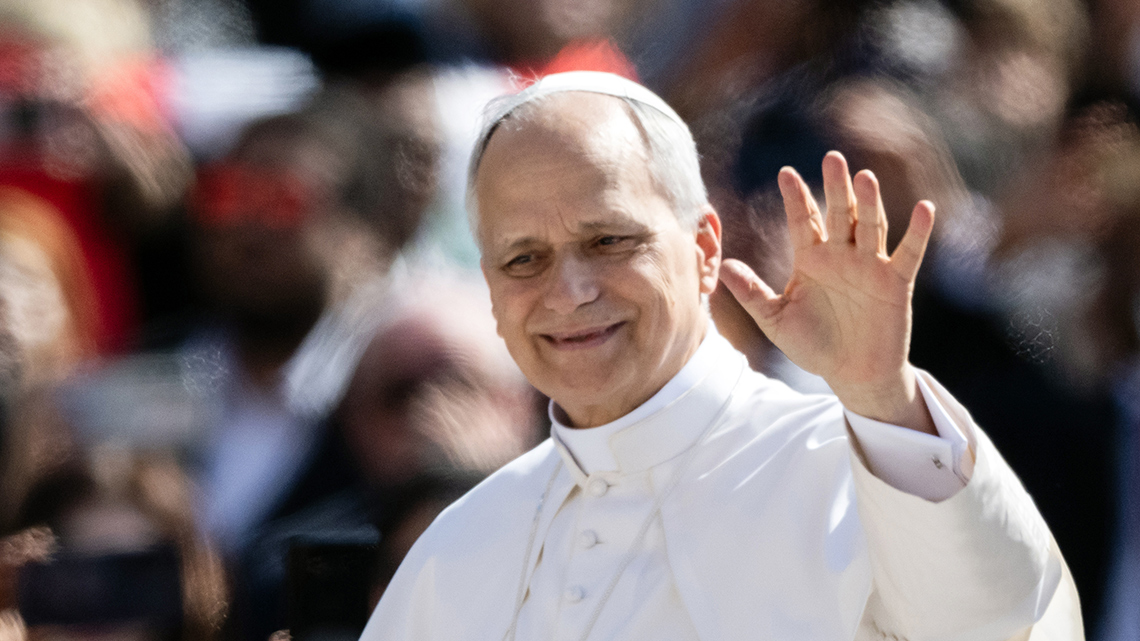
Pope Leo XIV offered a rare moment of cautious optimism on the world stage, welcoming a landmark agreement between the United States and Iran to end the Middle East conflict while also turning a sorrowful eye toward the grinding, bloody war still raging in Ukraine.
Speaking before thousands of faithful gathered at St. Peter’s Square, the 70-year-old pontiff praised the newly announced deal as the fruit of patient and principled diplomacy, calling it the result of “encouraging work in dialogue and negotiation.”
His words carried the measured weight of a spiritual leader who has watched wars multiply with alarming frequency since his elevation to the papacy.
The agreement, announced earlier this week after weeks of high-stakes back-channel diplomacy between Washington and Tehran, marks what could be one of the most consequential geopolitical breakthroughs in the Middle East in decades.
While details of the accord are still being digested by governments and analysts around the world, the Vatican wasted no time in lending it moral legitimacy from one of the world’s most recognizable moral voices.
“I hope that this agreement will contribute to strengthening mutual trust, security, and stability in the Middle East by promoting paths of dialogue and cooperation between peoples,” Leo said, expressing personal gratitude to all those involved in bringing the negotiations to fruition.
Analysts watching the Vatican‘s foreign policy posture noted the significance of the Pope’s unambiguous endorsement. For months, the Holy See had quietly encouraged diplomatic channels between the two rival powers, and Wednesday’s remarks appeared to be a deliberate signal of support to the fragile peace architecture that will require sustained international goodwill to hold.
Yet even as the pope welcomed the first rays of peace over the Middle East, the mood at the Vatican quickly turned somber when Leo addressed the conflict that continues to bleed Europe and Ukraine.
Russia’s full-scale invasion of Ukraine has become the deadliest conflict on European soil since the Second World War, surpassing even the duration of the First World War. Cities have been reduced to rubble, millions displaced, and a generation of young men fed into a war machine that shows no sign of exhaustion on either side.
Leo did not mince words. Describing the news from Ukraine as “painful,” he painted a devastating portrait of a civilian population bearing the unbearable weight of prolonged war.
“So many innocent victims, rescuers killed, churches and cultural heritage sites devastated by flames,” he said, his voice, by all accounts, heavy with grief.
The mention of rescuers and cultural sites was a striking, pointed acknowledgment that this war is not merely destroying lives but erasing centuries of heritage and the very people who rush toward danger to save others. It was the language not of a detached diplomat but of a pastor deeply acquainted with the human cost of geopolitical ambition.
“I am close to those mourning their loved ones, to the injured, and to those who, amidst the violence, continue to serve life with courage,” Leo added, in words directed as much to exhausted aid workers and medics on the front lines as to the grieving families watching from afar.
The Pope stopped short of issuing any direct condemnation of Russia by name, consistent with the Holy See’s long-standing diplomatic tradition of preserving access to all parties in a conflict, but his prayer for “paths of dialogue to make a just and lasting peace possible” left little ambiguity about where Rome stands on the urgency of ending the bloodshed.
Wednesday’s audience underscored what is becoming a defining feature of Leo XIV’s papacy: a willingness to speak plainly about the moral dimensions of war and peace at a moment when the world finds itself torn between cautious hope and catastrophic risk.
In one breath, he celebrated a deal that could reorder the Middle East. In the next, he wept symbolically, at least for a Europe still burning.
For the faithful who packed St. Peter’s Square, and for the millions more who follow his words from conflict zones, refugee camps, and living rooms across the globe, it was a reminder that the oldest institution in the Western world still considers itself, above all else, a voice for those caught in the crossfire of history.
WHAT YOU SHOULD KNOW
Pope Leo XIV used his Wednesday Vatican address to strike a dual tone on global conflict, celebrating the historic U.S.-Iran peace deal as a triumph of diplomacy, while mourning the unrelenting devastation of the Ukraine war.