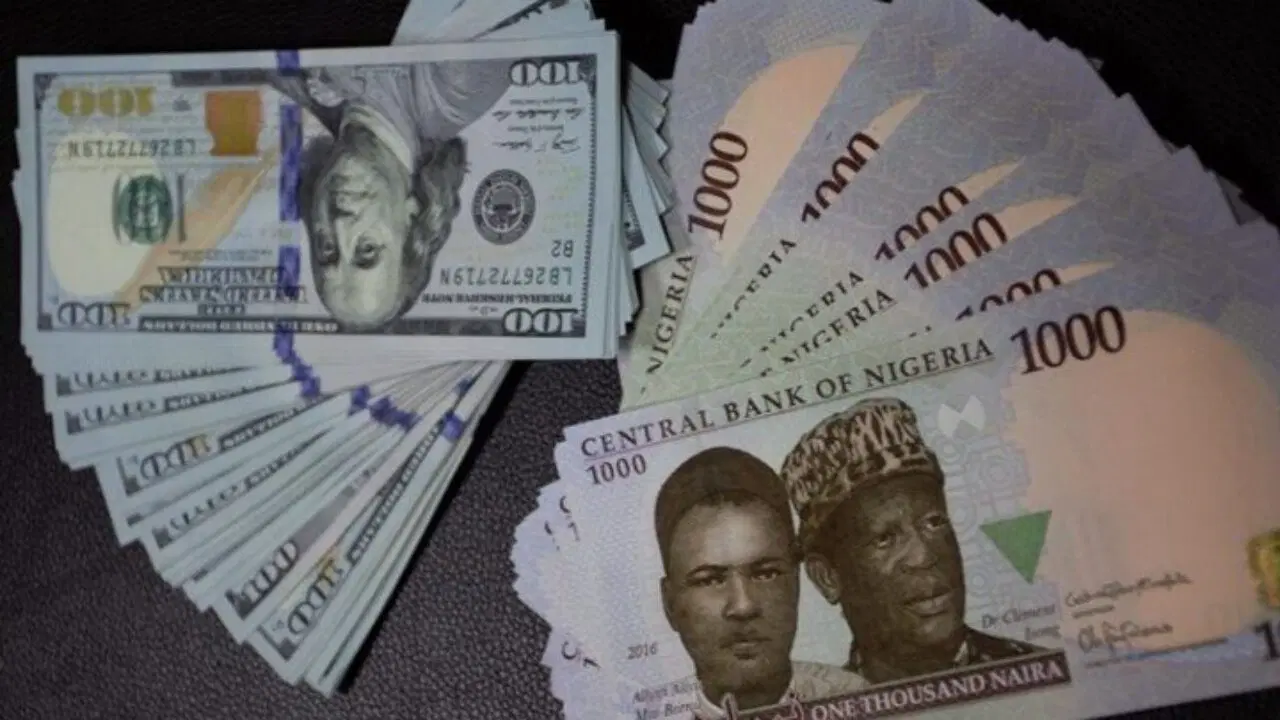
The Nigerian naira held steady on Tuesday against the US dollar in both the official and parallel markets, as ongoing monetary policy reforms continued to take effect.
Data from the Central Bank of Nigeria’s (CBN) exchange rate portal showed the naira closing at ₦1,363.83 to the dollar at the official Nigerian Foreign Exchange Market (NFEM) window, a figure consistent with rates recorded in preceding sessions and one that market watchers say reflects a degree of newfound predictability that was largely absent from the market in years past.
In the parallel market, the informal but widely patronized corridor that has long served as a barometer of street-level confidence in the naira, the dollar exchanged hands at ₦1,390 for buying and ₦1,400 for selling, according to multiple independent market trackers monitoring activity across major commercial hubs, including Lagos, Abuja, and Kano.
Perhaps the most telling detail embedded in Tuesday’s figures is not the rates themselves, but the spread between them.
The premium between the official NFEM rate and the parallel market selling rate stood at approximately ₦36 per dollar, a margin that, while not negligible, represents a dramatic compression when set against the triple-digit and, at times, near-200-naira differentials that characterized the forex market during its most turbulent periods between 2022 and 2024.
“This is not a perfect market, but it is a far healthier one than what we had before,” said one Lagos-based currency analyst. “When the gap is this narrow, it tells you that arbitrage opportunities are shrinking and that confidence, at least institutional confidence, is gradually returning.”
The convergence is widely attributed to a sweeping package of foreign exchange reforms initiated under CBN Governor Olayemi Cardoso, which included the unification of multiple exchange rate windows, tighter oversight of Bureau de Change operators, and a concerted push to attract foreign portfolio investment back into the Nigerian market.
Currency dealers described demand for the greenback as steady but not aggressive, with importers, manufacturers, and individual travelers among the most active buyers in the market.
Dealers noted that dollar availability in the parallel market continues to fluctuate based on inflows from diaspora remittances, crude oil receipts, and the pace of CBN interventions to defend the naira in the official window.
“The demand side is predictable; businesses still need dollars to pay for raw materials, machinery, and freight,” said one BDC operator in Lagos. “What you can never be too sure about is how much supply will show up on any given day. That’s what keeps the parallel rate moving.”
For millions of Nigerians, the naira-dollar rate is far more than an abstraction tracked by economists and financial traders. It is a lived reality, one that determines the price of imported rice at a neighborhood market, the cost of a child’s school fees billed in foreign currency, and the landed cost of pharmaceutical products stocked in a local chemist’s.
Manufacturers who depend on imported machinery and raw materials factor the exchange rate directly into their production costs, often passing fluctuations down the value chain to end consumers. Importers, similarly, adjust their pricing models with almost every significant shift in the naira’s value.
The rate also carries significant political weight. Previous administrations faced intense public pressure over sharp naira devaluations, and the current government has staked considerable credibility on its ability to restore a measure of exchange rate stability, making Tuesday’s relatively calm trading session, however modest, a point in its favor.
Analysts are cautious about declaring victory, even as the numbers trend in an encouraging direction.
The naira’s fortunes in the days and weeks ahead will hinge on several intersecting variables: the volume of foreign exchange inflows, including crude oil revenues at a time when global oil prices remain susceptible to geopolitical shocks; the CBN’s continued willingness and capacity to intervene in the market; and broader macroeconomic signals, including inflation data and the direction of monetary policy.
“The fundamentals are still fragile,” one analyst at a Lagos-based investment firm noted. “What we are seeing is stability, not strength. The naira is holding, but it needs sustained inflows and consistent policy to move from merely stable to genuinely competitive.”
For now, businesses, traders, and ordinary Nigerians will take what they can get, and on this Tuesday in June, what they got was a naira that, at the very least, held its ground.
WHAT YOU SHOULD KNOW
The Nigerian naira traded calmly on Tuesday, June 16, 2026, closing at ₦1,363.83 to the dollar officially and between ₦1,390 and ₦1,400 in the parallel market.
The gap between both markets has narrowed significantly, and that matters. It signals that years of foreign exchange reforms are quietly working, arbitrage is shrinking, and market confidence is gradually returning.
Stability, however, is not the same as strength. The naira is holding, but its ability to sustain that hold depends entirely on consistent dollar inflows, disciplined monetary policy, and a global oil market that remains cooperative.