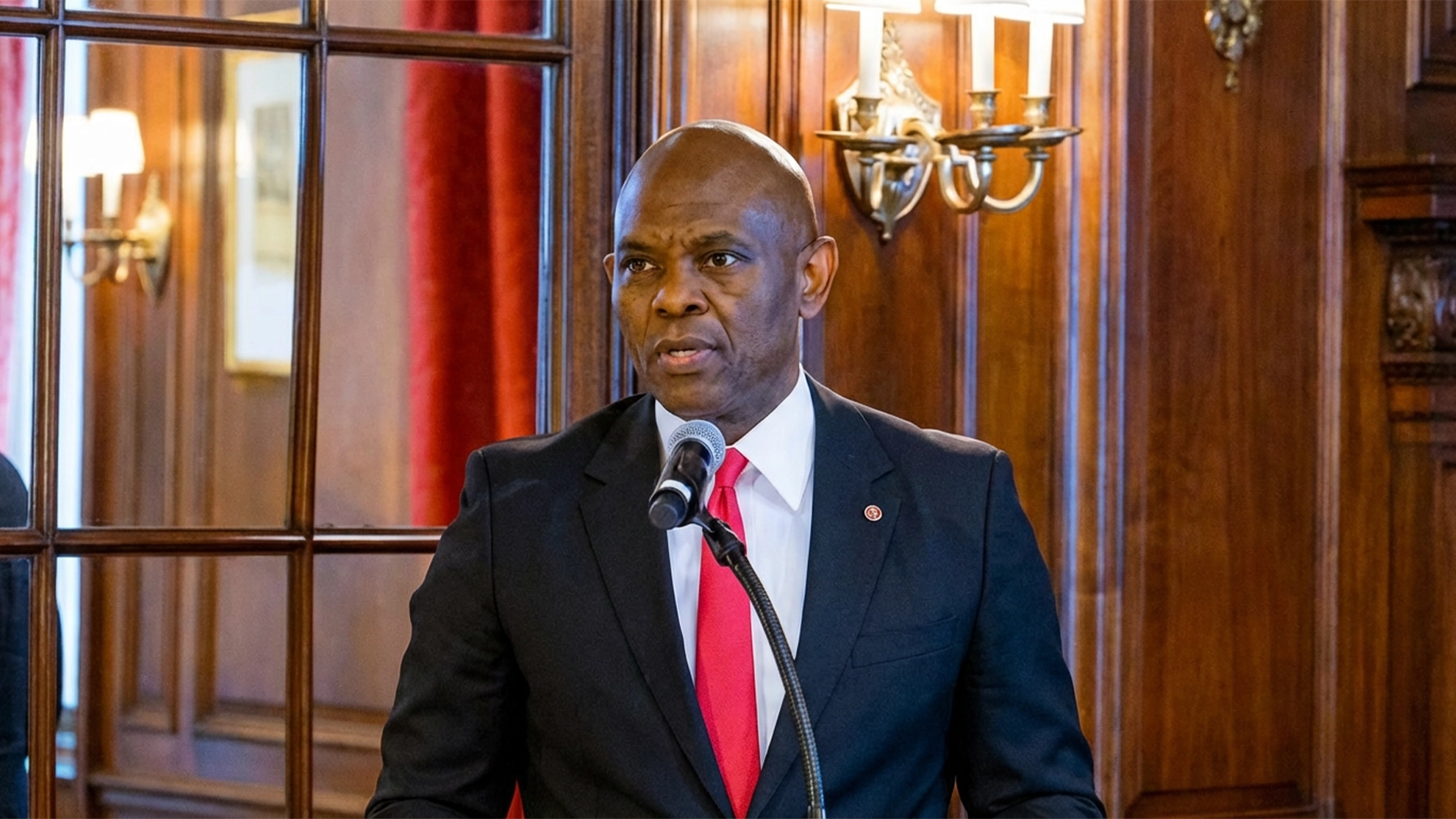
Seplat Energy Plc, Nigeria’s foremost indigenous oil and gas company, is set for a sweeping leadership transformation, as the company announced the appointment of pan-African business magnate Tony Elumelu as its incoming board chairman and Engr. Effiong Okon as its new Chief Executive Officer.
The appointments, disclosed in a regulatory filing on the Nigerian Exchange Limited (NGX) on Tuesday and signed by company secretary Edith Onwuchekwa, confirm what many industry watchers had long anticipated following Heirs Energies’ landmark entry into Seplat’s shareholding structure.
The choreography of Tuesday’s announcement traces its origins to a blockbuster transaction that shook Nigeria’s energy landscape: Heirs Energies’ acquisition of a 20.07% stake in Seplat Energy for $500 million, making it the single largest shareholder in the dual-listed company.
Elumelu’s ascension to the chairmanship, effective January 2027, is the natural culmination of that investment thesis. For Seplat, it represents not merely a change of guard but a statement of intent that the company is entering a new era with one of Africa’s most consequential business minds at the helm of its governance.
He will succeed Senator Udoma Udo Udoma, the current board chairman, who has presided over the company through a period of considerable growth and regulatory complexity. Seplat said the transition marks “a new chapter of leadership” as it continues its growth and transformation journey.
For anyone outside the corridors of African high finance, the question barely needs asking. Tony Elumelu, 62, is arguably the most recognizable private-sector figure on the African continent, a serial institution-builder whose business empire spans nine sectors and cuts across dozens of countries.
As Founder and Chairman of Heirs Holdings, a pan-African investment conglomerate, Elumelu has built interests in energy, power, banking, insurance, technology, real estate, hospitality, and healthcare.
He is the architect of Africapitalism, an economic philosophy that champions long-term private sector investment as the engine of Africa’s development, a vision he has evangelized on global stages from Davos to the United Nations.
He chairs Transcorp Group, one of Nigeria’s largest listed conglomerates, with significant stakes in power generation and hospitality through Transcorp Power and Transcorp Hotels Plc.
He is also the chairman of the United Bank for Africa (UBA) Group, one of the continent’s largest financial institutions, operating in over 20 African countries and across global financial capitals, including London, Paris, and New York.
Seplat said Elumelu’s track record in corporate governance, institution building, and value creation would reinforce the company’s ambition of becoming “a resilient and globally competitive energy business,” language that, coming from a major listed company, is rarely accidental.
While Elumelu’s appointment commands the headlines, industry insiders are equally focused on the elevation of Engr. Effiong Okon to the role of Chief Executive Officer, effective August 1, 2026.
He replaces Roger Brown, who has helmed the company since August 1, 2020, a six-year tenure that saw Seplat navigate COVID-era oil price shocks, regulatory uncertainty, and an ultimately unsuccessful bid to acquire ExxonMobil’s Nigerian upstream assets before pivoting to its current trajectory.
Okon is no outsider. A petroleum engineer with over 35 years of industry experience, he joined Seplat in 2018 and steadily ascended through its operational hierarchy. He served as operations director on the company’s board for four years before transitioning to the role of new energy director, a position that underscored Seplat’s growing ambitions beyond conventional oil production.
Most recently, Okon served as managing director of ANOH Gas Processing Company (AGPC), where he was central to one of Nigeria’s most consequential gas infrastructure milestones in recent memory: the delivery of the ANOH gas project, which achieved first gas in January 2026. The project, long delayed and closely watched by Nigeria’s gas-hungry power sector, is expected to significantly boost domestic gas supply.
For a company that has made the energy transition central to its growth narrative, appointing the man who oversaw that breakthrough as CEO sends an unmistakable signal about where Seplat believes its future lies.
Seplat said Okon’s “operational expertise and deep understanding of the business” position him well to lead the company as it expands its energy portfolio and pursues long-term growth opportunities.
The dual appointments arrive at a moment when Nigeria’s oil and gas sector is navigating one of its most complex periods in decades. Chronic underinvestment, infrastructure decay, theft on key pipelines, and a regulatory environment still adjusting to the Petroleum Industry Act (PIA) have clouded the outlook for even the most resilient operators.
Against that backdrop, Seplat’s decision to anchor its next chapter around Elumelu, a figure with unmatched access to global capital, relationships with heads of state across the continent, and a proven record of navigating Nigeria’s notoriously complex business environment, looks less like a symbolic gesture and more like a strategic calculation.
For investors, the question now turns to execution: can the union of Elumelu’s institutional clout and Okon’s operational depth deliver on Seplat’s ambitions to become not just Nigeria’s leading indigenous energy company but also a credible player on the global stage?
WHAT YOU SHOULD KNOW
Seplat Energy’s leadership overhaul is more than a routine boardroom reshuffle; it is a strategic power play. With Tony Elumelu taking the chairmanship and Engr. With Effiong Okon stepping in as CEO, the company is betting on a potent combination of continental business influence and deep operational expertise to propel it into its next phase of growth.
The real story, however, is the $500 million Heirs Energies acquisition that made all of this possible. Elumelu did not just buy a stake in Seplat; he bought a seat at the table, and now he owns the table. For Nigeria’s energy sector, and indeed for Africa’s broader investment landscape, that is the headline that matters most.