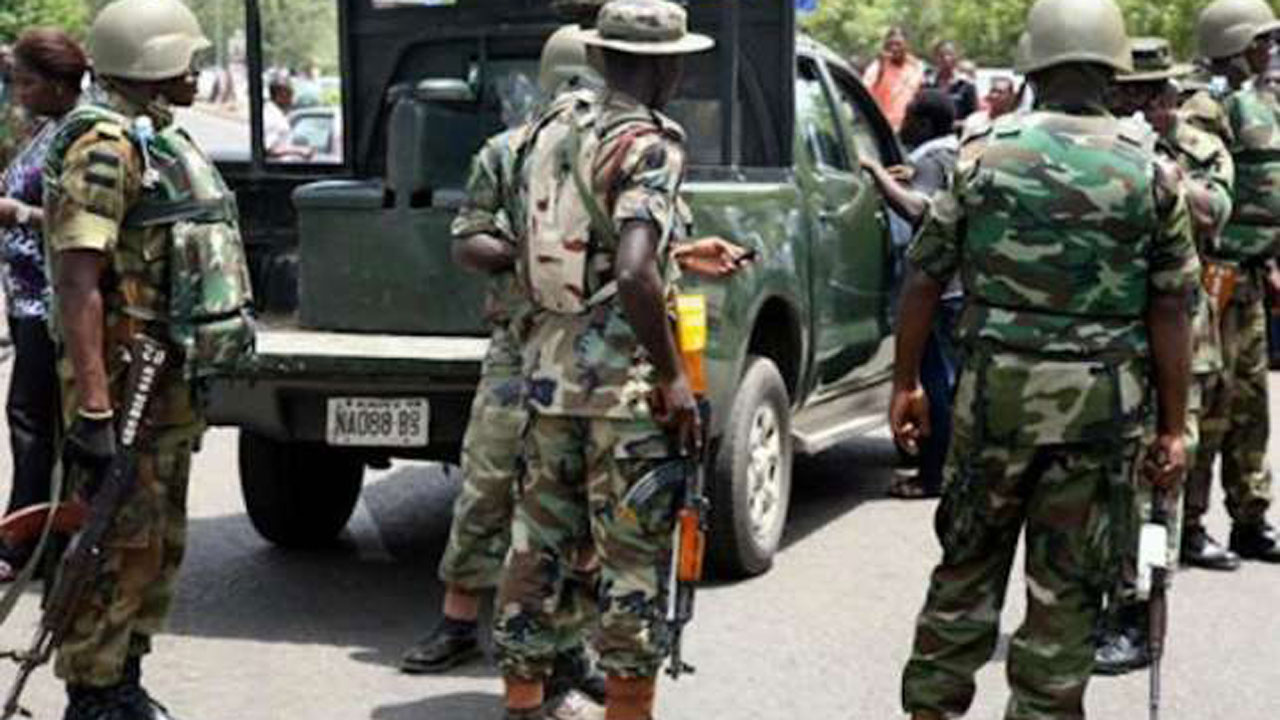
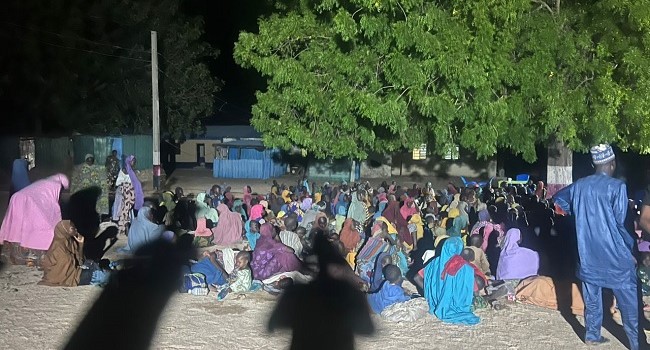
Troops of the Joint Task Force (North East), operating under Operation HADIN KAI (OPHK), have successfully rescued 360 men, women, and children from a heavily fortified enclave belonging to the Jama’atu Ahlis Sunna Lidda’awati wal-Jihad, the faction of the Boko Haram insurgency more commonly known as JAS, deep within the rugged Mandara Mountains of southern Borno State.
The rescue, which came to a dramatic conclusion on Saturday night, drew weeks of meticulous preparation, with commanders deploying a sophisticated blend of human and signals intelligence before a single shot was fired.
For the hundreds of families who had spent agonizing months and, in some cases, years waiting for word of their loved ones, the news arrived not with fanfare but with the quiet relief of a long-deferred answered prayer.
According to a statement released by Lieutenant Colonel Haruna M. Sani, the Acting Media Information Officer for OPHK Headquarters, the operation was not the result of a chance encounter or a reactive patrol.
It was, rather, the product of a disciplined, intelligence-led campaign stretching across several weeks, one that required operatives to work in the shadows long before soldiers ever moved into position.
“The operation was the culmination of weeks of intelligence gathering, covert reconnaissance, and operational planning,” Lieutenant Colonel Sani confirmed, adding that the rescued individuals, abducted from several communities, predominantly within the Ngoshe axis, had been held under “harsh conditions” in a terrain that offers natural fortification to anyone determined to use it.
The Mandara Mountains, which straddle the Nigeria-Cameroon border in southern Borno State, have long served as a refuge and operational base for insurgents exploiting the area’s deep ravines, dense vegetation, and limited accessibility.
It is a landscape that has historically frustrated military planners and emboldened those who know its paths. That OPHK was able to penetrate it with the precision reportedly demonstrated in this operation represents a notable evolution in the military’s operational capability in the region.
Military authorities confirmed that human intelligence (HUMINT), signals intelligence (SIGINT), and persistent surveillance conducted through unmanned aerial system drones were integrated into what Lieutenant Colonel Sani described as an “extensive target development process.”
This multi-layered intelligence architecture allowed commanders to develop what the military described as “a comprehensive understanding of the terrain, insurgent disposition, defensive arrangements, movement patterns, and the condition of the abductees.”
In practical terms, this meant that by the time assault forces were given the order to move, they knew not just where the hostages were held but also where the guards slept, how the camp was defended, and which routes insurgents might use to escape or relocate the captives.
Military intelligence, the statement revealed, had successfully cultivated assets inside the JAS structure, individuals who provided “timely and actionable intelligence regarding the exact locations of the abductees, the disposition of insurgent commanders, internal security measures, and planned relocation routes.”
This kind of inside knowledge is notoriously difficult to acquire and, once secured, places an intelligence apparatus in an extraordinarily powerful position.
Compounding the insurgents’ vulnerability was a carefully orchestrated psychological operations campaign run concurrently with the intelligence collection phase. Designed to sow confusion and mistrust within the JAS ranks, it reportedly succeeded in “degrading their cohesion and disrupting command and control arrangements,” softening the target well before the physical assault commenced.
OPHK Special Forces and troops from Sector 1 executed a multi-axis assault under cover of darkness, a tactical choice designed to maximize the element of surprise and deny the insurgents time to reorganize or, critically, harm or relocate the hostages. Blocking forces moved simultaneously to seal off escape routes into the surrounding mountains, while assault elements closed in on the objective.
The results, by the military’s account, were swift and decisive. The operation achieved “complete tactical surprise,” and insurgents overwhelmed by the speed and weight of the assault either fled into the mountainous terrain or surrendered. The hostages were “swiftly secured, medically screened, and evacuated from the objective area.”
It was, in operational terms, the kind of clean outcome that planners design for but rarely achieve in full, a testament, military authorities argued, to the quality of the preparation that preceded it.
The military confirmed that two infants succumbed during the evacuation, their deaths attributed to exhaustion brought on by the grueling mountainous terrain and the prolonged hardships of captivity.
A further and more troubling account emerged from the Borno South Youth Alliance (BOSYA). This civil society group had reportedly been involved in sustained humanitarian advocacy and backchannel mediations on behalf of the victims.
The group’s president, Samaila Ibrahim-Kaigama, revealed via telephone to Channels Television that four babies who had been born in captivity died as a result of infections contracted during their time in the enclave, with their mothers currently receiving treatment at a government medical facility in the state.
The discrepancy in figures between the military’s account and that of BOSYA, two versus four infant deaths, has not yet been officially reconciled, and questions remain about the full accounting of casualties among the rescued population.
“To the Ngoshe women and children who were released tonight, welcome home,” BOSYA said in a statement. “Your return brings hope, joy, and relief to Southern Borno.”
Ibrahim-Kaigama, whose organization claims to have played a sustained role in negotiations and humanitarian mediation efforts that contributed to the conditions enabling the rescue, was candid in celebrating the outcome while calling for immediate government action on behalf of those freed.
Military authorities were clear that Saturday’s rescue, significant as it is, does not mark the end of operations in the region. The High Command confirmed that “follow-on exploitation and clearance operations are ongoing to neutralize residual terrorist elements, dismantle remaining support networks, and prevent future abductions.”
BOSYA, for its part, has called on the federal government, the Borno State Government, and relevant local government authorities to conduct thorough screening of the rescued victims, a process that will be essential not only for medical and psychological care but also for the reintegration support that survivors of prolonged captivity invariably require.
WHAT YOU SHOULD KNOW
Nigerian military forces rescued 360 hostages, mostly women and children, from a Boko Haram stronghold in the Mandara Mountains of southern Borno State, marking one of the most significant counter-terrorism operations in the region’s recent history.
The mission’s success hinged almost entirely on weeks of meticulous intelligence work, including the penetration of the insurgent network from within.
However, the victory is bittersweet: at least two to four infants died, some from exhaustion during evacuation and others from infections contracted in captivity.
While the rescued are now receiving care, military operations in the area continue, as the broader fight against insurgency in Nigeria’s North-East remains far from over.