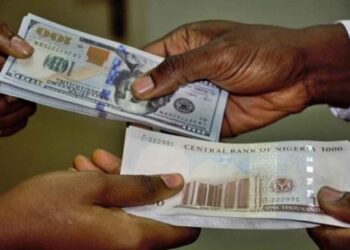
Nigeria pulled in $10.37 billion in foreign capital in Q1 2026, its strongest quarterly figure in recent memory and an 83.8 percent rise from the same period last year, according to the National Bureau of Statistics.
The figures, published by the NBS on Wednesday, also showed a 61 percent rise from the $6.44 billion logged in the fourth quarter of 2025, painting a picture of a country rapidly regaining its footing in the eyes of international capital markets.
For a nation that has spent much of the past decade navigating currency crises, fuel subsidy turbulence, and bouts of foreign exchange scarcity, the numbers represent a notable vote of confidence, albeit one that comes with important caveats.
Dig beneath the headline figure, however, and a familiar structural imbalance emerges. Portfolio investment, the kind that can enter and exit a country at the click of a button, accounted for a staggering $9.86 billion, or 95.1 percent of total inflows during the quarter. That represents an 89.5 percent increase year-on-year and a 79.8 percent rise from the preceding quarter.
Within that category, money market instruments drew $6.50 billion, while bonds attracted $3.23 billion, together accounting for more than 98 percent of all portfolio flows.
In other words, the overwhelming majority of foreign capital flowing into Nigeria right now is chasing yields on short-term financial instruments, not building factories, expanding infrastructure, or creating jobs.
Foreign Direct Investment, the category economists and policymakers tend to regard as the more durable indicator of long-term confidence, told a starkly different story. FDI stood at just $135.08 million for the quarter, a mere 1.3 percent of total inflows.
While that figure was technically 7 percent higher than what was recorded in Q1 2025, it collapsed by more than 62 percent compared to the immediately preceding quarter, a decline that will concern development economists who have long argued that Nigeria’s growth aspirations cannot be financed by hot money alone.
Other investments, which included loans of $364.43 million and trade credits of $10 million, contributed a combined $374.48 million, accounting for 3.6 percent of total inflows.
The banking sector alone absorbed $7.55 billion, representing 72.8 percent of all inflows, while the financing sector followed with $2.43 billion, or 23.4 percent. Together, these two sectors claimed more than 96 percent of every dollar that entered Nigeria as foreign capital during the quarter.
By contrast, the figures for sectors that form the backbone of any genuinely diversified economy were startling in their smallness. Production and manufacturing received $152.27 million. Agriculture in a country where roughly a third of the population depends on farming for their livelihood attracted just $37.28 million.
Information technology services, a sector widely touted as a frontier of Nigeria’s future economic potential, recorded $11.33 million. Telecommunications received $7.24 million.
Perhaps most striking of all were the figures for sectors central to human capital and productive infrastructure. Oil and gas, the traditional engine of the Nigerian economy, attracted a mere $460,000. Construction received $100,000.
The health and social work sector drew $120,000, while education received just $70,000. These are not rounding errors; they are a reflection of where foreign investors believe their money is safe and where they believe it is not.
On the geographic front, the United Kingdom emerged as the single largest source of foreign capital into Nigeria during the quarter, contributing $5.08 billion, nearly half, or 49 percent, of total inflows.
The United States was the second-largest source with $3.18 billion, representing 30.7 percent. South Africa, perhaps reflecting the deepening financial ties between the continent’s two largest economies, contributed $983.83 million, or 9.5 percent of the total. Mauritius and the United Arab Emirates rounded out the top five with $390.07 million and $194.51 million, respectively.
The dominance of the UK and the US is not entirely surprising. Both countries are home to large institutional investors, hedge funds, asset managers, and fixed-income desks that have, in recent quarters, found Nigerian treasury bills and bonds attractive given the country’s elevated interest rate environment, which has been sustained by the Central Bank of Nigeria‘s hawkish monetary policy stance.
Among Nigerian financial institutions, Standard Chartered Bank Nigeria Limited processed the largest volume of incoming capital, handling $4.41 billion, equivalent to 42.6 percent of total importation.
Stanbic IBTC Bank came in second with $2.78 billion, representing 26.8 percent, while Rand Merchant Bank handled $930.82 million. Citibank Nigeria and Access Bank processed $782.84 million and $710.03 million, respectively.
The concentration of inflows among a handful of banks, particularly those with strong international parentage and correspondent banking relationships, reflects the reality that foreign portfolio investors tend to operate through institutions they know and trust, with robust foreign exchange infrastructure.
Other notable receiving banks included First Bank of Nigeria, Guaranty Trust Bank, Zenith Bank, FCMB, Ecobank, and Fidelity Bank.
The $10.37 billion figure will almost certainly be welcomed by Nigerian authorities as evidence that the reforms implemented over the past two years, including the unification of the foreign exchange market, the removal of fuel subsidies, and the liberalization of the naira, are bearing fruit. There is truth in that reading. Investor confidence, even of the short-term variety, does not materialize in a vacuum.
But experienced market watchers will be quick to point out that the structural character of these inflows has not changed meaningfully. Nigeria continues to attract capital that can leave as quickly as it arrives, while the sectors that could transform the economy, manufacturing, agriculture, health, education, and technology, remain largely starved of foreign investment.
The question facing policymakers is no longer whether Nigeria can attract foreign capital. Clearly, it can. The more pressing question is what kind of capital the country is attracting and whether the current investment architecture, concentrated in financial assets and funneled through a narrow set of sectors and institutions, is the foundation on which sustainable, broad-based economic growth can actually be built.
WHAT YOU SHOULD KNOW
Nigeria’s record $10.37 billion capital importation in Q1 2026 is an impressive headline, but it masks a deeper structural problem. Nearly all of that money, 95 percent, is speculative portfolio investment chasing short-term yields on bonds and money market instruments.
The sectors that actually build economies and create jobs, such as manufacturing, agriculture, health, education, and even oil and gas, received next to nothing.
Until foreign capital begins flowing into productive sectors rather than financial instruments, these record-breaking figures will continue to reflect a country that looks attractive on paper but remains far from achieving the kind of investment-driven growth its people need.