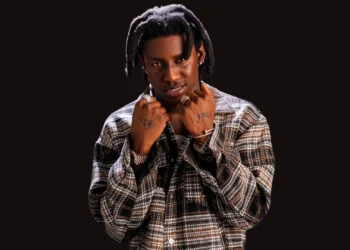
Popular Nigerian skit maker Cute Abiola has apologized to former First Lady Patience Jonathan for years of mockery, forcing the nation to ask itself one uncomfortable question: Did we laugh when we should have wept?
The apology, posted on the comedian’s Instagram page, comes in the wake of a fresh and deeply disturbing mass abduction in Oyo State, in which teachers and pupils, some barely two years old, were snatched from the safety of their school environment, reigniting fears about Nigeria’s spiraling insecurity crisis and the government’s repeated failure to protect its most vulnerable citizens.
To understand the weight of Cute Abiola’s apology, one must first revisit the events of 2014, a year that scarred the Nigerian psyche in ways the country is arguably still processing.
When the terrorist group Boko Haram abducted 276 schoolgirls from the Government Girls Secondary School in Chibok, Borno State, the world watched in horror. The hashtag #BringBackOurGirls echoed from Washington to Westminster. World leaders condemned the act. Mothers wept in the streets.
And then, First Lady Patience Jonathan wept on national television.
She appeared visibly distressed, her voice breaking under the weight of genuine anguish as she issued an emotional plea on behalf of the abducted girls and their devastated families.
Her delivery, marked by grammatical imperfections and raw, unfiltered emotion, was the cry of a woman who, whatever her political shortcomings, appeared to feel, in that moment, the full horror of what had befallen those children and their families.
Nigeria, however, chose to laugh.
Her words were clipped, remixed, mocked, and immortalized in memes, skits, ringtones, and comedy routines that endured for years. The very vulnerability that should have commanded empathy became the punchline of a national joke.
Comedians, content creators, and ordinary citizens alike mined her grief for entertainment, stripping it entirely of its context, the bleeding wounds of 276 missing daughters, and reducing it to fodder for viral laughs.
Cute Abiola, one of Nigeria’s most beloved skit makers with millions of followers across platforms, was among those who, by his own admission, participated in that culture of ridicule. For over ten years, the mockery barely let up.
It took yet another abduction, another convoy of innocents, this time in Oyo State, for the mirror to be held up to the nation’s face.
The recent mass kidnapping of teachers and pupils in Oyo, including children as young as two years old, struck Nigeria with the particular horror that comes not from surprise, but from grim familiarity. This had happened before. The tears had been shed before. The outrage had been expressed before. And yet, here Nigeria was again counting the missing, consoling the bereaved, and demanding answers that were slow in coming.
It was against this backdrop that Cute Abiola took to Instagram, not with a skit, not with a punchline, but with an apology.
“Years ago, when you cried on national television over the pain, bloodshed, and kidnapping of innocent children,” he wrote, addressing Mrs. Jonathan directly, “You felt the pain of the victims and their families. You spoke with emotion because you understood the gravity of what was happening to our nation.”
The post continued: “Today, as kidnapping and insecurity continue to affect innocent Nigerians, many now realize that your tears were not weakness. They were humanity.”
He closed with a simple but significant sentence: “We are sorry for the ridicule. Thank you for caring. Thank you for speaking up.”
The timing of Cute Abiola’s post also raises a pointed question that Nigerians on social media have been asking since it went viral: Why did it take another abduction for us to arrive at this apology?
The Chibok girls have not all been found. Some remain in captivity to this day. The grief was never abstract. And yet the jokes continued until fresh grief, closer to home, forced a reckoning.
Thousands have shared and commented, with many Nigerians applauding Cute Abiola’s courage in owning his role in the collective mockery. Several public figures and commentators have echoed the sentiment, acknowledging that the nation owed Mrs. Jonathan and by extension, the families of the Chibok girls an apology long overdue.
Others, however, have been more measured in their praise, pointing out that an Instagram post, however sincere, cannot undo ten years of viral humiliation, nor can it return the Chibok girls who remain missing.
They argue that the apology, while welcome, must be the beginning of a larger cultural conversation about how Nigerians respond to tragedy and about the politicians and security institutions that have consistently failed to end the cycle of abductions that provokes such grief in the first place.
More than a decade after the Chibok abductions, Nigeria finds itself still ensnared in the same nightmarish loop. New names. New schools. New families shattered. The insecurity that drew tears from the former First Lady in 2014 has not abated; it has, by most credible assessments, deepened.
In that light, Cute Abiola’s apology is more than a personal moment of growth. It is an invitation, uncomfortable, necessary, and long overdue for Nigeria to reckon with how it treats grief, how it treats women who dare to show it, and how it has allowed the entertainment value of a public figure’s anguish to distract from the urgent, unanswered demand at the heart of that anguish.
WHAT YOU SHOULD KNOW
Cute Abiola’s apology to Patience Jonathan is a long-overdue national reckoning. What Nigerians mocked for a decade as comedic material was, in truth, a mother’s genuine anguish over abducted children, an anguish that has proven tragically prophetic, as kidnappings continue to ravage the country to this day.
The real story here is not the apology itself, but what it exposes: a nation that ridiculed a woman’s grief instead of directing its outrage at the failure of the systems meant to protect its citizens. Mrs. Jonathan’s tears were not the problem in 2014. They are not the problem now.
Until Nigeria shifts its focus from mocking its grieving to demanding accountability from its leaders, the cycle of abductions, tears, and empty outrage will continue, and future apologies will remain just as late and just as insufficient.