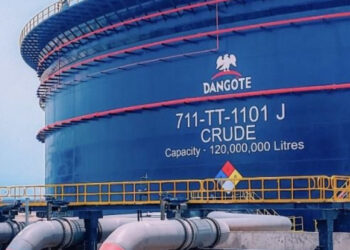
Dangote Industries Limited has once again claimed the title of Africa’s Most Admired African Brand, securing the coveted distinction for an unprecedented eighth consecutive year at the 16th annual Brand Africa 100 rankings held in Addis Ababa, Ethiopia.
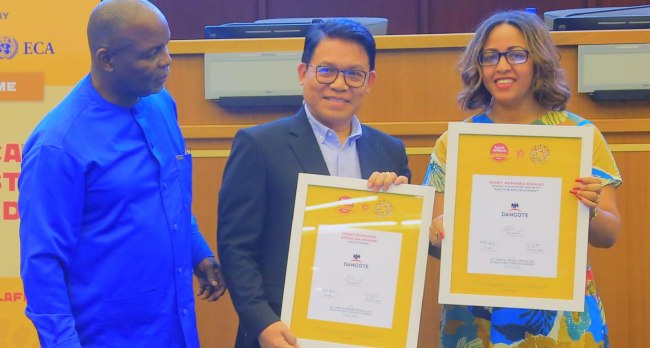
The achievement cements the Nigerian industrial conglomerate’s standing not merely as a corporate success story but as a symbol of what homegrown African enterprise can accomplish on the world stage at a time when the continent continues to grapple with the overwhelming dominance of foreign brands in its own consumer markets.
The Brand Africa 100 rankings are no ordinary corporate scorecard. Regarded as the most comprehensive consumer-led brand study on the continent, the survey canvassed opinion across 30 countries representing more than 85 per cent of Africa’s population and economic output.
That breadth lends the recognition a weight that few other business honors on the continent can match.
In the aided recall category, Dangote surpassed South Africa’s telecommunications giants MTN and Vodacom to claim the top spot. In spontaneous recall, arguably the more telling measure of genuine brand penetration, where no prompts are given to consumers, the group ranked second only to MTN, edging out Zambia’s Trade Kings.
For a Nigerian-headquartered industrial brand competing against some of Africa’s most established telecoms and retail players, the result is striking.
What makes Dangote’s brand dominance particularly significant is the breadth of sectors underpinning it. Unlike telecom brands that build consumer recognition through daily digital touchpoints, Dangote has forged its identity through hard industry cement, fertilizer, petrochemicals, energy, sugar, salt, packaging, and logistics.
These are not glamorous consumer products; they are the bones of an economy, and yet the Dangote name has become as familiar to ordinary Africans as any household goods brand.
The group retained its position as Africa’s Most Admired Industrial Brand and, perhaps most tellingly, was ranked the Number One African Brand Contributing to a Better Africa ahead of MTN, DStv, Shoprite/Checkers, and Trade Kings.
The ranking reflects more than commercial success: recognition that Dangote’s investments in industrialization, job creation, and infrastructure development have left a tangible imprint on the everyday lives of millions across the continent.
The group also placed second among brands recognized for doing good for society, people, and the environment, a nod to its growing sustainability credentials at a time when African consumers are becoming increasingly discerning about corporate social responsibility.
Yet the celebrations in Addis Ababa were tempered by a sobering reality. Despite Dangote’s extraordinary run, homegrown African brands account for just 15 percent of the continent’s 100 most admired brands.
European brands dominate with a 38 per cent share, followed by North American brands at 28 per cent and Asian brands at 19 per cent. Global names such as Nike, Adidas, Samsung, Apple, and Coca-Cola continue to tower over the rankings.
Brand Africa Founder and Chairman Thebe Ikalafeng did not mince his words on the matter. “Converting goodwill towards African contribution into admiration for African brands is the most urgent commercial opportunity for the continent,” he said at the ceremony. “It is not enough for Africans to believe in Africa; they must buy Made-in-Africa.”
It is a rallying cry that lends added resonance to Dangote’s achievement. In a landscape where African brands are swimming against a powerful current of global marketing spend and entrenched consumer habits, the Dangote story represents proof that it can be done: an African brand, built on African soil, serving African needs, can compete for the hearts and minds of African consumers.
Dangote Group’s Chief Branding and Communications Officer, Anthony Chiejina, was named to the inaugural Africa CMO 100 list, a new initiative launched by Brand Africa in partnership with African Business magazine, MIPAD, and the African Media Agency to honor the continent’s most impactful marketing and brand leaders.
Chiejina was among just 20 executives selected from West Africa and one of 17 Nigerians on the full list, a distinction that underscores the depth of brand-building talent that has helped sustain Dangote’s continental visibility over more than a decade.
The latest accolade adds to what is now a formidable legacy of recognition. Last year, Dangote Industries was inducted into the Brand Africa Hall of Fame, having consistently featured among Africa’s most admired brands for over a decade.
The group’s president and chief executive, Aliko Dangote, Africa’s richest man and arguably the continent’s most recognizable industrialist, was separately honored with a Lifetime Achievement Award for his role in championing industrialization and building one of Africa’s most consequential indigenous enterprises.
Together with MTN and Ethiopian Airlines, Dangote now stands as one of three African brands consistently punching above their weight on a list dominated by global giants, a trio that, in many ways, represents the best of what the continent’s private sector and state-linked enterprises can aspire to be.
For a continent still searching for economic self-sufficiency, the Dangote brand, now eight years running as Africa’s most admired, is, at minimum, a compelling argument for what is possible.
WHAT YOU SHOULD KNOW
Dangote Industries’ eighth consecutive win as Africa’s Most Admired Brand is more than a corporate milestone; it is a powerful statement about what African enterprise can achieve.
Built on industries that form the backbone of economies rather than flashy consumer products, the Dangote brand has earned genuine continental respect across 30 countries.
Dangote’s achievement matters not just as a business triumph, but as a challenge to both African consumers and entrepreneurs, proof that Made-in-Africa can compete, and a reminder that for the continent to truly thrive economically, Africans must increasingly choose to invest in and buy from their own.