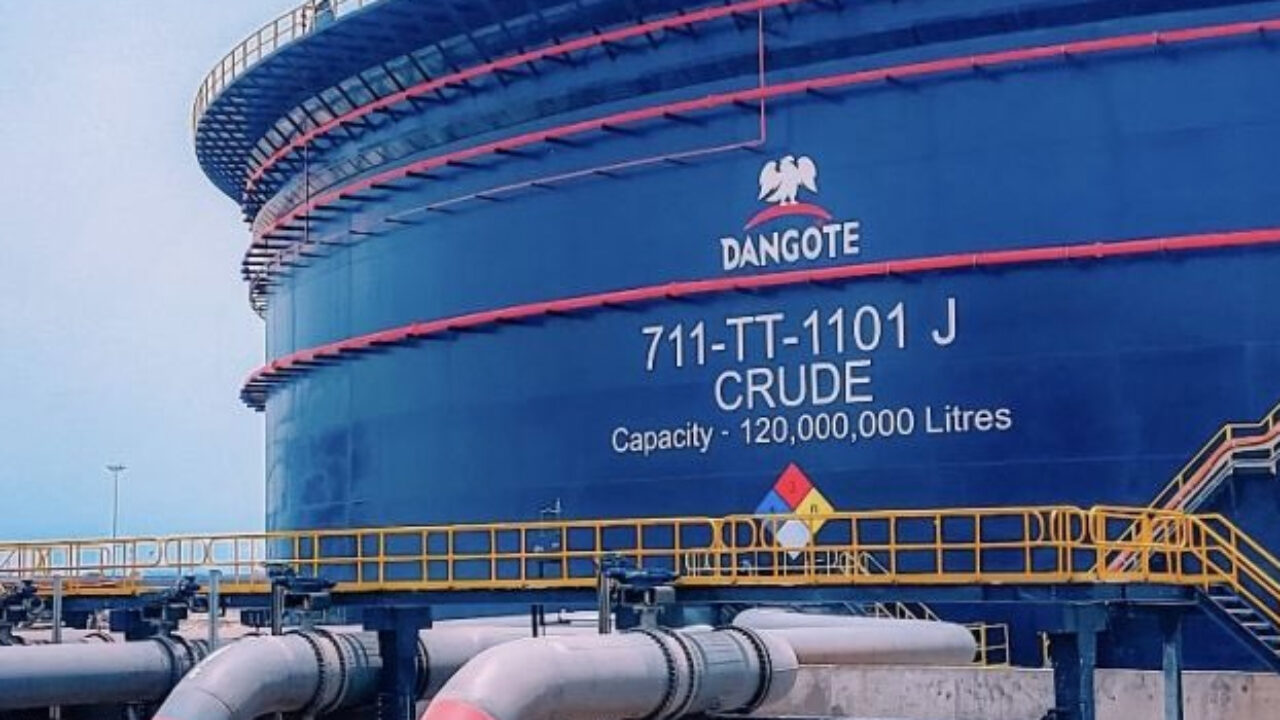
The Dangote Refinery emerged in April as the world’s single largest exporter of aviation fuel, a landmark achievement that signals Africa’s growing weight in the international energy order.
The disclosure, contained in a recent S&P Global Energy report, was backed by Commodities at Sea shipping data and confirmed by remarks from the refinery’s chief executive officer, David Bird, during an interview conducted at the facility in Lagos.
The report painted a picture of a refinery that moved with speed and precision to exploit a window of opportunity that geopolitics had unexpectedly opened.
When conflict escalated in the Middle East, the consequences rippled far beyond the battlefield. Established aviation fuel supply routes that airlines, cargo operators, and energy traders had depended on for years were abruptly disrupted, triggering an urgent scramble for reliable alternative suppliers. Dangote, already running at near-full capacity, was ideally placed to respond.
Bird described the refinery’s response as a deliberate strategic pivot. “After the Middle East war began, Dangote shifted to ‘max jet mode,'” the S&P Global report stated, capturing the urgency and decisiveness with which the facility redirected its output toward aviation fuel. The results were immediate and historic; by April, no refinery anywhere in the world was exporting more jet fuel.
The scale of what has been built at the Lekki Free Zone is difficult to overstate. The refinery has reached its full production capacity of approximately 650,000 barrels per day following a prolonged ramp-up phase and has maintained near-peak output consistently since.
To maximize product flexibility, the facility operates an advanced blending system that incorporates imported feedstocks, including GTL naphtha and Bonny condensate, allowing it to push gasoline yields beyond what its base configuration would otherwise permit.
Bird acknowledged, however, that operating at this level of throughput is an entirely different discipline from simply building and commissioning a refinery. Sustaining output at scale, he said, demands greater trading sophistication, tighter logistics coordination, and a more resilient supply chain, particularly as the refinery pushes against the natural limits of relying predominantly on Nigerian crude.
The refinery is deliberately shedding its original profile as a domestically focused crude processor and reinventing itself as a merchant refiner, one that actively competes for crude cargoes and refined product customers in international markets.
Central to this shift is an aggressive expansion of the crude slate. The refinery can currently process around 40 different crude grades, including heavier grades and residue blends, alongside the Nigerian light-sweet crude it was originally built around.
Bird has set his sights on eventually matching the processing versatility of Singapore’s Pulau Bukom refinery, a global benchmark capable of handling more than 100 crude grades.
Realizing that ambition will require crude sourced from far beyond West Africa. Bird confirmed the refinery is targeting a future production capacity of 1.4 million barrels per day, more than double its current throughput, with supply lines drawn from the United States, the Middle East, and potentially South America.
Alongside its production ambitions, Dangote is pursuing a commercial strategy designed to reduce vulnerability to spot market volatility. The company is actively negotiating long-term offtake agreements with governments, national oil companies, and airlines to anchor relationships that would provide revenue stability and underpin the business case for further expansion.
It is a deliberate shift away from short-term transactional trading toward the kind of durable partnerships that define the world’s most established refining operations.
In a continent where aviation demand is projected to grow faster than almost anywhere else globally, locking in long-term buyers now could prove to be as strategically significant as the April export record itself.
The refinery is actively investing in a network of regional infrastructure projects designed to extend its distribution reach deep into Africa — including proposed storage and logistics hubs in Namibia, pipeline discussions in Zambia, and storage planning across Central and East Africa.
Together, these projects would give Dangote not just the capacity to produce at scale but also the ability to deliver product precisely where demand is rising fastest.
The overarching vision, Bird said, is to transform the Lekki Free Zone into a world-class industrial and energy hub integrating refining, petrochemicals, and export logistics into a single, interconnected ecosystem that can compete with the great refining centers of Rotterdam, Singapore, and the United States Gulf Coast.
April’s jet fuel milestone is, in isolation, a remarkable achievement. In context, it is something more than a signal that the balance of power in global energy is shifting and that Africa, long defined in commodity markets primarily as a crude oil exporter, is staking a credible claim as a refining and trading force in its own right.
Whether Dangote can sustain this momentum through the capital demands of expansion and the pressures of competing in global refined product markets remains the central question.
But for now, the world’s airlines are, quite literally, flying on fuel that came out of Lagos, and the industry is paying close attention.
WHAT YOU SHOULD KNOW
The Dangote Refinery‘s rise to the world’s top jet fuel exporter in April is more than a headline statistic; it marks Africa’s arrival as a serious player in global energy markets.
Driven by the Middle East conflict that disrupted established supply routes, the Lagos-based facility seized the moment by pivoting aggressively to aviation fuel production.
But the bigger story is structural: with a capacity of 650,000 barrels per day, plans to scale to 1.4 million, the ability to process 40-plus crude grades, and a deliberate shift toward international trading and long-term supply contracts, Dangote is not simply benefiting from a geopolitical accident.