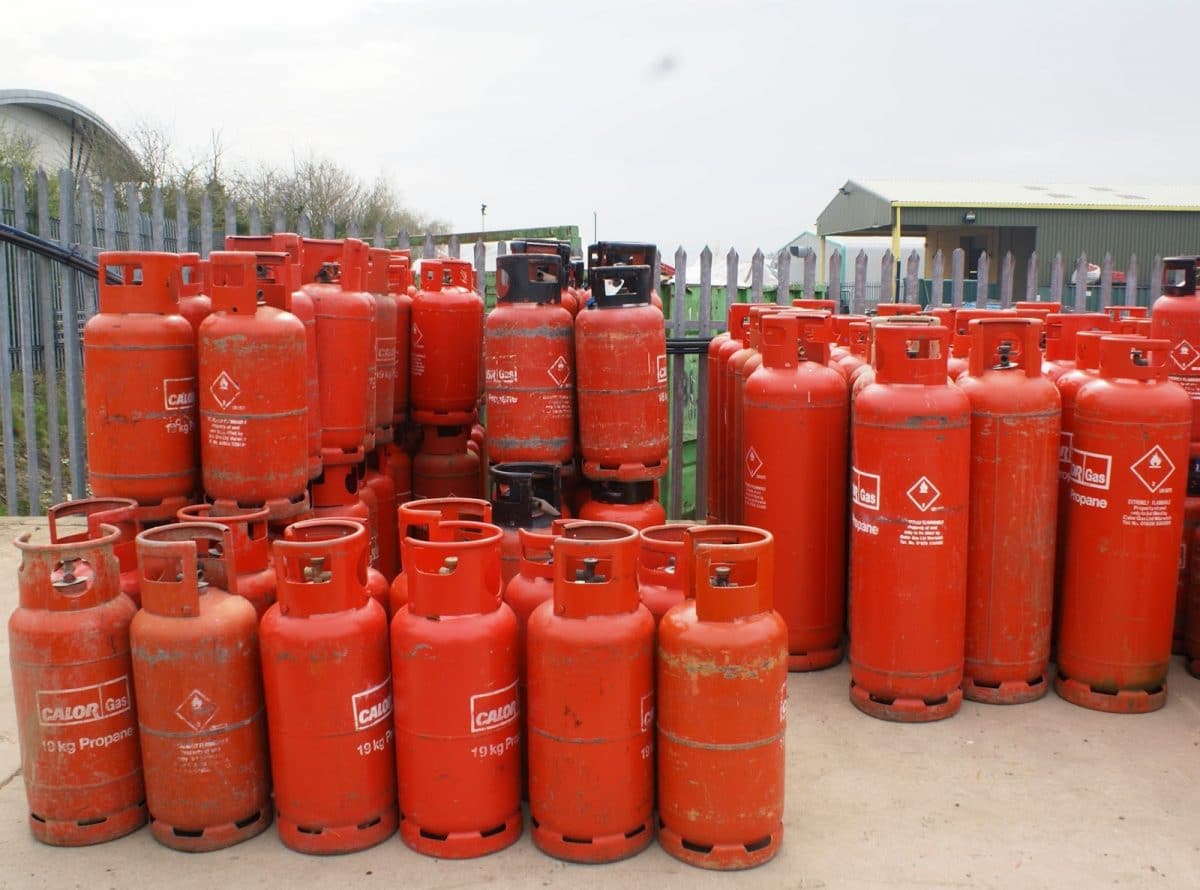
Cooking gas prices have surged to ₦1,500/kg across Nigeria, up from ₦1,300/kg just weeks ago, and in many areas, even at that price, supply is nowhere to be found.
The alarm was formally sounded on Sunday when the Nigerian Association of Liquefied Petroleum Gas Marketers (NALPGAM) issued a strongly worded public statement warning that the worsening scarcity and spiraling cost of Liquefied Petroleum Gas (LPG) had reached crisis proportions.
The association addressed its concerns to the Federal Government, industry regulators, the Nigerian Midstream and Downstream Petroleum Regulatory Authority (NMDPRA), and the Nigerian National Petroleum Company (NNPC) Ltd, among other stakeholders across the LPG supply chain.
The numbers tell a grim story. Marketers report paying between ₦25.2 million and ₦26.2 million for a 20-metric-ton consignment of cooking gas, costs they say they have no choice but to pass on to consumers already stretched thin by a broader cost-of-living crisis.
At the retail end, the ₦1,500/kg price point is not uniform; it fluctuates by location, with some areas reporting slightly lower prices where supply is marginally better, and others where the product is simply unavailable at any price.
For the ordinary Nigerian, the market trader frying akara before dawn, the roadside buka feeding factory workers, and the urban family of five in a two-bedroom flat—this is not an abstract policy problem. It is a daily, grinding struggle.
“This sad situation has brought untold hardship to millions of Nigerian households, small businesses, food vendors, and low-income families who rely on LPG for daily cooking and livelihood,” NALPGAM said in its statement, in language that was unusually blunt for a trade body more accustomed to diplomatic engagement.
The roots of the current crisis are multiple and interlocking. NALPGAM points to persistent supply shortages at the source, with domestic production falling short of national demand.
This is compounded by high depot prices, logistics bottlenecks along the distribution chain, and operational costs that have ballooned in an environment of naira depreciation and fuel subsidy removal.
Nigeria, despite being a significant gas-producing nation, has long struggled to efficiently harness its LPG resources for domestic consumption. A large share of the country’s LPG is imported, leaving the market exposed to global price fluctuations and foreign exchange volatility, both of which have moved sharply against consumers in recent years.
Industry observers note that the problem is not simply one of production but of infrastructure. Storage and distribution facilities remain inadequate, meaning that even when the product is available at the source, getting it reliably to end consumers across a country of over 200 million people is a persistent challenge. Where the product does reach the market, NALPGAM notes, “it is sold at rates far beyond the reach of average Nigerians.”
Over the past decade, successive Nigerian governments, in partnership with the private sector, have invested significantly in a national clean energy transition a concerted push to move households away from kerosene, firewood, and charcoal toward the cleaner, more efficient LPG. The campaign achieved measurable results, with millions of Nigerians adopting cooking gas as their primary fuel source.
“Those gains are now under serious threat,” the association warned, as families priced out of the LPG market revert to the very fuels the transition programme sought to replace.
The consequences of that reversal extend well beyond inconvenience. Firewood and charcoal combustion are significant contributors to indoor air pollution, which the World Health Organization has linked to millions of premature deaths globally each year. Increased charcoal demand also accelerates deforestation, with attendant consequences for soil erosion, water catchment, and climate resilience.
Nigeria has made commitments under international climate frameworks, including pledges to reduce its carbon footprint and expand clean energy access. A mass reversal to biomass fuels would deal a significant blow to those commitments and to the country’s credibility as a climate partner.
The association did not mince words about the broader economic implications either. Beyond the immediate pain at the household level, NALPGAM warned that a sustained LPG crisis could accelerate food inflation with food vendors passing higher energy costs onto consumers, triggering the collapse of small-scale gas retail businesses, and generating widespread job losses across the LPG distribution value chain.
Investor confidence in the sector is also at stake. Nigeria has, in recent years, attracted modest but growing private investment in LPG infrastructure. A protracted market crisis, marked by price instability and supply uncertainty, risks deterring the long-term capital commitment the sector urgently needs.
The association also issued what amounted to a social warning, noting starkly that “the citizens may rise against the owners of gas filling stations” if the situation is not quickly resolved, a pointed reminder to authorities that economic grievances, left unaddressed, carry a social cost.
NALPGAM is demanding immediate, coordinated intervention across the entire LPG value chain. Its demands include an increase in domestic LPG allocation to the Nigerian market, transparent and equitable distribution of available supply across regions, a reduction of importation and distribution bottlenecks, strategic retail price stabilisation measures, and expanded investment in storage and distribution infrastructure.
The association is also calling for the adoption of long-term policies that embed affordability and sustainability into the architecture of the LPG sector, not just emergency fixes, but structural reforms that prevent the recurring boom-and-bust cycles that have defined the market.
Critically, NALPGAM is calling on the NNPC, as the country’s dominant energy corporation, to take a more active role in stabilizing domestic supply, a call that echoes concerns raised by civil society groups and other industry bodies about the gap between Nigeria’s gas wealth and its citizens’ access to it.
As of the time of this report, neither the Federal Ministry of Petroleum Resources nor the NMDPRA had issued a formal public response to NALPGAM’s statement.
Whether the government moves quickly to address the crisis or, as has happened before, the response is slow and piecemeal, will determine whether the current spike is a temporary disruption or the beginning of a more prolonged affordability emergency.
What is clear is that for the millions of Nigerians who have made cooking gas central to their daily lives, the stakes could not be higher. Clean energy is not a luxury.
For the mother boiling water for her children, the chef running a small chop business, the caterer feeding a neighbourhood it is as essential as the food itself.
WHAT YOU SHOULD KNOW
Nigeria’s cooking gas crisis is a ticking clock. Prices have surged to ₦1,500/kg, supply is erratic, and marketers are being squeezed at every point in the chain.
The greater danger is what happens next: families reverting to firewood and charcoal, food inflation rising, small businesses collapsing, and years of hard-won progress on clean energy going up in smoke.