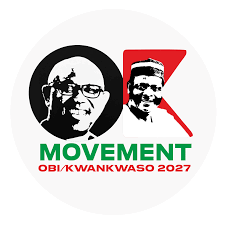
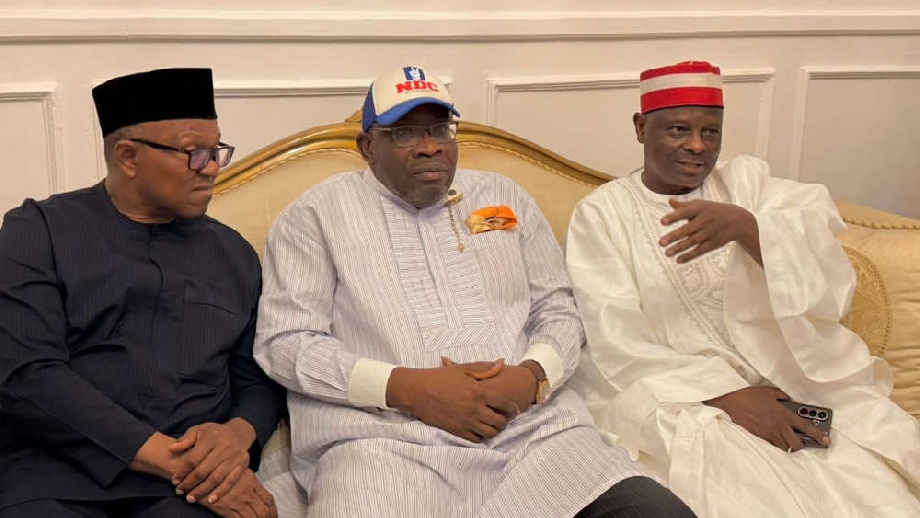
The Nigeria Democratic Congress, the new political platform of former presidential candidates Peter Obi and Rabiu Musa Kwankwaso, is rapidly consolidating its presence in Nigeria’s political landscape following its official registration by the Independent National Electoral Commission.
The party secured approval on February 5, 2026, alongside the Democratic Leadership Alliance, after years of legal battles that followed its original registration application in 2017.
Its eventual approval came through a ruling of the Federal High Court, ending a prolonged judicial process that delayed its formal entry into Nigeria’s multiparty system.
Since receiving registration, the NDC has moved swiftly to establish operational structures and position itself for active participation in the 2027 general elections.
A full complement of national officers has already been appointed in an interim capacity, pending ratification at the party’s first National Convention.
Leading the interim structure is Senator Cleopas Moses Zuwoghe as National Chairman, while Barrister Ikenna Morgan Enekweizu serves as National Secretary.
Other national officers include John Odey as Treasurer, Mainasara Abubakar Sani as Financial Secretary, and Barrister Reuben Egwuaba as National Legal Adviser.
In line with efforts to project national spread and inclusiveness, the party has also named vice chairmen across Nigeria’s six geopolitical zones.
These include Mohammed Bakin Zuwo for the North-West, Danlami Arabs for the North-East, and Barnabas Ejisi for the North-Central.
Others are Frederick Owotorufa for the South-South, Teddy Obey for the South-East, and Adedayo Ekong for the South-West.
State chairmen have also been appointed to coordinate grassroots mobilisation and strengthen local political structures.
Party officials say the appointments were deliberately designed to create a broad-based and nationally representative platform capable of attracting support from across the country.
Beyond leadership appointments, the NDC has launched a digital membership registration drive and begun building functional structures across all states.
The party has also formally notified INEC of its immediate political activities as part of preparations for full operational rollout.
Nationwide congresses commenced on May 1, while the party’s inaugural National Convention is scheduled to hold on May 9 in Abuja.
The convention is expected to formally ratify leadership positions, adopt the party’s constitution, and unveil its strategic roadmap toward the 2027 general elections.
Party primaries are expected to follow later in the month.
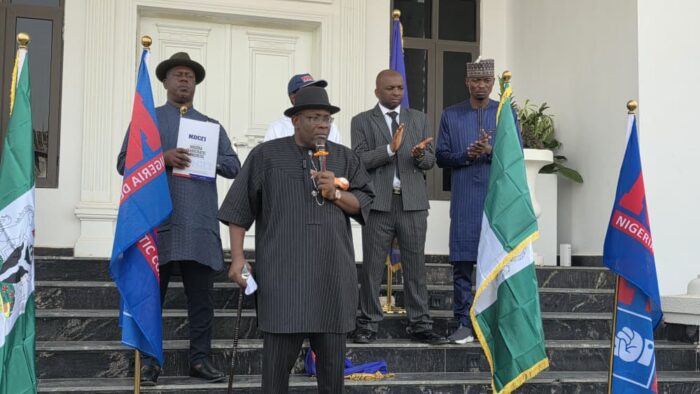
Speaking during the presentation of the party’s registration certificate, Egwuaba described the moment as the successful conclusion of a difficult legal journey.
“Today’s event marks the culmination of NDC’s long and torturous fight for registration,” he said.
The entry of the NDC into the political arena, particularly with the involvement of Obi and Kwankwaso, is already generating attention across Nigeria’s political space.
Analysts believe the party could emerge as a significant opposition force if it succeeds in maintaining internal stability and building credible national structures.
Its rapid mobilisation signals an aggressive push to establish relevance ahead of the next electoral cycle.
What You Should Know
The NDC’s swift organisational rollout suggests it is positioning itself as a serious contender in Nigeria’s opposition landscape ahead of 2027.
Political parties often struggle after registration due to weak structures and internal disputes, so the speed of its mobilisation is notable. The presence of Peter Obi and Rabiu Kwankwaso gives the party immediate national visibility and access to established support bases.
However, long-term success will depend on internal cohesion, transparent primaries, and legal compliance.
For now, the NDC appears focused on building credibility quickly enough to challenge more established political parties.