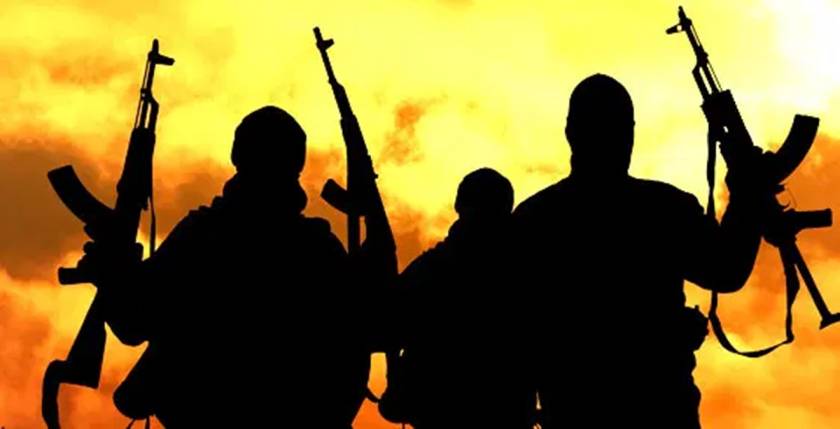
The Federal Government has released a list of 48 individuals and groups allegedly involved in financing terrorism across the country, marking a major step in its ongoing crackdown on security threats.
The list, published by the Nigeria Sanctions Committee, was made public shortly after the Office of the Attorney General of the Federation concluded the ninth phase of mass trials involving more than 500 suspects linked to terrorist activities.
The trials, which lasted four days, were conducted by judges of the Federal High Court in Abuja, resulting in 386 convictions secured by the government.
The Attorney General of the Federation, Lateef Fagbemi, SAN, led the prosecution alongside the Director of Public Prosecutions of the Federation, Rotimi Oyedepo, SAN, while most defendants were represented by lawyers from the National Legal Aid Council of Nigeria.
The courts handed down various sentences, including life imprisonment, and also directed that the convicted individuals undergo rehabilitation and deradicalisation programmes.
Fagbemi expressed satisfaction with the outcome, stressing that the penalties imposed were meant to send a strong message to those engaged in terrorism and its financing.
“There is no space for them here in Nigeria. We cannot stop them from going elsewhere, but as far as Nigeria is concerned, we cannot accommodate them.
“We have been able to bring justice to them—or rather, bring them to justice. This is the clear signal we are sending,” he stated.
Shortly after the trials, the sanctions committee released names of those it identified as being complicit in sponsoring terrorism nationwide.
Among those listed were already proscribed organisations such as the Indigenous People of Biafra, Ansaru, and the Islamic State West Africa Province.

Also named was Simon Ekpa, described as the self-proclaimed Prime Minister of Biafra, who was convicted in 2025 by the Päijät-Häme District Court in Finland on terrorism-related charges.
The court found that Ekpa supplied weapons and supported armed separatist groups in southeastern Nigeria while also using online platforms to incite violence.
Another prominent figure on the list is Tukur Mamu, linked to the Abuja-Kaduna train kidnapping incident. He is expected to begin his defence in a terrorism-related case before Justice Mohammed Umar after the prosecution closed its case.
Mamu was arraigned in 2023 for allegedly aiding terrorist operations and receiving large sums of money from families of kidnapping victims on behalf of terrorist groups. According to the government, investigations showed he collected about $420,000 and N21 million, in addition to other ransom payments.
Authorities further alleged that he concealed proceeds linked to terrorism and maintained communication with individuals associated with insurgent groups, in violation of the Terrorism (Prevention and Prohibition) Act, 2022.
He was arrested in Egypt in September 2022 while travelling for religious purposes and was later returned to Nigeria, where he has remained in custody following an order secured by the Department of State Services (DSS).
The government also listed dozens of other individuals suspected of financing terrorism, spanning different regions of the country.
There are indications that extradition proceedings may be initiated for suspects currently residing abroad, as authorities intensify efforts to dismantle networks supporting terrorism.
What you should know
The Federal Government has released a list of 48 individuals and groups accused of financing terrorism, following mass trials that resulted in 386 convictions.
The list includes organisations like IPOB, ISWAP, and Ansaru, as well as individuals such as Simon Ekpa and Tukur Mamu. Authorities say the move is part of broader efforts to combat terrorism financing and strengthen national security. Some suspects may face extradition if they are abroad.
The government also emphasised rehabilitation for convicted individuals, while warning that strict consequences await anyone involved in supporting terrorist activities within Nigeria or beyond its borders.