Nigeria’s maritime sector is bleeding money at an alarming rate, with a leading research and advocacy group warning that the country’s failure to establish a national shipping line is costing Africa’s largest economy an estimated N1.8 trillion annually.
The Sea Empowerment and Research Center (SEREC) made this sobering disclosure in a comprehensive policy advisory titled “Nigeria’s Maritime Crossroads: Quantifying the Cost of Policy Gaps and Unlocking a N3–N5 Trillion Blue Economy Opportunity” — a document that lays bare, in stark economic terms, the price Nigeria continues to pay for decades of institutional neglect and strategic miscalculation in its maritime governance.
According to Eugene Nweke, Head of Research at SEREC, Nigeria’s maritime sector is not merely underperforming — it is actively hemorrhaging resources that should be powering economic growth.
“These figures underscore a fundamental reality: Nigeria is not just underperforming, it is incurring avoidable economic losses at scale,” Nweke said in the advisory.
The numbers paint a grim picture. Logistics inefficiency alone is consuming between 20% and 30% of total cargo value, a burden that ripples through the entire supply chain, inflating the cost of goods and weakening the competitiveness of Nigerian businesses in global trade.
Port-related delays are costing the economy an estimated $7 to $10 billion every year, while annual revenue leakages — money that ought to flow into productive economic activity — are estimated to range between N1.2 trillion and N1.8 trillion.
To put those figures in perspective: Nigeria’s annual education budget has historically hovered around N1.5 trillion. The country is, in effect, losing the equivalent of its education budget every single year simply due to maritime inefficiency.
Central to SEREC’s advisory is a reckoning with history. The collapse of the Nigerian National Shipping Line (NNSL)— an institutional failure that former President Goodluck Ebele Jonathan has publicly reflected upon — is now being quantified in hard economic terms for the first time, and the numbers are staggering.
SEREC estimates that the historic fleet investment losses, adjusted to present-day values, stand at between $500 million and $1 billion. More damning, however, is the opportunity cost — the revenue Nigeria forfeited over more than three decades by not having a functional national carrier. That figure, SEREC calculates, ranges between $10 billion and $15 billion.
Every container that leaves or enters Nigerian ports aboard a foreign vessel represents a freight payment — and the accumulated weight of those payments over 30 years forms a monument to one of Nigeria’s most consequential policy failures.
Foreign shipping lines have, in essence, been the primary beneficiaries of Nigerian trade, while the Nigerian economy watched from the sidelines.
If the absence of a national carrier represents a long-term structural wound, the state of Nigeria’s ports represents a daily, open haemorrhage.
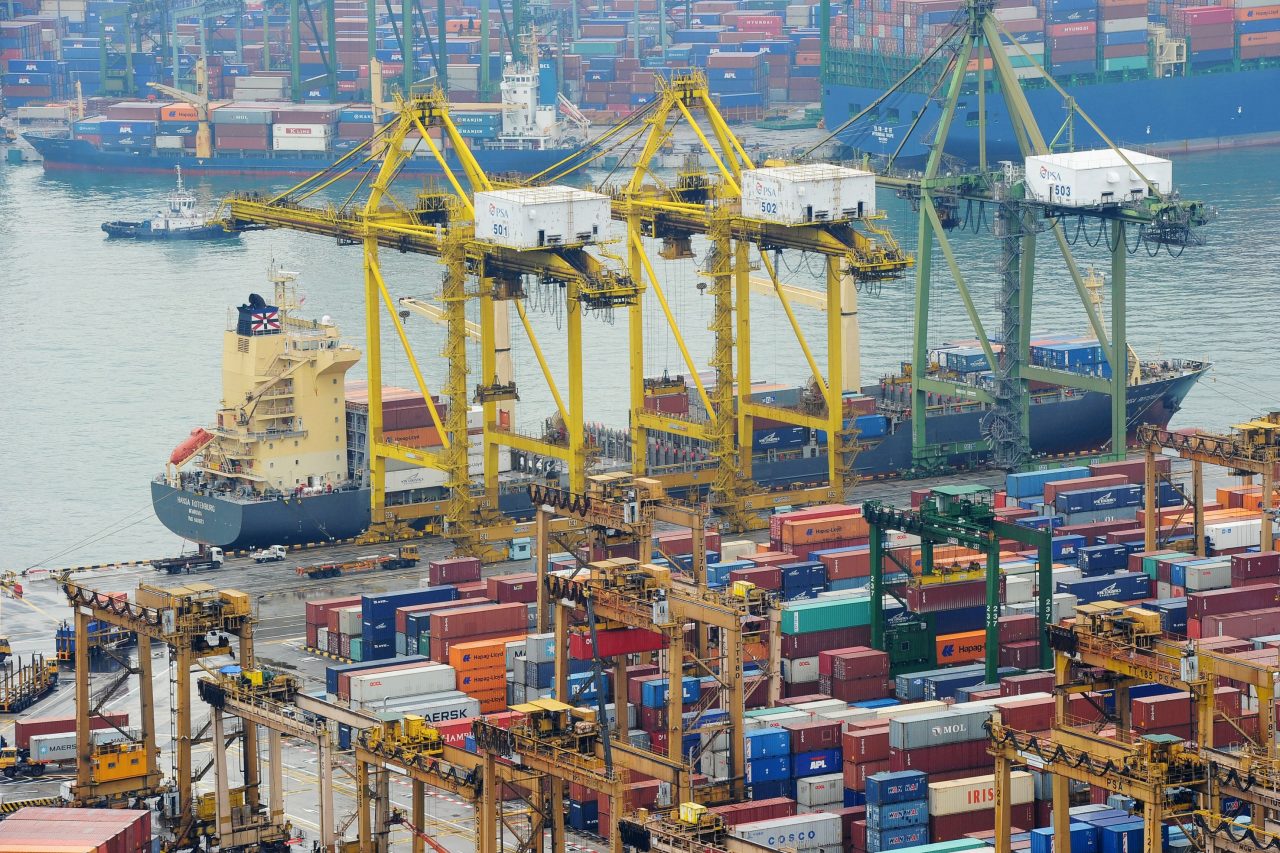
SEREC’s analysis reveals that the average cargo dwell time at Nigerian ports — the number of days a shipment sits at port before being cleared — currently stands at a staggering 18 to 25 days. The global benchmark is between 3 and 7 days.
Every additional day a container sits idle costs between $200 and $400, and when multiplied across the volume of Nigeria’s seaborne trade, the result is an estimated $3 to $5 billion in annual economic losses attributable to port delays alone.
The picture grows bleaker when one considers the concentration of risk. Over 70% of Nigeria’s seaborne trade passes through Lagos ports — a chokepoint of extraordinary fragility.
Truck turnaround delays stemming from congestion at these ports cost the economy an estimated N250 billion annually, while supply chain disruptions attributable to this bottleneck are valued at another N500 billion per year.
Then there is the human cost of an antiquated clearance system. SEREC found that the persistence of manual, fragmented cargo clearance processes — where human interfaces at multiple points invite both delays and informal charges — inflates transaction costs by 15% to 25% per cargo movement. Annual leakages and informal charges from these processes are estimated at between N300 billion and N600 billion— a shadow tax that Nigerian importers and exporters pay, often without formal recourse.
Perhaps the most striking finding in SEREC’s advisory is not what Nigeria is losing, but what it is leaving on the table.
Nigeria’s inland waterways — a vast, natural network of rivers and tributaries stretching across the country — represent what SEREC describes as the nation’s “fastest, cheapest, and most scalable logistics solution.” Yet the barge sector, which could serve as a critical pressure valve for the overburdened Lagos ports, is currently operating at only 30% of its potential capacity.
Total annual cargo throughput via barges currently stands at between 80 and 120 million tonnes, generating an estimated economic value of between N500 billion and N1 trillion — a figure that could be dramatically higher with the right policy support.
SEREC projects that a fully optimised barge sector could reduce port congestion by 30% to 40%, cut cargo evacuation costs by 20% to 35%, and save Nigerian roads — many of which are being destroyed by heavy freight trucks — over N200 billion annually in maintenance costs.
“Barging represents Nigeria’s fastest, cheapest, and most scalable logistics solution — yet remains policy-neglected,” Nweke stated pointedly in the advisory.
The establishment of the Federal Ministry of Marine and Blue Economy under President Bola Tinubu’s administration was widely hailed as a signal of renewed federal commitment to maritime development. SEREC, however, is careful to distinguish between institutional intent and measurable economic output — and it finds the gap between the two deeply concerning.
If Nigeria’s blue economy policy is effectively implemented, SEREC projects that the sector could generate between N3 trillion and N5 trillion annually within five to seven years, create between 2 and 3 million direct and indirect jobs, and contribute 15% to 20% to non-oil GDP — a contribution that could meaningfully accelerate Nigeria’s long-stated goal of economic diversification.
But SEREC is equally clear that these outcomes will not materialise through goodwill alone. The advisory identifies several systemic policy failures that must be urgently addressed: the absence of financial modelling in maritime planning; weak prioritisation of inland waterways; a lack of a coordinated execution framework; continued over-reliance on Lagos-centric port operations; and the stubbornly low adoption of automation and digital systems across port operations.
SEREC is not content to diagnose the problem without prescribing solutions. The group is calling for the establishment of a Maritime Economic Intelligence Framework— a real-time monitoring system that tracks maritime GDP contributions, trade cost indicators, and mandates return-on-investment analyses for all maritime projects.
Central to its reform agenda is the creation of a N500 billion National Barge Development Fund, structured as a public-private financing vehicle to drive fleet expansion, terminal development, and regulatory modernisation. SEREC further recommends an ambitious but achievable target: routing 50% of Nigeria’s cargo evacuation through inland waterways within five years.
Crucially, SEREC is urging that the National Marine and Blue Economy Policy be converted from a static government document into a budget-linked, annually reviewed execution roadmap — a living instrument with teeth, not a policy shelf ornamen.
Nigeria’s maritime sector stands at a genuine crossroads. The losses are real, the opportunities are immense, and the policy tools — if deployed with discipline and urgency — are within reach. What has historically been absent, SEREC argues, is not the knowledge of what must be done, but the institutional will to do it.
With N1.8 trillion leaving the economy every year through maritime inefficiency alone, the cost of continued inaction is no longer abstract. It is measured in trillions of naira, in millions of jobs not created, and in a blue economy that remains, for now, more blueprint than reality.
The question is no longer whether Nigeria can afford to fix its maritime sector. Increasingly, the evidence suggests it can no longer afford not to.
WHAT YOU SHOULD KNOW
Nigeria’s maritime sector is losing N1.8 trillion annually due to decades of policy neglect, port inefficiency, and the absence of a national shipping line — losses that have accumulated to over $15 billion in recent years.
Congested ports, cargo delays four times above the global average, rampant informal charges, and an underutilised inland waterway network are collectively draining an economy that can ill afford it.
The hard truth is this: Nigeria is paying a massive, self-inflicted economic tax every single day it delays maritime reform.
The potential is not in question — a well-executed blue economy strategy could generate up to N5 trillion annually and millions of jobs within a decade. What has consistently failed is the political will to translate policy documents into concrete, funded, and measurable action.
Until Nigeria treats its maritime sector not as a peripheral infrastructure concern but as a strategic economic priority, the hemorrhage will continue — and the opportunity of a generation will remain just that: an opportunity, unrealised.