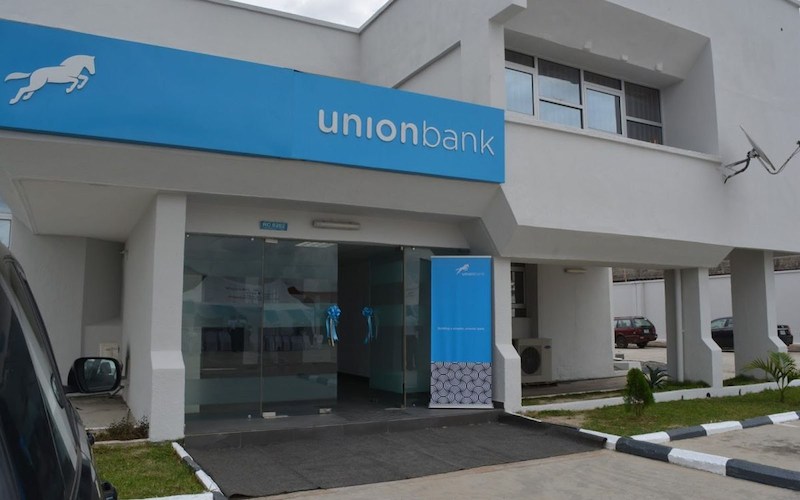
A Federal High Court in Lagos has nullified the Central Bank of Nigeria’s (CBN) January 2024 removal of Union Bank’s board and management, ruling that the apex bank overstepped its legal authority.
Justice Chukwujekwu Aneke, delivering judgment on Wednesday, set aside all decisions taken by the CBN-appointed board and ordered the immediate reinstatement of the bank’s former board and management.
The court further restrained the CBN, its agents, and appointees from taking any further steps concerning the bank, including actions relating to its proposed recapitalization or any associated measures.
The verdict is a stinging judicial rebuke to the apex bank and raises uncomfortable questions about the limits of regulatory power in Nigeria’s banking sector.
The seeds of this dispute were sown on January 10, 2024, when the CBN dissolved the boards and management of Union Bank, alongside Keystone Bank and Polaris Bank, citing non-compliance with provisions of the Banks and Other Financial Institutions Act (BOFIA) 2020.
The alleged infractions, according to the regulator, ranged from regulatory non-compliance and corporate governance failures to activities said to pose a threat to financial stability.
In Union Bank’s case, the apex bank appointed Yetunde Oni as managing director and chief executive officer and Mannir Ubali Ringim as executive director, installing an entirely new leadership structure overnight.
The move, coming barely weeks after special investigator Jim Obazee submitted a report to President Bola Tinubu on the CBN and related entities, was widely seen as part of a broader governance clean-up drive.
But not everyone accepted it quietly.
Union Bank’s core shareholders — Titan Trust Bank, Luxis International, and Magna International — refused to accept the boardroom purge lying down, challenging the CBN’s move in court and arguing that the regulator had overstepped its legal authority.
They urged the court to restrain the CBN, Union Bank, and the appointed directors from taking further steps pending the determination of the suit. On December 5, 2025, the court granted interim relief in favor of the applicants before proceeding to hear the substantive matter. It was a first victory, and Wednesday’s judgment has now made it definitive.
The defendants named in the suit formed a lengthy roll call of individuals and institutions, including the CBN Governor, the CBN itself, and all the key figures installed in Union Bank’s new leadership structure following the January 2024 dissolution.
Legal analysts say Justice Aneke’s ruling goes beyond the fortunes of one bank. By declaring the CBN’s action ultra vires—a Latin term meaning beyond one’s legal powers—the court has drawn a firm line in the sand around the limits of regulatory intervention in the Nigerian banking system.
With Wednesday’s ruling, the court has effectively invalidated all actions taken by the apex bank in respect of the bank’s leadership change, setting the stage for a major shake-up in Union Bank’s governance structure.
The decision also throws into question the legal basis of the CBN’s broader January 2024 intervention, which swept through three banks simultaneously. While Keystone Bank’s situation has since evolved along a different legal trajectory—ultimately resulting in a government takeover—Union Bank’s shareholders have now secured a judicial vindication that could become a template for future challenges to regulatory overreach.
The Central Bank had long maintained it had the legal muscle to act as it did. Under BOFIA 2020, the CBN has historically invoked provisions granting the governor powers to remove bank directors in situations of corporate governance failure or financial instability—a power it exercised as far back as 2009 against Union Bank itself and again in 2016 against Skye Bank and in 2021 against First Bank.
But Wednesday’s ruling suggests that legal authority, however broad in statute, is not without judicial oversight—and that when it comes to dissolving boards and installing new management, the courts will scrutinize whether due process was followed and whether the specific grounds for action were lawfully established.
The immediate practical consequence is a governance reversal at Union Bank. The former board and management must now be restored, while the CBN-installed leadership is effectively shown the door by court order. Any recapitalization plans tied to the CBN-appointed board are also frozen pending compliance with the court’s directives.
Whether the CBN will appeal the ruling remains to be seen. The apex bank, which has not yet issued a public response to the judgment, faces a delicate decision—contesting the ruling risks prolonging uncertainty at one of Nigeria’s oldest financial institutions, but accepting it sets a precedent that could constrain future regulatory interventions.
For Union Bank’s core shareholders, however, Wednesday was a day of vindication—one that affirms, in the words of the court, that even Nigeria’s most powerful regulator is not above the law.
WHAT YOU SHOULD KNOW
A Federal High Court in Lagos has ruled that the Central Bank of Nigeria acted beyond its legal authority when it dissolved the board and management of Union Bank of Nigeria in January 2024, ordering the immediate reinstatement of the bank’s former leadership.
The judgment is a landmark reminder that regulatory power, no matter how broad, is not absolute—and that Nigeria’s courts stand ready to hold even its most powerful institutions accountable when due process is not followed.