European countries are preparing to restart diplomatic discussions with Iran over its nuclear programme, marking the first round of negotiations since the United States launched airstrikes on Iranian nuclear sites last month.
This development was confirmed on Sunday by a German diplomatic source who spoke to AFP.
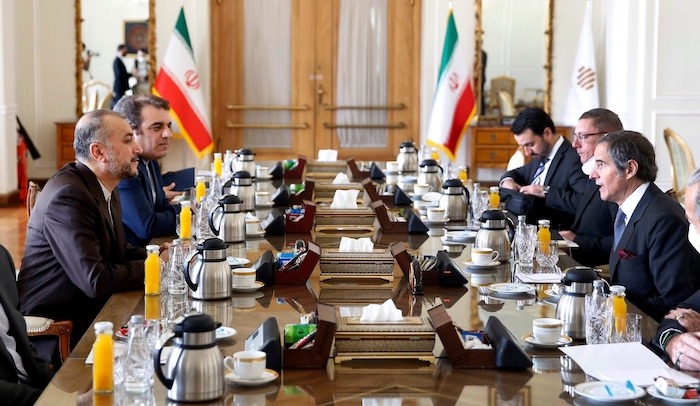
The diplomatic trio—Britain, France, and Germany, collectively referred to as the E3—“are in contact with Iran to schedule further talks for the coming week,” the source disclosed.
In the lead-up to this announcement, the E3 had warned that if Tehran did not re-engage in the nuclear dialogue, longstanding international sanctions could be reinstated. Their concerns were echoed by Iran’s semi-official Tasnim news agency, which cited an unnamed source confirming Tehran’s agreement to resume discussions with the European bloc. However, final arrangements regarding the venue and timing remain under negotiation.
A senior German diplomat emphasized, “Iran must never be allowed to acquire a nuclear weapon.” The source added that Germany, France, and the United Kingdom are intensifying efforts under the E3 platform to secure a lasting and verifiable diplomatic resolution to Iran’s nuclear ambitions.
Allegations that Iran is working towards developing nuclear arms have long circulated among Western countries and Israel, though Tehran has consistently denied such intentions.
Recent military actions have further inflamed the situation. On June 13, Israel conducted surprise strikes on Iranian facilities, escalating regional hostilities. Just days later, on June 22, the United States launched its own offensive, targeting sensitive Iranian nuclear locations including Fordo in Qom province, Isfahan, and Natanz.
Before the escalation, nuclear negotiations had been ongoing between Tehran and Washington, facilitated by mediators in Oman. However, the decision by US President Donald Trump to support Israel’s strikes effectively dismantled the fragile progress of those discussions.
The E3 and Iran last convened in Geneva on June 21—just a day before the American strikes took place. Meanwhile, diplomatic efforts took an unexpected turn on Sunday when Russian President Vladimir Putin hosted a surprise Kremlin meeting with Ali Larijani, a key adviser on nuclear affairs to Iran’s Supreme Leader.
According to Kremlin spokesperson Dmitry Peskov, Larijani shared insights into the deteriorating conditions in the Middle East and ongoing tensions surrounding Iran’s nuclear programme. In response, Putin reiterated Russia’s commitment to political solutions and regional stability. Though Moscow maintains close ties with Iran, it has not strongly backed its ally following the Israeli-American strikes.
In a related development, the possibility of activating the Joint Comprehensive Plan of Action’s (JCPOA) “snapback” mechanism has reemerged. This mechanism enables the automatic reinstatement of UN sanctions should Iran be found in violation of the 2015 nuclear agreement.
The original JCPOA deal, which imposed strict limits on Iran’s nuclear activities in exchange for sanctions relief, began unraveling in 2018 when President Trump unilaterally withdrew the US from the pact and reimposed economic penalties on Tehran.
Following renewed calls for sanctions, Iran’s Foreign Minister Abbas Araghchi pushed back, asserting after a call with European leaders that they had “absolutely no moral (or) legal grounds” to reimpose the snapback provisions. In a statement shared on social media, he added: “Through their actions and statements, including providing political and material support to the recent unprovoked and illegal military aggression of the Israeli regime and the US… the E3 have relinquished their role as ‘Participants’ in the JCPOA.”
Araghchi concluded that any move to restore prior UN Security Council sanctions would be “null and void,” noting that while Iran is open to genuine diplomacy, it is equally capable of resisting foreign aggression.
Despite Tehran’s firm stance, the German source reiterated that if the upcoming talks do not yield progress, “snapback remains an option for the E3.”
Adding to Iran’s unyielding position, Ali Velayati—an influential adviser to Supreme Leader Ayatollah Ali Khamenei—announced last week that Tehran would not engage in further talks with the US if doing so required halting its uranium enrichment programme.
What you should know
Iran’s nuclear programme remains one of the most contentious issues in global diplomacy. Although Tehran insists its efforts are peaceful, Western countries and Israel remain skeptical.
The 2015 JCPOA was an attempt to curb Iran’s nuclear capabilities, but tensions flared after the US withdrawal in 2018. Now, with military strikes and renewed threats of sanctions, the outcome of the upcoming E3-Iran talks could significantly shape the future of regional stability and global nuclear policy.