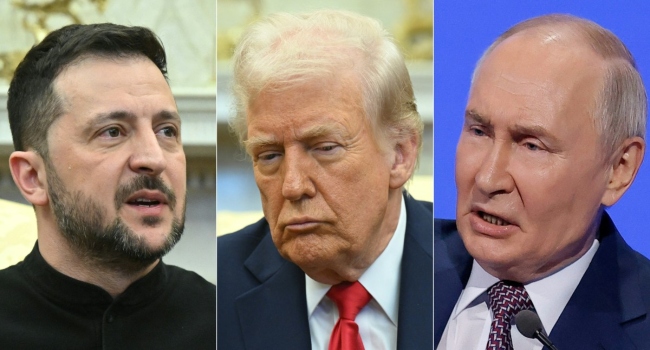
President Donald Trump announced on Monday that the United States would resume sending military aid to Ukraine, following recent advances by Russian forces and mounting Ukrainian pleas for support.
The decision comes after a brief and unexpected pause in weapons shipments, which left Ukrainian officials scrambling for answers as they faced some of the heaviest aerial attacks since the war began.
Speaking to journalists at the White House, Trump acknowledged the severity of the situation on the ground in Ukraine. “We’re going to have to send more weapons, defensive weapons primarily,” he said.
Describing the latest escalation, he added, “They’re getting hit very, very hard,” while reiterating his dissatisfaction with Russian President Vladimir Putin. Trump has publicly pushed for peace negotiations between both sides, but Putin has continued to reject calls for a ceasefire, instead demanding territorial concessions from Kyiv.
The announcement of renewed support followed reports from Moscow that Russian troops had seized the village of Dachne in Ukraine’s central Dnipropetrovsk region, marking Russia’s first claimed territorial gain in the area after months of advancing efforts.
The region, a critical industrial and mining hub, has increasingly come under missile and drone fire from Russian forces, escalating pressure on Ukrainian defenses.
Although Ukraine’s military denied that Dachne had fallen and reported it had “repelled” Russian attacks in the region, the situation remains highly contested.
Ukrainian military analyst Oleksiy Kopytko acknowledged the difficulty of the ongoing battle. “Our troops are holding their ground quite steadily,” he said, while noting that Russia’s broader aim may be to create a buffer zone in Dnipropetrovsk, which could have both economic and strategic implications for Ukraine’s war effort.
The Dnipropetrovsk region is not among the five territories, Donetsk, Kherson, Lugansk, Zaporizhzhia, and Crimea, that Moscow has formally claimed as part of the Russian Federation. Nevertheless, the apparent push into this industrial heartland has prompted serious concern in Kyiv.
Prior to Trump’s pledge, the White House had paused some arms transfers that had been initiated under President Joe Biden, offering little clarity on the specific equipment affected.
This decision came as part of a broader reassessment of America’s defense priorities and global security obligations. Despite the shift in leadership, Ukraine has consistently warned that any lapse in US military aid could leave it exposed to devastating consequences, especially in the face of intensified Russian assaults.
Under the previous administration, the United States committed over $65 billion in military assistance to Ukraine. Trump, since returning to office, had not yet unveiled a new aid package until Monday’s announcement.
His administration has instead focused on diplomatic outreach, including direct calls with Putin, aimed at pressuring both parties toward peace. Yet the Kremlin has continued to insist on Ukraine ceding more territory before it will consider ending hostilities, a condition Kyiv has flatly rejected.
Meanwhile, Ukraine’s President Volodymyr Zelensky stressed the critical importance of air defense systems in the ongoing conflict. “Air defence remains the top priority for protecting lives,” he said, underscoring Ukraine’s reliance on its partners to deliver on previously agreed support.
The call for assistance comes as explosions were reported overnight in Mykolaiv, a southern city once again targeted by Russian drones. Local officials confirmed that shelling led to a fire on the city’s outskirts and left a 51-year-old man wounded.
While Trump’s critics have questioned his delay in reauthorizing weapons support, Monday’s announcement signals a renewed, if cautious, commitment to bolstering Ukraine’s defense amid growing international scrutiny and a rapidly evolving battlefield.
What You Should Know
President Donald Trump has agreed to send more defensive weapons to Ukraine after pausing aid deliveries earlier in the month. His decision comes as Russian forces claimed their first advance into the Dnipropetrovsk region and launched intensified drone and missile attacks.
The situation remains volatile, with Ukrainian officials emphasizing the urgent need for air defense systems and clarity from allies.