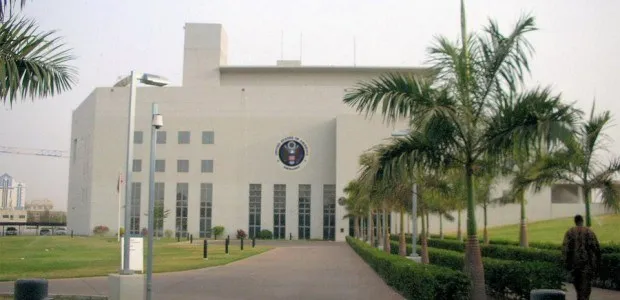
The United States Embassy in Nigeria has cancelled all visa appointments scheduled for Wednesday, March 4, 2026, citing a high potential for protests in Abuja as tensions escalate between the United States and Iran.
In a statement published on its website, the embassy warned of “potential demonstrations” in the Federal Capital Territory and advised American citizens to remain indoors.
“The U.S. Embassy in Abuja informs U.S. citizens that there is a high potential for protests in Abuja tomorrow, March 4, 2026, due to the current conflict with Iran,” the statement read.
“Previous protests by some groups have resulted in violent clashes between the groups and Nigerian security forces. The Embassy strongly recommends that all U.S. citizens in Abuja remain in their residences on Wednesday, March 4.”
The development comes four days after joint US-Israeli airstrikes reportedly killed Iran’s Supreme Leader, Ali Khamenei, along with several other senior Iranian officials, prompting swift retaliation from Tehran.
In response, Iran launched multiple missiles targeting U.S. bases in Gulf countries, including Saudi Arabia, vowing to avenge the deaths of its top leadership figures. The conflict, which began over the weekend, entered its fifth day on Tuesday with no signs of easing.
US President Donald Trump said it was too late for Iran to pursue negotiations despite signals from Tehran indicating interest in talks.
In a post on Truth Social, Trump wrote, “Their air defense, Air Force, Navy, and Leadership is gone. They want to talk. I said ‘Too Late!’”
Speaking at the White House during a meeting with Friedrich Merz, Trump claimed the attacks had caused extensive damage.
“Just about everything’s been knocked out,” he said.
He also asserted that Iran had been preparing to strike first, contradicting earlier remarks by w suggesting Israel initiated the conflict.
“I think they were going to attack first, and I didn’t want that to happen. So, if anything, I might have forced Israel’s hand,” Trump stated.
Addressing concerns about the aftermath, Trump said a worst-case scenario would be the emergence of a successor similar to the late Iranian leader.
“I guess the worst case would be, we do this, and then somebody takes over who’s as bad as the previous person,” he said. “That could happen. We don’t want that to happen.”
He further claimed that two waves of strikes had eliminated individuals considered potential successors.
However, Iran dismissed the prospect of negotiations. Mohammad Mokhber, a senior aide to Khamenei, said there was “no basis for any negotiations with them”, adding, “We can continue the war as long as we want.”

Meanwhile, Iran announced plans to hold a three-day state funeral for Khamenei, according to official news agency IRNA. Authorities said members of the public would be allowed to pay their respects at the Imam Khomenei Grand Mosque in Tehran before his burial in Mashhad, his hometown in northeastern Iran.
What you should know
The US Embassy in Abuja has cancelled visa appointments for March 4 over fears of protests linked to the escalating US-Iran conflict.
The development follows the reported killing of Iran’s Supreme Leader, Ali Khamenei, in US-Israeli strikes and subsequent retaliatory attacks.
As tensions deepen, diplomatic warnings and strong rhetoric from both sides suggest the crisis may persist.