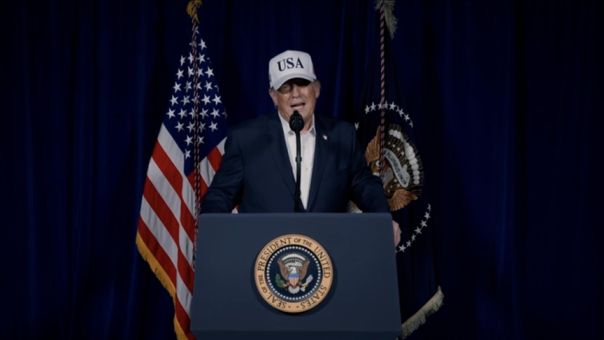
US President Donald Trump said Monday that he is not ruling out deploying American ground troops to Iran, as he warned of a major escalation in the ongoing US military campaign.
The 79-year-old Republican, who has long criticised past US military interventions in the Middle East, ordered large-scale strikes against Iran starting Saturday. So far, the assault has been conducted through aerial attacks involving missiles and bombs.
However, Trump declined to dismiss the possibility of sending troops on the ground.
“I don’t have the yips with respect to boots on the ground,” Trump said, using a golf term for anxiety. “Every president says, ‘There will be no boots on the ground.’ I don’t say it.”
“I say ‘probably don’t need them,’ (or) ‘if they were necessary,’” he told the New York Post.
Speaking to CNN, Trump signalled that a significant escalation is imminent.
“We haven’t even started hitting them hard. The big wave hasn’t even happened,” he said. “The big one is coming soon.”
Expanding Conflict
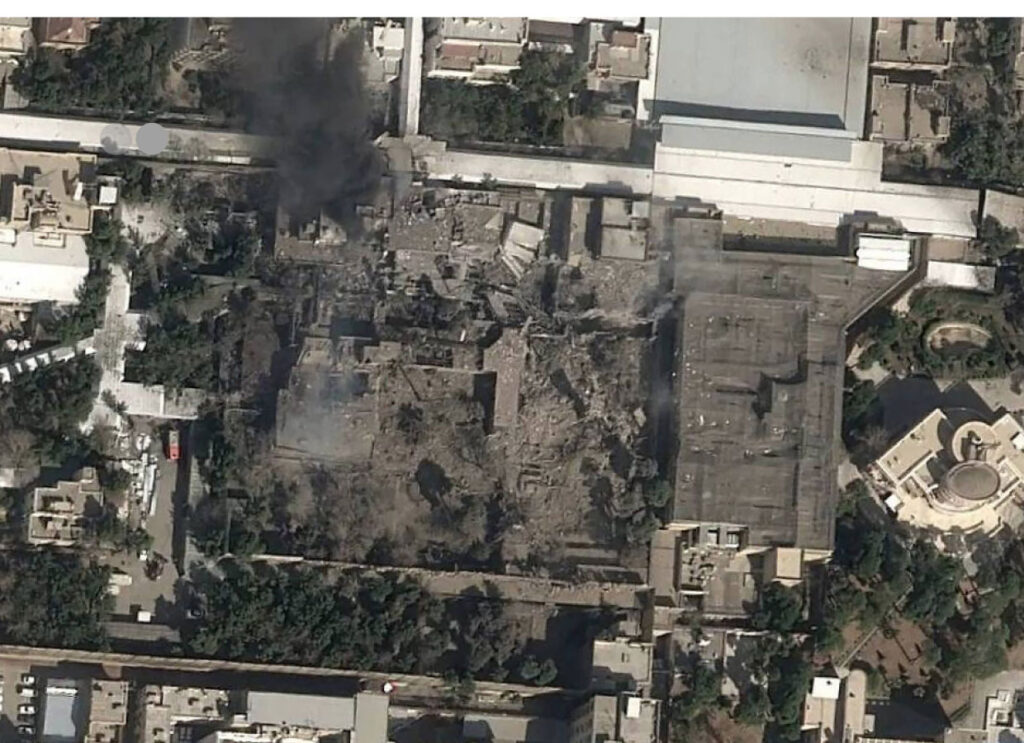
US and Israeli forces have reportedly struck hundreds of targets across Iran, including missile sites, naval assets and command-and-control centres.
Four US military personnel have been confirmed killed, and three fighter jets were shot down—officially described as friendly fire incidents.
Iran has responded with missile strikes targeting Israel, US bases across the region and facilities in Bahrain, Jordan, Kuwait, Qatar and the United Arab Emirates—developments Trump described as “the biggest surprise.”
Timeline and Military Capacity
Speaking at the White House during an award ceremony, Trump suggested the US campaign could extend beyond the previously discussed four-to-five-week timeframe.
“We’re already substantially ahead of our time projections,” he said. “From the beginning we projected four to five weeks, but we have capability to go far longer than that. We’ll do it.”
Defense Secretary Pete Hegseth also declined to rule out troop deployment inside Iran.
Asked whether US troops were already on the ground, Hegseth said, “No, but we’re not going to go into the exercise of what we will or will not do.”
“We’ll go as far as we need to go,” he added.
On the potential duration of the war, Hegseth said, “Four weeks, two weeks, six weeks, it could move up. It could move back.”
‘Not Iraq, Not Endless’

Hegseth sought to distinguish the Iran campaign from previous US wars in Iraq and Afghanistan, saying it would not involve nation-building efforts.
“No stupid rules of engagement, no nation building quagmire, no democracy-building exercise. No politically correct wars. We fight to win and we don’t waste time or lives,” he said.
“This is not Iraq. This is not endless,” he added.
Also speaking at the briefing, General Dan Caine, the top US military officer, said American forces had established local air superiority over Iran.
Strikes by US forces “resulted in the establishment of local air superiority. This air superiority will not only enhance the protection of our forces, but also allow them to continue the work over Iran,” Caine said.
What you should know
President Donald Trump has refused to rule out deploying US ground troops to Iran, warning that a larger wave of attacks is imminent.
While the campaign has so far relied on aerial strikes, US officials say the operation could expand and last longer than initially projected.
Defense Secretary Pete Hegseth and military leaders say all options remain on the table as the conflict intensifies.