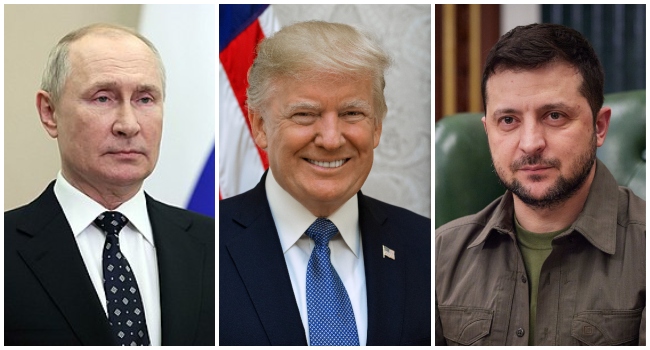
US President Donald Trump said on Sunday that he believes the leaders of Ukraine and Russia are genuinely committed to ending the war, as he held separate talks with both men in what he described as the final phase of his diplomatic push to secure peace.
Trump, who had pledged to end the conflict on the first day of his presidency, said he has set no deadline but is intensifying efforts toward a breakthrough, as he hosted Ukrainian President Volodymyr Zelensky at his Florida estate.
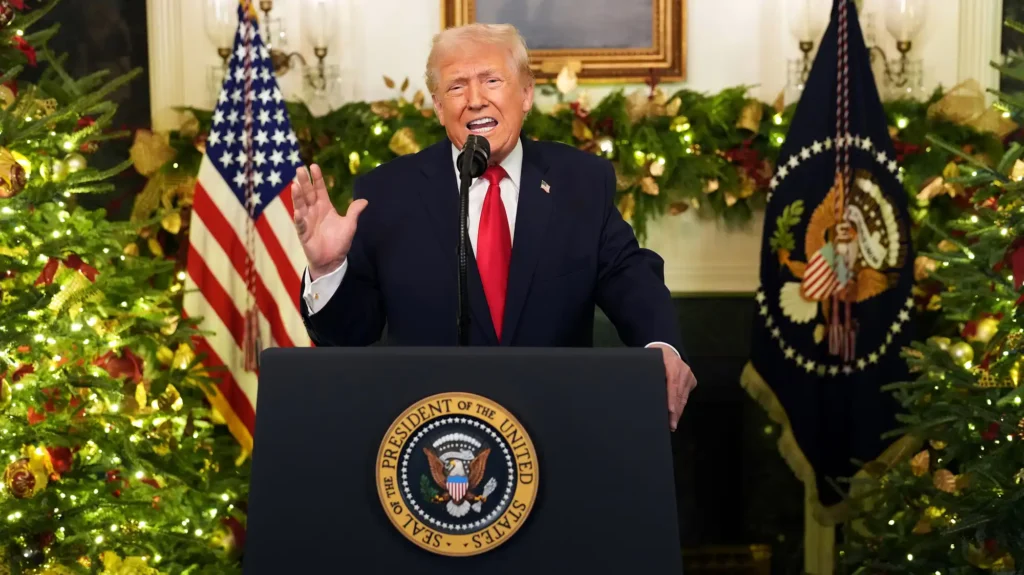
The meeting marked a renewed attempt to revive stalled negotiations nearly four years into the war.
As was the case during Zelensky’s previous visit in October, Russian President Vladimir Putin spoke with Trump by telephone shortly before the Ukrainian leader arrived. The US president expressed fresh optimism about working with Moscow, which has been pushing to avoid tougher pressure from Ukraine’s allies in Washington and Europe.
Trump’s upbeat tone came despite deep skepticism across Europe, particularly after Russia launched another heavy missile and drone attack on Kyiv just as Zelensky was en route to Florida. Asked whether Putin could be serious about peace in light of the bombardment, Trump replied: “He’s very serious.”
“I can say that I believe Ukraine has made some very strong attacks also, and I don’t say that negatively. I think you probably have to,” Trump said outside his estate.
Ahead of the meeting, Trump wrote on social media that his conversation with Putin had been “very productive.” Standing alongside Zelensky at the entrance, with cameras rolling, Trump said any emerging agreement would benefit Ukraine.
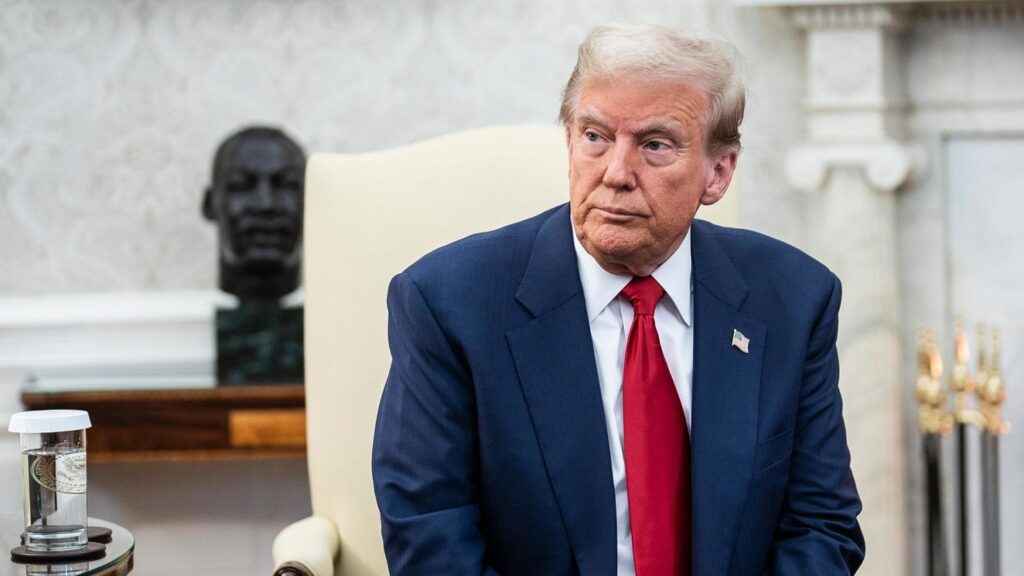
“There will be a security agreement. It’ll be a strong agreement,” Trump said.
“And the European nations are very much involved in that. They’ll be very much involved in protection, et cetera,” he added.
Trump’s advisers have previously floated the idea of NATO-style security guarantees for Ukraine, which would imply a collective military response should Russia attack again.
Russia, however, offered a sharper interpretation of Trump’s call with Putin. The Kremlin said Trump agreed that a simple ceasefire “would only prolong the conflict,” while reiterating demands that Ukraine concede territory.
Zelensky, who has previously been criticized by Trump, has sought to align himself with the broad outlines of the US president’s peace approach. Putin, by contrast, has shown no clear sign of accepting the proposal.
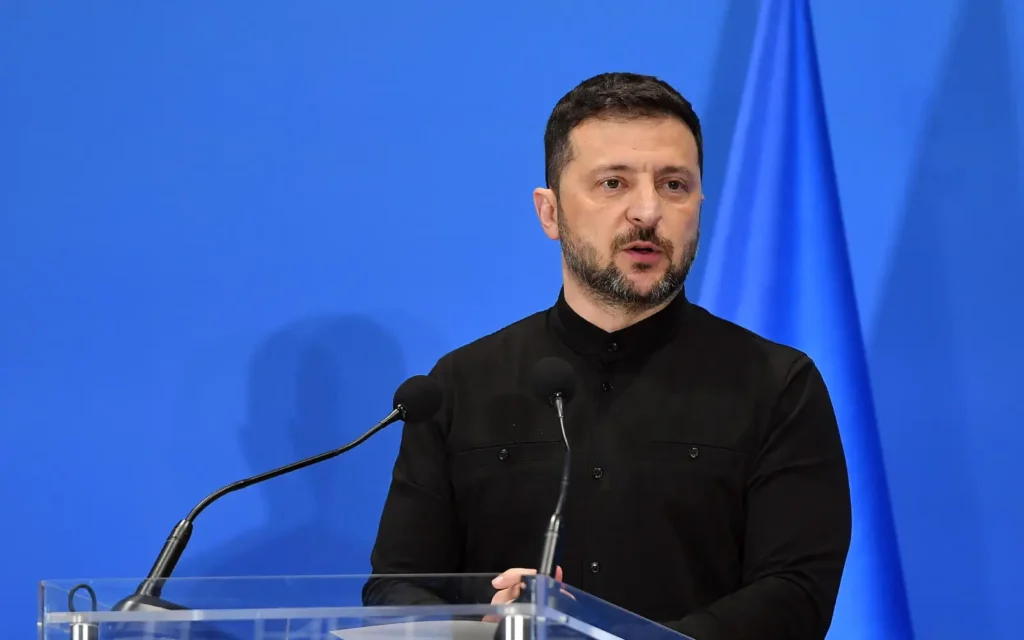
During their October meeting, Trump declined Zelensky’s request for long-range Tomahawk missiles, again suggesting at the time that Putin was signaling goodwill.
Sunday’s talks between Trump and Zelensky were expected to last about an hour, after which both leaders planned to hold a joint call with key European allies. Trump and Putin were also scheduled to speak again later in the day.
Polish Prime Minister Donald Tusk, who is expected to join the call, wrote on X that the Russian attacks on Kyiv were “contrary to President Trump’s expectations and despite the readiness to make compromises” by Zelensky.
The latest Russian assault temporarily knocked out power and heating for hundreds of thousands of Kyiv residents during freezing conditions.
The revised peace proposal, shaped by weeks of US-Ukraine negotiations, would halt the war along current front lines and could require Ukrainian forces to pull back from parts of the east, creating demilitarized buffer zones. It represents Kyiv’s clearest acknowledgment yet that territorial concessions may be necessary.
However, the plan does not include Ukraine withdrawing from the 20 percent of eastern Donetsk region it still controls, a central demand from Moscow.
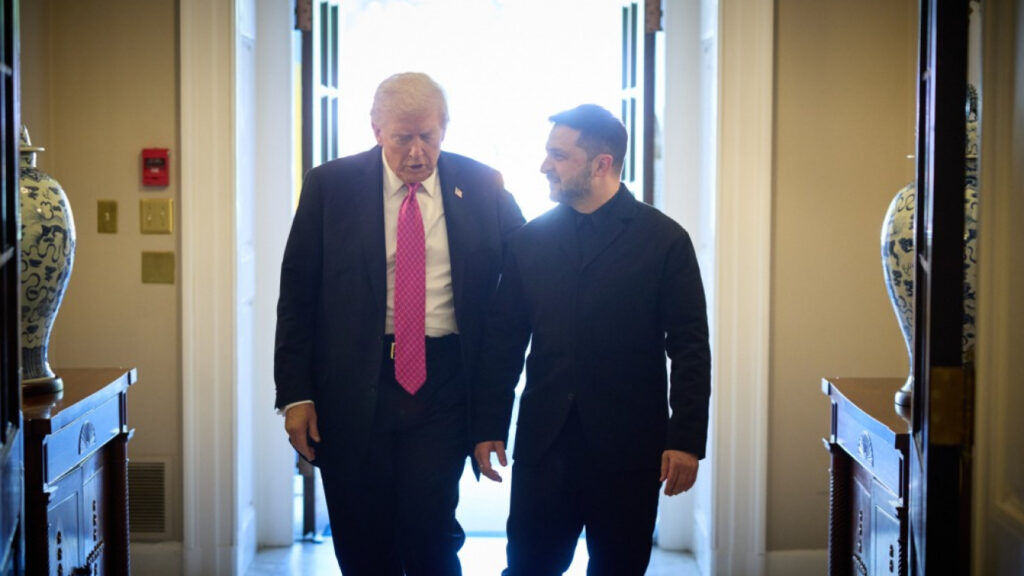
Zelensky struck a cautious but positive tone during the meeting, saying: “It’s very important to our teams talk about strategy.”
The two leaders then moved into Trump’s dining room with senior aides, as the president asked reporters to leave for lunch.
Russia has accused Ukraine and its European partners of attempting to “torpedo” an earlier US-backed peace effort. Moscow’s recent battlefield advances, including the capture of two more eastern towns announced on Saturday, are widely seen as strengthening Russia’s negotiating position.
“If the authorities in Kyiv don’t want to settle this business peacefully, we’ll resolve all the problems before us by military means,” Putin said on Saturday.
What you should know
Donald Trump has made ending the Ukraine war a defining promise of his presidency, positioning himself as a dealmaker capable of bridging deep divisions.
While Ukraine has shown increased flexibility by engaging with US-backed proposals that include possible territorial compromises, Russia continues to press its advantage on the battlefield. European leaders remain wary of Putin’s intentions, particularly as attacks continue alongside talks.
Any lasting settlement is expected to hinge on credible security guarantees for Ukraine, the role of European allies, and whether Moscow is willing to stop short of its maximal territorial demands.