IEA Chief Fatih Birol warned Monday that the Middle East war has triggered an energy crisis that poses a ‘major threat’ to the global economy, leaving no nation safe from its impact.
Birol did not mince words when categorizing the current instability triggered by the escalating conflict in the Middle East. He framed the situation as a historical anomaly—a “triple threat” that surpasses previous shocks in both scale and complexity.
“This crisis, as things stand, is now two oil crises and one gas crash put all together,” Birol warned. By comparing the current climate to the 1973 oil embargo and the 2022 energy spike following Russia’s invasion of Ukraine, the IEA chief signaled that the world is no longer dealing with a temporary price hike but a fundamental breakdown of the energy supply chain.
At the heart of the volatility is the Strait of Hormuz, a narrow but vital artery for the world’s energy needs. As the war enters its fourth week, a diplomatic and military standoff has brought transit to a virtual standstill.
The Volume: Approximately 20% of the world’s daily oil and gas consumption flows through this passage.
The Standoff: President Donald Trump has demanded that Tehran immediately reopen the waterway, while tit-for-tat threats continue to escalate between Washington and the Islamic Republic.
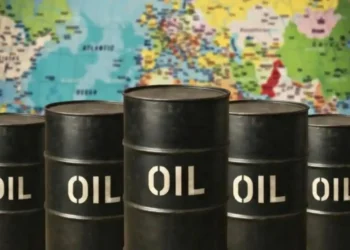
The Market Reaction: The “Hormuz Bottleneck” has sent shockwaves through the commodities market. On Monday, US benchmark crude briefly breached the psychologically significant $100-per-barrel mark.
Perhaps most alarming was Birol’s revelation regarding the physical destruction of energy infrastructure. The conflict has moved beyond rhetoric and into the systematic dismantling of production capabilities.
Birol confirmed that at least 40 energy assets, including refineries, pipelines, and storage facilities, have been “severely or very severely” damaged. This destruction spans nine countries across the region, suggesting a regional contagion that could take years and billions of dollars to repair.
“No country will be immune to the effects of this crisis if it continues to go in this direction. So there is a need for global efforts,” Birol stated, calling for an unprecedented level of international cooperation to prevent a total economic derailment.
As petroleum shipments remain nearly halted, the “major, major threat” Birol described is transitioning from a forecast to a lived reality for the global consumer. With supply lines severed and infrastructure in ruins, the IEA’s message is clear: the era of cheap, stable energy has been replaced by a period of extreme vulnerability.
WHAT YOU SHOULD KNOW
The global economy is facing a historic “triple threat” that merges the volatility of the 1970s with modern supply chain failures. With the Strait of Hormuz effectively blocked and 40 critical energy assets damaged across nine countries, the crisis has pushed oil to $100 per barrel, creating a supply shock that no nation—regardless of its wealth or location—can escape.