The Nigerian National Petroleum Company (NNPC) has seized on the U.S.-Iran conflict, sharply hiking the official selling prices of all 37 Nigerian crude grades for May loading cargoes in what analysts describe as an unusually aggressive pricing move.
The decision, which sent immediate signals through trading floors from London to Singapore, reflects a broader geopolitical reality: war in the Middle East has become a revenue opportunity for oil-exporting nations far removed from the theater of conflict.
Nigeria’s flagship crude grade, Bonny Light, has been repriced upward by $6.13 per barrel for May-loading cargoes compared to April, while the Forcados grade, another premium Nigerian export, has climbed even higher, rising by $7.01 per barrel.
The scale of these increases is remarkable, representing some of the sharpest month-on-month adjustments seen in Nigeria’s crude pricing history outside of the COVID-era collapse.
Central Bank of Nigeria data shows that Bonny Light was trading at approximately $136.74 per barrel in mid-April 2026, a dizzying altitude for a grade that, just weeks ago, was considered moderately priced.
The CBN’s own records confirm that Bonny Light was hovering around $74 per barrel before the Middle East crisis dramatically escalated on February 28, meaning the grade has nearly doubled in price in just two months, a staggering appreciation driven almost entirely by the guns of war.
The backdrop to Nigeria’s pricing maneuver is a global oil market gripped by fear. Brent futures climbed above $110 per barrel as analysts and industry voices increasingly raised alarm that the U.S.-Iran conflict could degenerate into a prolonged, open-ended confrontation, which some in the market have begun calling a “forever” conflict.
Those fears deepened following the failure of weekend talks in Islamabad, after which U.S. President Donald Trump publicly stated he was “unhappy” with Tehran’s posture on ceasefire proposals. The diplomatic impasse, combined with persistent military pressure, has left oil traders pricing in disruption for the foreseeable future rather than a near-term resolution.
Adding another layer of complexity to an already volatile market was the sudden announcement of the United Arab Emirates’ exit from OPEC, a development that rattled market participants and triggered speculation about a broader realignment of Middle Eastern energy policy.
The UAE’s departure, a seismic institutional break, raised immediate questions about cohesion within the cartel and whether other Gulf producers might follow suit.
At the heart of global energy anxiety lies the Strait of Hormuz, the narrow waterway through which roughly a fifth of the world’s oil supply passes. The CBN reported that Bonny Light gained nearly $2 in a single day on Monday amid speculation that Iran and the United States might reach an agreement to reopen the Strait and restore free movement of oil tankers.
Energy economists have warned that unless the Strait of Hormuz is reopened soon, fuel prices globally may continue their upward trajectory, even as the Nigerian government benefits handsomely from expanded oil revenues.
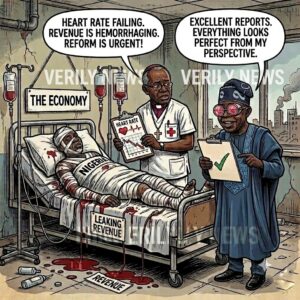
Nigeria’s windfall, however, comes with uncomfortable complications. A former president of the Nigerian Association for Energy Economics, Professor Adeola Adenikinju, described the situation as a “two-edged sword,” revenue gains from elevated oil prices on one side and deepening economic hardship for ordinary citizens on the other.
Rising petrol costs have already fed through into higher transportation fares and accelerating inflation, squeezing the budgets of low-income households who have little buffer against such shocks.
The question hanging over Abuja is whether the government will translate its oil windfall into targeted relief for its most vulnerable citizens or whether the gains will be absorbed, as they have so often been in Nigeria’s history, by the machinery of state without trickling down to the streets.
There are also downstream concerns. The price hike by NNPC may translate into higher crude costs for the Dangote Petroleum Refinery, potentially pushing up domestic fuel prices even further at a time when Nigerians are already contending with stubbornly high living costs.
Energy economists have called on the federal government to consider targeted cash transfer programs to cushion the impact of rising fuel prices on vulnerable Nigerians.
Nigeria is not alone in benefitting from the disruption. The U.S.-Iran conflict has propelled the currencies of energy-exporting nations higher, with windfall profits from oil, gas, and metals exports helping them outperform the U.S. dollar. Kazakhstan has emerged as the best-performing currency globally, gaining 10% over two months, as crude oil accounts for 17% of its GDP.
With up to 13 million barrels per day of global supply disrupted and early signs of demand destruction visible in Asia, markets are bracing for structural tightness that could persist well into 2027.
For Nigeria, a nation that has struggled for years with oil theft, infrastructure decay, and production shortfalls, the timing is bittersweet. The country is finally receiving top dollar for its crude, but in a world on fire and with its own citizens bearing the heat.
WHAT YOU SHOULD KNOW
The U.S.-Iran war has handed Nigeria an unexpected but significant economic windfall, with NNPC hiking prices across all 37 crude grades, Bonny Light up $6.13 and Forcados up $7.01 per barrel as Brent crude surges past $110. A grade that sold for roughly $74 before the crisis erupted on February 28 now trades above $136, nearly doubling in just two months.