Nigeria’s mounting debt crisis has reached a critical juncture, with the country’s total public debt stock climbing to a staggering N149.39 trillion ($97.24 billion) by the end of March 2025, representing a year-on-year surge of N27.72 trillion, or 22.8 percent, according to fresh data from the Debt Management Office (DMO).
This alarming trajectory, which saw debt levels rise by N4.72 trillion in just three months from December 2024, underscores the deepening fiscal challenges confronting President Bola Tinubu’s administration as it grapples with persistent economic headwinds and a rapidly depreciating naira.
Currency Crisis Amplifies External Debt Burden
The most concerning aspect of Nigeria’s debt profile lies in the external component, which has ballooned to N70.63 trillion ($45.98 billion) as of March 2025, marking a dramatic 26.1 percent increase from the N56.02 trillion recorded in the corresponding period of 2024. While the dollar-denominated value rose by $3.86 billion, the steeper naira increase reveals the devastating impact of currency depreciation on the country’s repayment obligations.
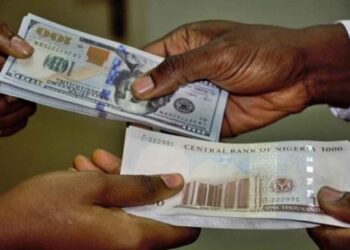
The naira has faced intense pressure throughout 2025, with market data showing it depreciating to N1,625 at its lowest points, significantly weaker than the N1,330.26 per dollar rate used by the Central Bank of Nigeria for debt conversion in the first quarter of 2024. Current exchange rates show the naira trading at approximately N1,540.88 per dollar as of June 27, 2025, representing a substantial weakening that directly translates into higher debt service costs for the federal government.
This currency volatility has transformed what might have been manageable dollar-denominated obligations into an increasingly burdensome naira liability, with multilateral loans from institutions like the World Bank and African Development Bank, bilateral agreements, and commercial Eurobond commitments all becoming more expensive to service in local currency terms.
Domestic Debt Maintains Upward Climb
Nigeria’s domestic debt component has similarly maintained its upward trajectory, reaching N78.76 trillion ($51.26 billion) by March 2025, reflecting a 20 percent year-on-year increase from N65.65 trillion in March 2024. The federal government alone accounts for N74.89 trillion of this total, while the 36 states and Federal Capital Territory collectively hold N3.87 trillion.
In a rare positive development, state-level domestic debt showed a marginal decline from N3.97 trillion in the fourth quarter of 2024 and N4.07 trillion in the first quarter of 2024, potentially indicating more prudent borrowing behavior by subnational governments or improved debt service performance.
Economic Context and Growing Concerns
The debt surge comes amid broader economic challenges that have characterized Nigeria’s post-subsidy removal era. Economic analysts project that Nigeria’s overall debt could reach N187.79 trillion by the end of 2025, highlighting the unsustainable nature of current borrowing patterns.
The timing of this debt explosion is particularly problematic, occurring alongside the Tinubu administration’s elimination of fuel subsidies and social safety nets without meaningful improvements in infrastructure, healthcare, or social welfare. Historical data shows that by 2022, an estimated 96 percent of federal government revenue was already being allocated toward interest payments, suggesting that the current debt levels may have pushed this ratio even higher.
Implications for Economic Stability
The debt crisis carries profound implications for Nigeria’s economic stability and development prospects. The heavy reliance on both domestic instruments, such as Treasury Bills, FGN Bonds, and Sukuk, alongside external commercial borrowing, has created a complex web of obligations that consume an increasingly large share of government revenues.
While domestic borrowing offers some protection from exchange rate risk, it comes with its interest cost burdens and crowds out private sector access to credit. External borrowing, though potentially offering lower interest rates, exposes the country to the type of currency-driven debt expansion currently being witnessed.
The quarter-on-quarter increase of 3.3 percent in total debt stock suggests that even short-term borrowing patterns remain unsustainable, with fresh borrowings outpacing economic growth and revenue generation capacity.
As Nigeria navigates this challenging fiscal landscape, the success of ongoing currency stabilization reforms and revenue mobilization efforts will be crucial in determining whether the country can reverse this dangerous debt trajectory or face more severe fiscal constraints in the months ahead.
The DMO’s latest figures serve as a stark reminder that Nigeria’s debt sustainability concerns have moved from theoretical risk to present reality, demanding immediate and comprehensive policy responses to prevent a full-blown debt crisis.
WHAT YOU SHOULD KNOW
Nigeria’s public debt has spiraled to N149.39 trillion by March 2025, representing a dangerous 22.8% increase in just one year. The most alarming aspect is that currency depreciation is dramatically amplifying the burden of external debt, turning manageable dollar obligations into crushing naira liabilities.