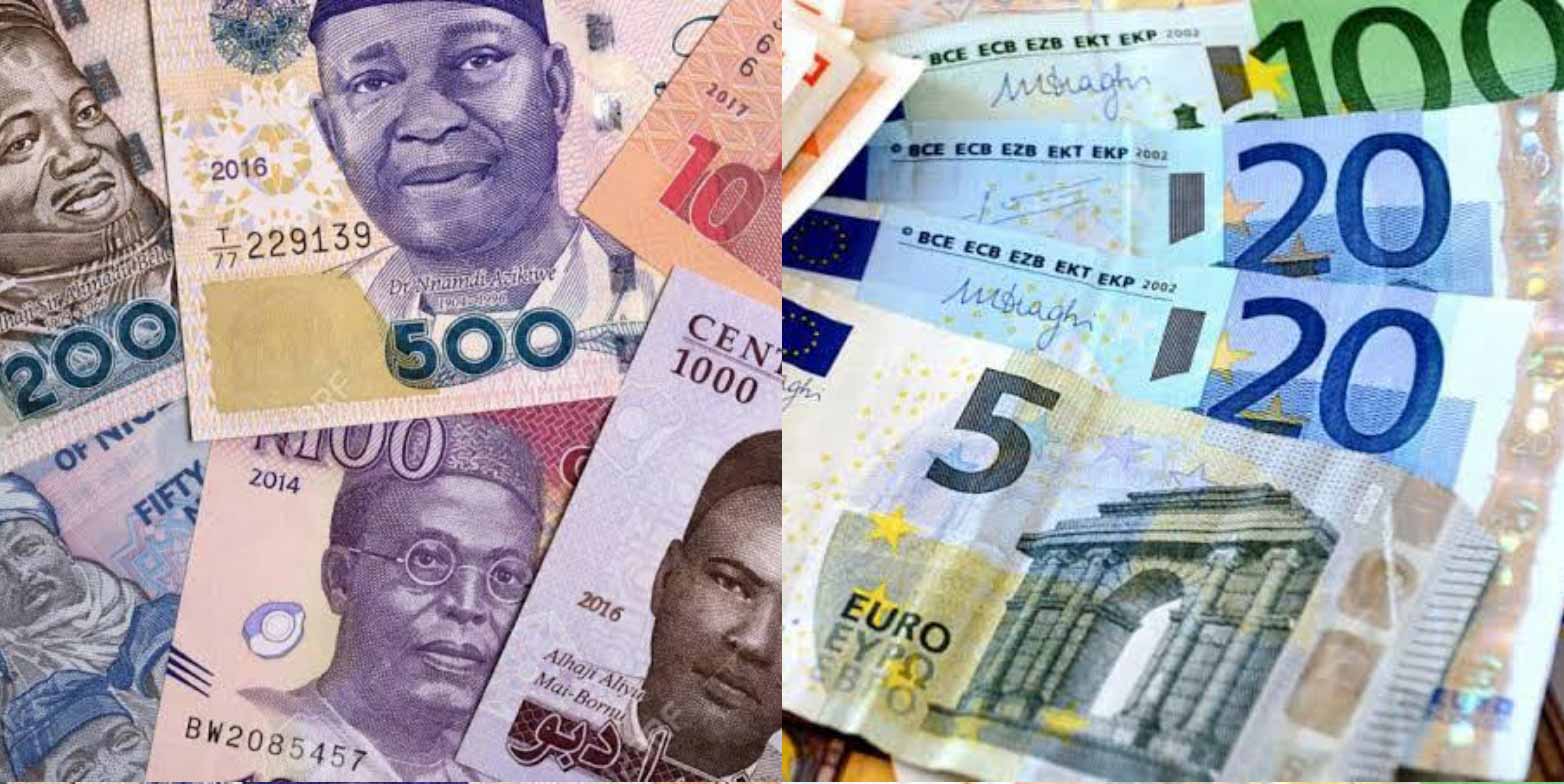
The naira clawed back some ground against the euro in Wednesday’s official market session, with Central Bank of Nigeria (CBN) figures showing the local currency closing at N1,552/€1, an improvement from the N1,563/€1 quoted a week earlier.
The gain, while modest, adds to a string of steadier sessions that traders say reflect a currency finding its balance after a turbulent start to the year.
The single-currency pair has come a long way from the multi-year highs of roughly N1,684/€1 recorded in early January and now appears to be consolidating in a tighter band between N1,550/€1 and N1,575/€1.
For a market accustomed to sharp, disorderly swings, that narrowing range is itself notable; dealers describe it as the clearest sign yet that a floor has been established beneath the naira.
Much of the credit, analysts say, belongs to the CBN’s unrelenting tightening cycle. Successive rounds of policy rate hikes, paired with a narrower cash reserve ratio, have steadily mopped up excess naira liquidity in the banking system that might otherwise have found its way into speculative dollar and euro demand. With less loose cash chasing foreign exchange, pressure on the official window has eased noticeably.
The CBN’s continued efforts to clear outstanding FX backlogs owed to importers and foreign investors have gone a long way toward restoring confidence in the official market, market watchers note, and appear to have taken some of the urgency and panic out of parallel market buying.
Even so, the recovery has clear limits. Nigeria’s inflation rate remains stubbornly elevated, eroding real purchasing power and keeping a lid on how much the naira can genuinely strengthen, regardless of what happens on the supply side.
Steady inflows from oil exports and diaspora remittances continue to provide a cushion, but they have not been enough to offset the drag of persistently high domestic prices.
That dynamic is set to be reinforced from the European side of the equation. With inflation across the eurozone cooling, the European Central Bank’s pivot toward an easing cycle is expected to chip away at the yield advantage euro-denominated debt has held over other asset classes, emerging-market bonds included.
A narrower rate differential could, in time, take some of the shine off euro-based investments relative to naira assets, though few expect this to translate into a dramatic rally for the naira given the scale of Nigeria’s inflation challenge.
Growth prospects in the eurozone add another layer of restraint. While core European economies continue to expand, that momentum is not translating into a broader upswing capable of powering the euro meaningfully higher.
The single currency’s underlying weakness was on full display in European trading hours on Wednesday, with EUR/USD hovering around the $1.1400 mark.
The pair struggled to build any real momentum, caught between a softer US dollar on one side and a cautious, risk-off mood among investors on the other, a combination that has left the greenback with underlying support even as its broader trend weakens.
Much of that caution traces back to the Federal Reserve. Markets are currently pricing in roughly a 35.8% probability of a rate hike at this month’s meeting, with expectations rising sharply to an 82.1% probability of at least a 25-basis-point increase by September. Until the Fed’s intentions become clearer, dollar positioning is likely to stay defensive.
Underpinning the risk-off tone is a sharp escalation in Middle East tensions. The Iran-aligned Houthi movement in Yemen has reportedly targeted two Saudi oil tankers in the Red Sea, framing the attacks as retaliation for alleged embargo violations.
In response, the United States has carried out bombing operations over Iran for 13 consecutive nights, marking one of the most sustained military engagements in the region in years.
The rhetoric has hardened further, with President Trump warning of a “major military punishment” against both the Houthis and Iran should further attacks occur, language that has fueled speculation over the possibility of a large-scale military operation against Tehran.
For currency markets, the episode has reinforced safe-haven flows and added a fresh layer of unpredictability to an already delicate rate environment.
Geopolitics is not the only source of unease. Reports suggest Washington is preparing its most sweeping tariff package in recent memory, with new duties of 10% to 12.5% planned on a broad range of imports as an effort to rebuild Trump-era trade barriers following last week’s Supreme Court ruling.
The European Union is not exempt: at least a 10% duty is expected to apply to EU imports, though officials are said to be structuring the measure to remain within the bounds of existing US-EU trade arrangements.
On the monetary policy front, the ECB Governing Council used its latest update to reaffirm its commitment to returning inflation to its 2% medium-term target, while cautioning that risks remain tilted to the upside as the full impact of recent energy shocks has yet to filter through the economy.
For now, the central bank has left rates unchanged following June’s 25-basis-point hike, with the deposit facility rate at 2.25%, the main refinancing rate at 2.40%, and the marginal lending rate at 2.65%.
WHAT YOU SHOULD KNOW
The naira’s modest gain against the euro isn’t a sign of underlying strength; it’s the CBN’s aggressive rate hikes and liquidity squeeze doing their job, absorbing excess cash and keeping FX demand in check. But persistent domestic inflation means real appreciation stays out of reach for now.
Meanwhile, the euro itself is under pressure from all sides: a dovish ECB pivot, tepid eurozone growth, Fed rate uncertainty, and escalating Middle East and trade tensions. So much of the naira’s “strength” here is really just euro weakness.