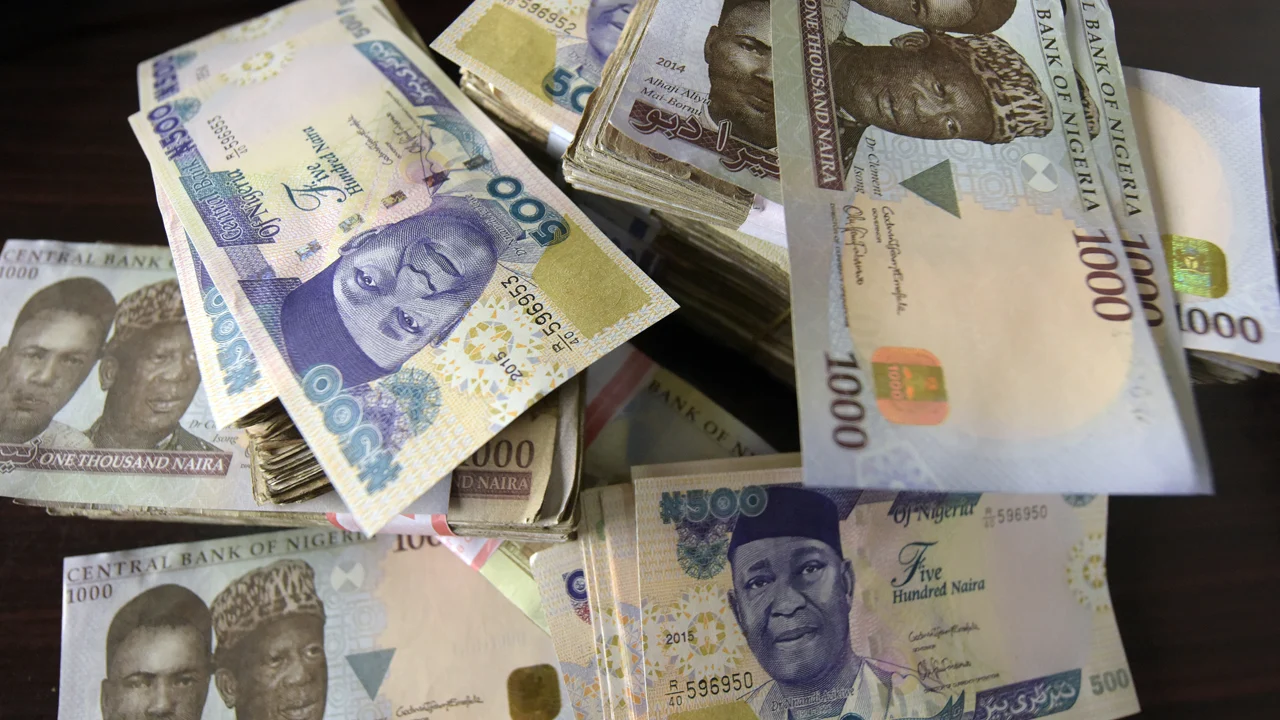
The naira closed the week strongly at N1,348 per dollar in the official market on Friday, February 20, continuing its steady appreciation against the dollar amid improved liquidity and rising reserves.
Data from the Central Bank of Nigeria (CBN) highlights the naira’s positive trajectory throughout the week, reflecting enhanced market sentiment and a narrowing gap between official and parallel rates.
The week began with the naira opening at N1,344 per dollar on Monday, February 16, before strengthening to N1,337 on Tuesday. A minor slip to N1,340 followed on Wednesday, but the currency firmed up again to N1,346 on Thursday, ultimately settling at N1,348 by Friday’s close.
This performance represents an N10 appreciation from the previous week’s close of N1,358 per dollar, signaling a moderate but sustained balance in demand and supply within the official Nigerian Foreign Exchange Market (NFEM). Analysts attribute this stability to the CBN’s proactive measures, including tighter liquidity management and increased foreign exchange inflows, which have helped curb speculative pressures.
Parallel to the official market’s gains, the naira also showed resilience in the informal sector. On Friday, it strengthened to N1,361.5 per dollar from N1,374 the previous day, a notable improvement from N1,420 per dollar recorded the prior Friday.
This narrowing spread between the official and parallel markets—now hovering around N13.5—suggests improving overall liquidity conditions across segments, reducing arbitrage opportunities that have long plagued Nigeria’s forex ecosystem. Street traders in Lagos, the nation’s financial hub, reported brisk activity but noted that dollar holders are increasingly counting losses as the naira’s rebound gathers pace.
Underpinning this currency recovery is a significant buildup in Nigeria’s external reserves, which have surged to $48.5 billion—the highest level since mid-May 2013, when they stood at approximately $48.51 billion. According to the latest CBN data, reserves crossed the $46 billion threshold in January for the first time in about eight years and exceeded $47 billion by February 11, continuing their upward march to the current peak as of February 17.
This accretion, amounting to over $3 billion since the end of 2025, enhances the central bank’s ability to defend the naira against volatility and meet external obligations.
Several factors are fueling this reserve growth. Rising global oil prices, with Brent crude hovering above $85 per barrel amid geopolitical tensions, have boosted export earnings for Africa’s largest oil producer.
Additionally, remittances from Nigerians abroad have surged through formal channels, supported by CBN incentives, while foreign portfolio investments have returned amid attractive yields on government securities. The CBN has also reported collecting more than $2.8 billion in early 2026 inflows, further strengthening the buffers. These developments provide a robust shield against global economic shocks, such as fluctuating commodity prices or capital flow reversals.
Market experts view the naira’s performance as a testament to the ongoing reforms under President Bola Tinubu‘s administration, which has prioritized forex liberalization and reserve accumulation since taking office in 2023. “The sustained increase in reserves is a key pillar supporting recent forex stability,” noted a Lagos-based economist with Afrinvest, who spoke on condition of anonymity. “With reserves now at levels not seen in over a decade, the CBN has greater firepower to intervene and maintain confidence.”
Looking ahead, projections remain optimistic. The CBN forecasts reserves could reach $51 billion by the end of 2026, potentially paving the way for further naira appreciation. Trading Economics anticipates the USD/NGN pair easing to around 1,325 in 12 months, assuming continued policy consistency.
However, challenges persist, including inflationary pressures from imported goods and the need to diversify beyond oil dependency. For ordinary Nigerians grappling with high living costs, this currency rebound offers cautious hope, though tangible relief in prices may take time to materialize.
As trading resumes next week, all eyes will be on whether the naira can sustain its momentum amid evolving global dynamics. For now, the week’s gains and reserve milestone signal a brighter outlook for Nigeria’s economic resilience.
WHAT YOU SHOULD KNOW
Nigeria’s naira has strengthened to N1,348 per dollar in the official market, posting a N10 week-on-week gain and showing sustained stability.
The single most important factor driving this recovery—and the one everyone should note—is Nigeria’s external reserves surging to $48.5 billion, the highest level in over a decade.
Stronger reserves give the Central Bank greater firepower to defend the currency, improve liquidity, narrow the official-parallel spread, and build confidence in the forex market. This reserve buildup is the foundation of the naira’s recent gains.