A former presidential candidate of the New Nigeria Peoples Party (NNPP), Rabiu Kwankwaso, has formally defected to the African Democratic Congress (ADC), marking a significant shift in Nigeria’s political landscape ahead of the 2027 elections.
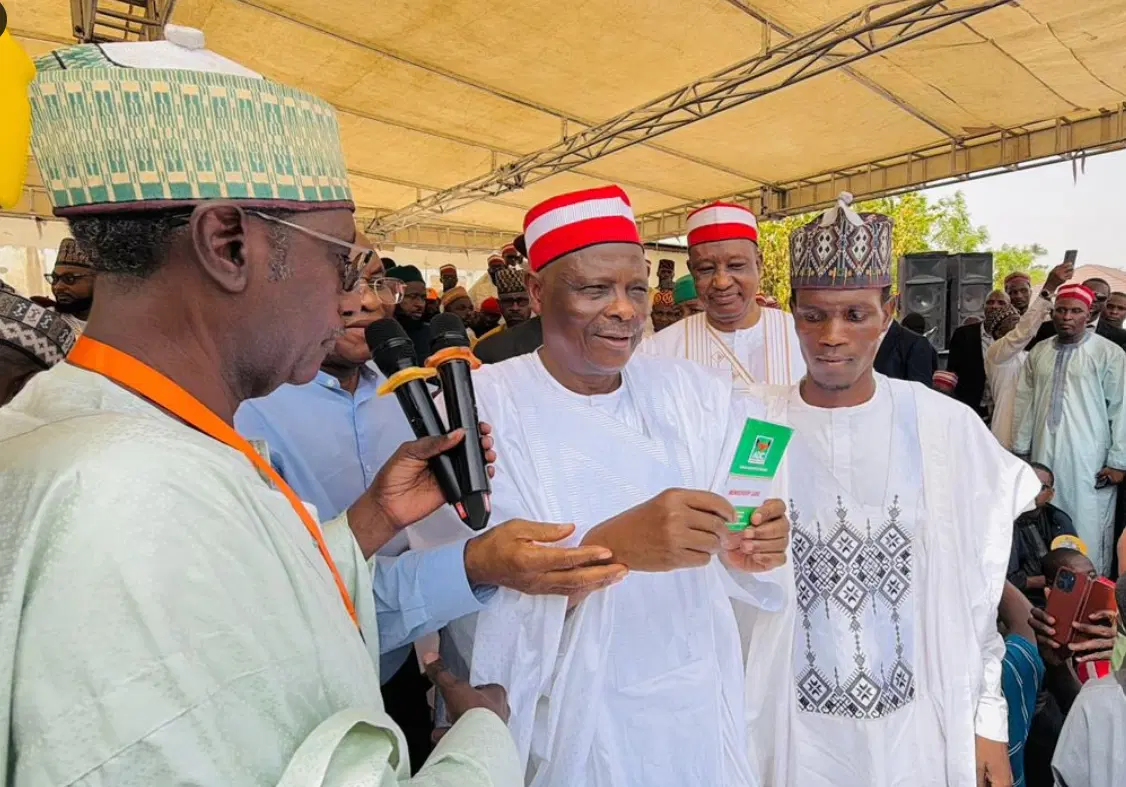
Kwankwaso, a former Minister of Defence, completed his registration and received his membership card at Gidan Kwankwasiyya, Miller Road, Bompai, in Kano. The event drew a large crowd of supporters, particularly members of the Kwankwasiyya Movement, alongside top figures within the ADC.
Among those present were former Senate President and ADC National Chairman, David Mark; the party’s National Secretary and former Minister of Interior, Rauf Aregbesola; and former Anambra State governor, Peter Obi.
Other notable attendees included former Sokoto State governor, Aminu Tambuwal; former Minister of Transportation, Rotimi Amaechi; Senator Dino Melaye; former APC National Chairman, John Odigie-Oyegun; and former Imo State governor, Emeka Ihedioha.
‘New Dawn’
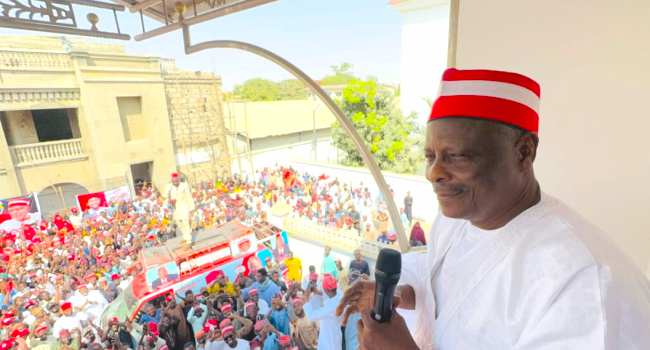
Following his registration, Kwankwaso announced his new political direction in a brief post, stating, “New Dawn. We are ADC.”
His defection came just a day after he confirmed his resignation from the NNPP, the platform under which he contested the 2023 presidential election and finished fourth.
Kwankwaso explained that his decision was driven by the need for political realignment. “I wish to formally announce my resignation from the New Nigeria People’s Party (NNPP) with immediate effect. I seize this opportunity to express my profound gratitude for the honour and privilege of serving as the Party’s National Leader and its Presidential Candidate in the 2023 General Elections.
“As a committed and bona fide member of the party, this was not an easy decision to make. However, considering the current trajectory of the nation’s political landscape, which calls for strategic realignment, I have found it necessary to identify with another political platform that offers the best opportunity to effectively change the nation,” he stated.
Political Alignment
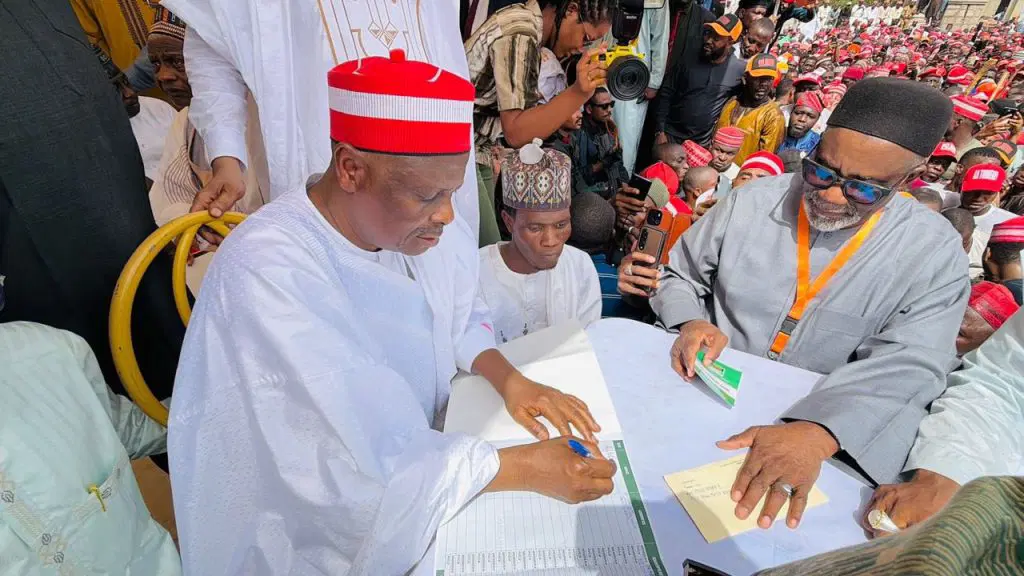
Kwankwaso becomes the latest major challenger of President Bola Ahmed Tinubu in the 2023 election to join the ADC, which has been adopted by an emerging opposition coalition seeking to challenge the ruling All Progressives Congress (APC) in 2027.
Former Vice President Atiku Abubakar, who finished second in the last election, and Peter Obi, who came third, had earlier aligned with the party.
Atiku welcomed Kwankwaso into the ADC, writing: “When men of conviction come together, power trembles. Welcome aboard, @KwankwasoRM.”
Prior to his defection, Kwankwaso had engaged in a series of consultations with key ADC figures, including Atiku, Obi, and Aregbesola, signaling a coordinated effort among opposition leaders.
Kwankwaso, a two-term former governor of Kano State, rose to prominence through the grassroots-driven Kwankwasiyya Movement, which has remained influential in shaping electoral outcomes in the North-West.
His political journey has seen him move across major parties before leading the NNPP into the 2023 general elections, where he maintained significant political influence in Kano.
That influence contributed to the victory of Abba Yusuf as governor of Kano State, defeating the APC in a closely contested race. However, a subsequent political fallout led to Yusuf’s defection to the APC.
With Kwankwaso now in the ADC, Kano is once again expected to become a key battleground as political alignments intensify ahead of the 2027 general elections.
What you should know
Rabiu Kwankwaso’s defection to the ADC is a major development in Nigeria’s opposition politics, signaling a growing coalition aimed at challenging the APC in 2027.
His influence in Kano and the North-West could significantly reshape electoral dynamics, especially with other key figures like Atiku Abubakar and Peter Obi already aligned with the ADC. This move highlights ongoing political realignments as opposition leaders seek a united platform.
The success of this coalition will depend on unity, strategy, and its ability to gain nationwide support against the ruling party.