The Joint Admissions and Matriculation Board (JAMB) has received the findings of its Special Committee on Examination Infractions (SCEIi), which revealed how advanced technology is increasingly being exploited to compromise Nigeria’s admission process.
Presenting the report in Abuja to JAMB Registrar, Professor Ishaq Oloyede, the Chairman of the Committee, Jake Epelle, disclosed that investigators uncovered 4,251 cases of “finger blending” and 192 instances of artificial intelligence-powered impersonation using image morphing during the 2025 Unified Tertiary Matriculation Examination (UTME).
The committee further documented 1,878 false disability claims, forged documents, multiple registrations of the National Identification Number (NIN), and instances of collusion between candidates and examination syndicates.
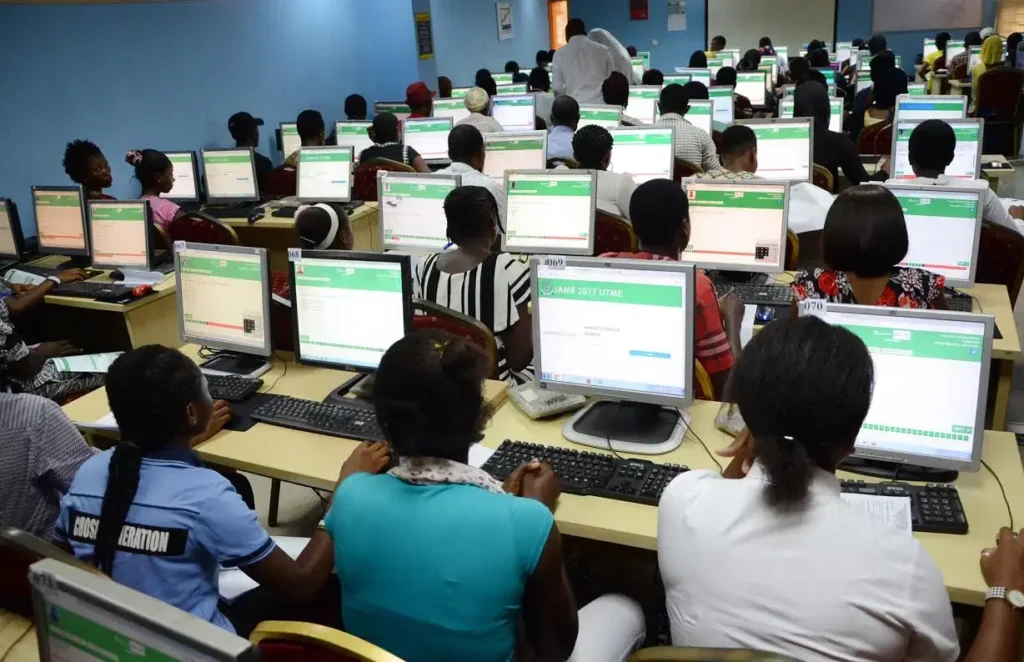
The panel, inaugurated on August 18, was tasked with probing the surge in examination malpractice, reviewing JAMB’s internal processes, and suggesting reforms to safeguard integrity.
Epelle expressed deep concern over the growing sophistication of malpractice, stressing that it has become highly organised, technologically driven, and dangerously normalised in the education system. He pointed out that parents, tutorial centres, schools, and even some Computer-Based Test (CBT) operators were complicit in perpetrating these infractions.
He added that Nigeria’s weak legal frameworks have further complicated enforcement and accountability, allowing the malpractice network to thrive.
To address the menace, the committee recommended a comprehensive strategy that includes deploying AI-powered biometric anomaly detection systems, real-time monitoring, and the creation of a central Examination Security Operations Centre.
What you should know
The JAMB report exposes how digital tools like image morphing and biometric manipulation are being used to undermine Nigeria’s admission process.
With thousands of fraudulent cases detected, the board faces pressure to adopt cutting-edge technology and stricter enforcement to restore credibility to national examinations.