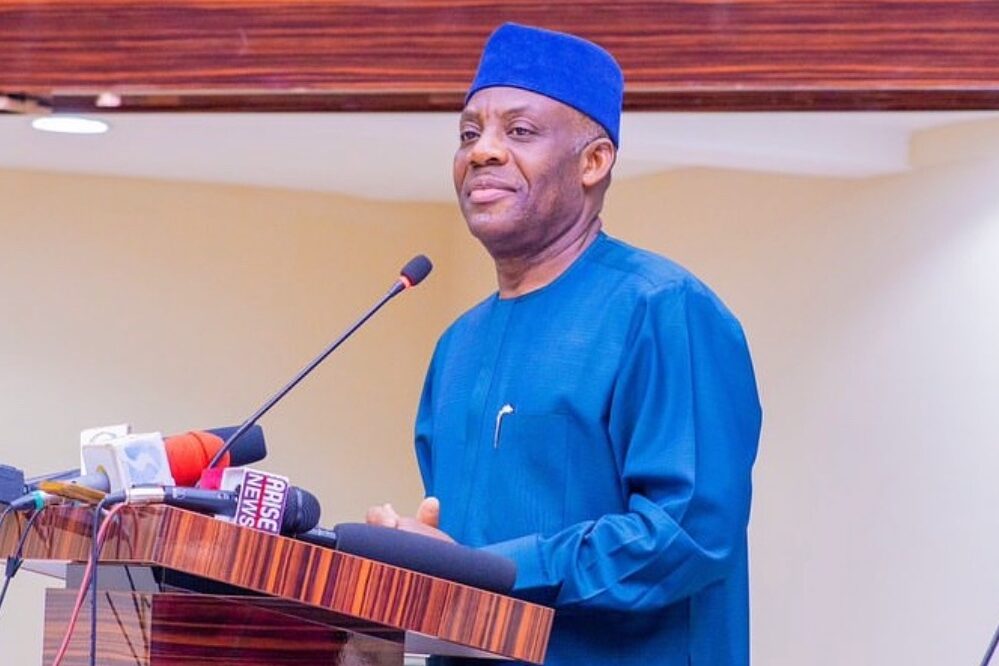
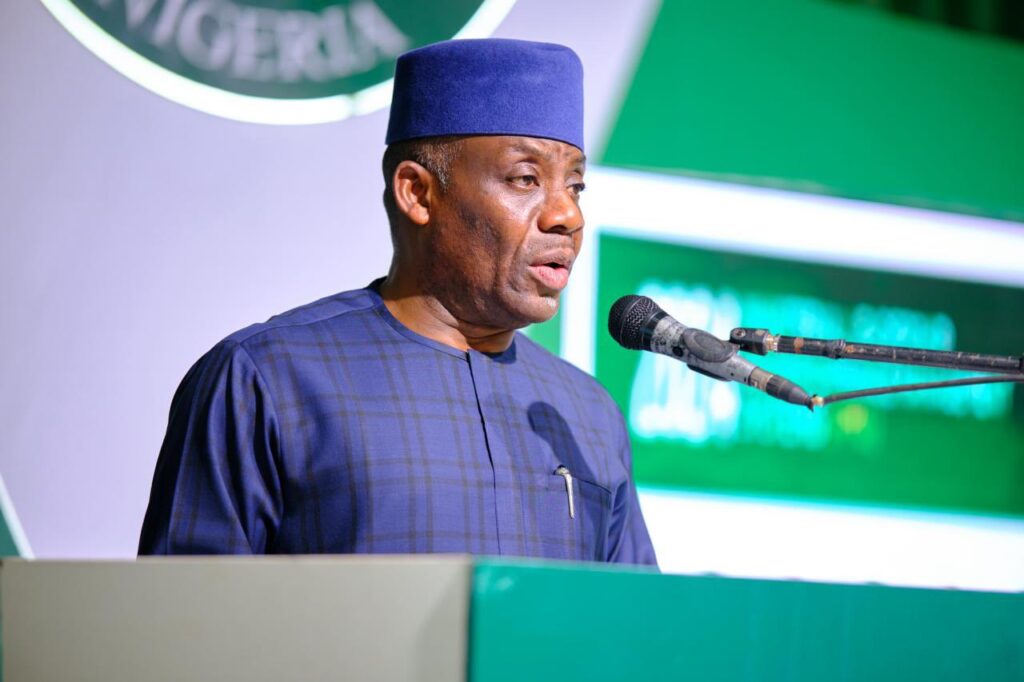
The Minister of Education, Tunji Alausa, has shed light on why successive administrations struggled to break the recurring deadlock between the Federal Government and the Academic Staff Union of Universities (ASUU), as well as other unions in the tertiary education sector.
Speaking during an interactive session with journalists in Lagos, Alausa attributed the prolonged impasse to the proliferation of committees that previously handled negotiations between the government and university-based unions.

According to him, earlier governments constituted numerous panels to engage academic and non-academic unions, a situation that created confusion rather than solutions.
“In the past, there were too many committees liaising with the various groups, the academic and non-academic staff unions. What happened then was that the various committees were making different recommendations and offering conflicting suggestions. But we came and consolidated everything under the Yayale Ahmed Committee. It is that committee that meets with all unions, whether academic or non-academic.
“As we do that, everybody is carried along. We are not forgetting ASUP, COEASU, and non-academic staff unions at those levels. In fact, the agreement between the government and ASUP and COEASU will be reached soon. We are also assuring all that there won’t be discrimination between the unions; we are for fairness,” he stated.
The minister explained that by harmonising negotiations under the Yayale Ahmed Committee, the current administration aims to ensure uniformity in discussions and prevent contradictory proposals that previously slowed progress.
Beyond labour matters, Alausa also outlined plans to strengthen innovation and practical training in tertiary institutions. He disclosed that the Federal Government has approved N200 billion for the establishment of engineering workshops in selected universities and polytechnics nationwide.
He clarified that each beneficiary university would receive N4 billion, while each polytechnic would be allocated N1 billion to develop the proposed facilities. The initiative, he noted, is intended to enhance hands-on technical skills among students and improve the quality of engineering education.
The minister described the engineering workshop scheme as a continuation of the earlier intervention that facilitated the construction of simulation medical laboratories in some federal universities.
Addressing concerns over abandoned Centres of Excellence initiated years ago by the Central Bank of Nigeria (CBN), Alausa revealed that more than N5 trillion would be required to complete the various projects scattered across higher institutions.
He recounted that during the tenure of Charles Soludo as CBN governor, a Centre of Excellence was established at the University of Ibadan to boost the training of economists. However, he noted that subsequent administrations expanded the concept to multiple institutions without adequate funding, leaving many projects unfinished.
He added that the Centre of Excellence at the University of Lagos alone would require about N19 billion to complete, based on estimates from contractors.
“I am meeting the contractors, and we are going to find a mid-course and also we are engaging TETFund to see what can be done,” he explained.
On the suspended national school feeding programme, the minister assured stakeholders that efforts were underway to revive it. He hinted that the scheme might be transferred from the Ministry of Humanitarian Affairs to the Ministry of Education to ensure better supervision and alignment with educational objectives.
What You Should Know
The Education Minister, Tunji Alausa, said past governments struggled to resolve disputes with ASUU and other tertiary institution unions because multiple committees issued conflicting recommendations.
The current administration has centralised negotiations under the Yayale Ahmed Committee to streamline talks.
Meanwhile, the Federal Government has earmarked N200 billion for engineering workshops in universities and polytechnics, acknowledged that over N5 trillion is needed to complete abandoned Centres of Excellence projects, and signalled plans to revive the school feeding programme under improved oversight.