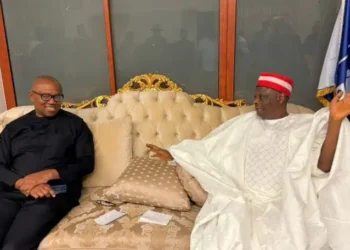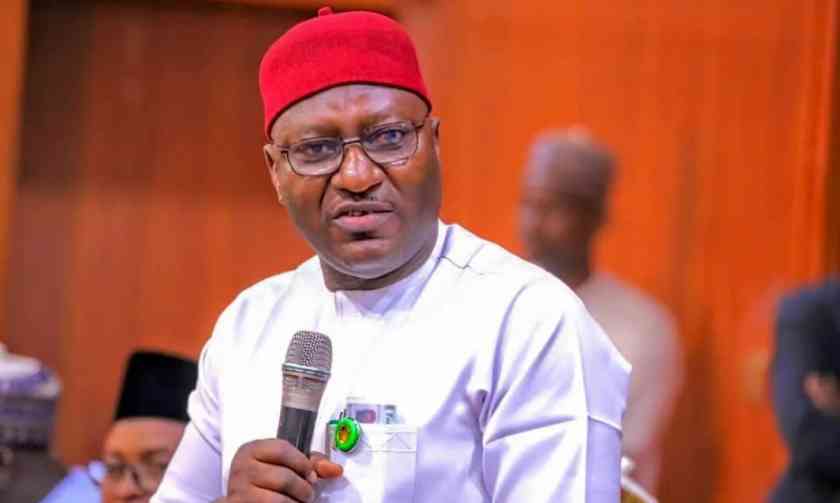
Paul Sunday Nnamchi, the lawmaker representing Enugu East/Isi-Uzo Federal Constituency in the House of Representatives, has come under heavy criticism and mockery on social media after he was spotted at a political meeting involving former Labour Party presidential candidate Peter Obi and former Kano State governor Rabiu Musa Kwankwaso.
Verily News reports that Nnamchi was elected into the House of Representatives in 2023 on the platform of the Labour Party during the height of the Obidient movement, which gained massive support across several parts of Nigeria, especially in the South-East.
However, in June 2025, the federal lawmaker defected from the Labour Party to the ruling All Progressives Congress, with Speaker Tajudeen Abbas officially reading his defection letter during plenary at the House of Representatives.
At the time of his defection, reports indicated that Nnamchi cited the lingering internal crisis within the Labour Party as one of the major reasons for joining the APC.
But his recent appearance around Obi and Kwankwaso has now sparked widespread reactions online, with many social media users accusing him of attempting to reconnect with opposition figures after allegedly struggling to secure political comfort within the APC ahead of the next election cycle.
The online reactions intensified after an X user identified as @Nedumcity_ shared a post highlighting Nnamchi’s presence at the political gathering, drawing attention to what many described as the irony of a politician leaving one political bloc only to later appear around the same opposition figures again.
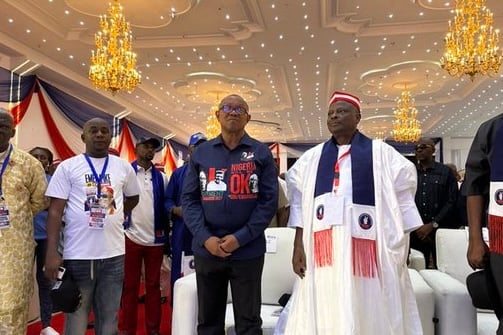
Obi and Kwankwaso have in recent months remained central figures in ongoing opposition realignment conversations ahead of the 2027 general elections, especially following reports linking both politicians with the Nigeria Democratic Congress and speculations surrounding a possible political alliance or joint presidential ticket.
For many critics online, Nnamchi’s attendance at the meeting was interpreted as more than a casual political consultation.
Several users framed the development as a political comeback attempt after what they described as a miscalculation following his move to the APC.
Some social media users argued that the lawmaker abandoned the same political movement that gave him visibility and electoral victory, only to allegedly discover that the APC may not provide him with the political advantage or re-election security he expected.
Others mockingly referred to him as a “prodigal politician,” claiming he was now attempting to reconnect with the opposition structure he once abandoned.
One user wrote: “So after using Obidient votes to enter Abuja, he ran to APC and now wants to come back through the same door?”
Another user stated: “This is why voters must start asking serious questions. You cannot collect mandate from one movement and go and eat with another party.”
A different commenter wrote: “APC breakfast is real. He has remembered Peter Obi and Kwankwaso now that ticket is becoming difficult.”
Another reaction read: “Politicians have no shame. They move anyhow and still expect the people to clap for them.”
One additional user commented: “He thought APC would give him automatic return ticket. Now he is tracing the road back to opposition.”
The development has once again reignited conversations around political defections in Nigeria, particularly involving elected lawmakers who secure mandates under one political party before crossing over to another platform without returning to seek fresh approval from voters.
For Nnamchi, political analysts say the issue may now extend beyond the actual defection itself and focus more on public perception.
In Nigeria’s political environment, perception often shapes public trust and political survival just as much as official political decisions.
What you should know
Political defections remain one of the most controversial issues in Nigeria’s democratic system, especially when elected lawmakers switch parties shortly after winning elections.
The Obidient movement, which emerged strongly around Peter Obi’s 2023 presidential campaign, played a major role in the electoral success of many Labour Party candidates across the country.
Critics often argue that politicians who defect after benefiting from a political movement betray the trust of voters who supported them under a different platform.
Meanwhile, ongoing opposition coalition talks involving Peter Obi and Rabiu Kwankwaso continue to attract national attention as parties reposition themselves ahead of the 2027 general elections and possible alliance negotiations.