The BRICS bloc is weighing a significant overhaul of how money moves between its member economies, with officials examining whether to connect their national instant payment systems and central bank digital currencies (CBDCs) into a shared cross-border infrastructure.
The discussions were disclosed by Reserve Bank of India Governor Sanjay Malhotra, speaking at the FIBAC 2026 conference in Mumbai, where he said the proposals remain at the discussion stage, with no common infrastructure or implementation model yet approved.
Malhotra confirmed the existence of a dedicated BRICS task force focused on payments and indicated several approaches are under consideration, including CBDC connections and linkages between fast payment systems.
According to Malhotra, the bloc is pursuing parallel avenues. One option would connect domestic instant-payment networks such as India’s Unified Payments Interface with equivalent systems in other member countries, while a separate proposal would explore connections between central bank digital currencies, potentially allowing participating countries to settle some transactions through sovereign digital-currency infrastructure.
The appeal is largely practical. Domestic systems such as UPI complete transactions almost instantly, in sharp contrast to traditional foreign remittances that can take hours or days to clear because they typically pass through multiple correspondent banks, each adding fees and delay.
Brazil’s Pix, which processed billions of transactions in 2025, is being cited alongside UPI as a model for what interoperable public payment rails could achieve if extended across borders.
India holds the BRICS chairmanship this year and is hosting the group’s annual summit, giving New Delhi significant influence over the agenda for financial integration discussions.
The Reserve Bank of India had recommended earlier in 2026 that the government place CBDC integration on the summit agenda, signalling New Delhi’s intent to push the issue toward a concrete outcome during its chairmanship.
For India, officials say, the initiative carries strategic weight beyond payment efficiency. The push aligns with three parallel objectives: internationalizing the rupee, expanding digital payment connectivity, and strengthening financial cooperation with emerging economies.
Malhotra also said the Reserve Bank of India intends to continue its work on the internationalization of the rupee and the expansion of the use of national currencies in international trade and payments.
Despite speculation in some quarters about a unified BRICS currency, officials have been careful to frame this as an infrastructure project rather than a monetary union. Rather than immediately attempting to create a single BRICS currency, the focus appears to be on connecting existing financial infrastructure.
The proposal carries added weight because several BRICS members already run advanced digital-payment or CBDC projects.. China, India, Russia, Brazil, the UAE, and Iran have all developed notable digital-currency initiatives, though the scope and maturity of those efforts vary considerably.
Officials have been candid that the plan is far from settled. Malhotra said BRICS members have not yet agreed on a specific model for linking their payment systems, and a timetable for implementation has not been established, with technical specifications for any shared infrastructure still under discussion.
Any common framework would require agreement on technical standards, foreign-exchange settlement, data governance, cybersecurity, and anti-money laundering controls, and members are at different stages in developing their own instant-payment networks and CBDCs, adding to the complexity of integration.
Analysts note the bloc appears likely to favor caution over speed. Technical, regulatory, and privacy challenges remain significant hurdles, with the group reportedly exploring gradual pilot projects before any fully integrated network emerges.
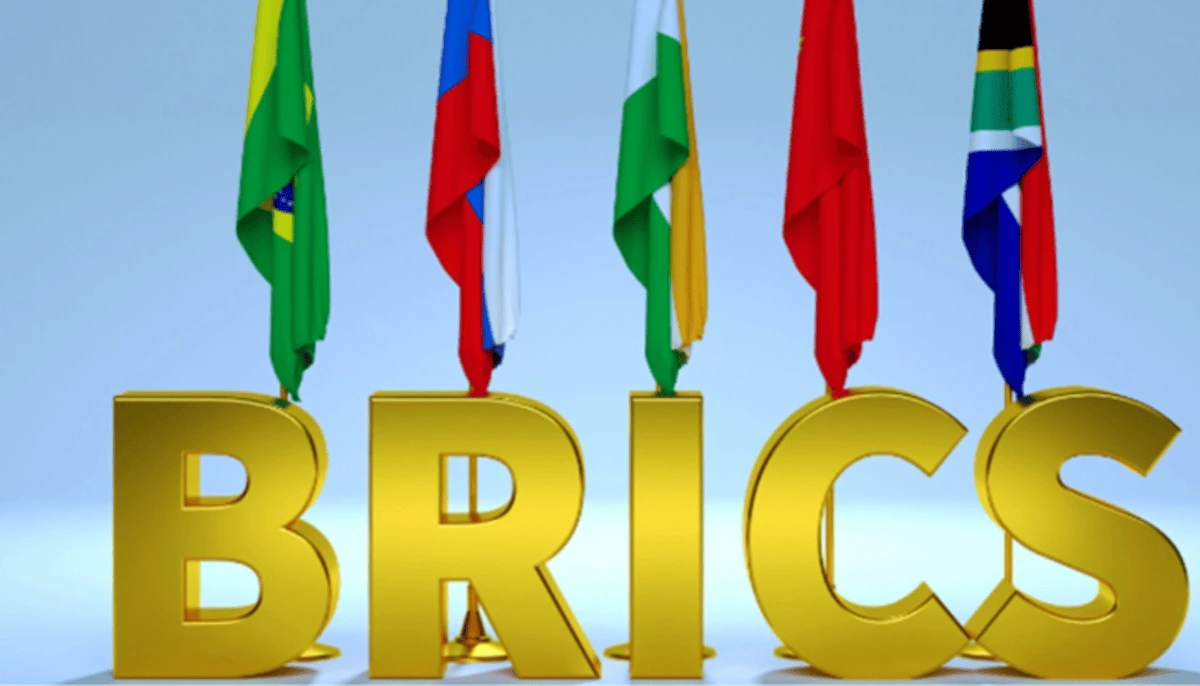
BRICS currently comprises ten countries: Brazil, Russia, India, China, South Africa, Egypt, the United Arab Emirates, Ethiopia, Indonesia, and Iran, a grouping that collectively accounts for a substantial share of global trade and economic output.
If the payment-linkage plan advances, it would mark one of the bloc’s most concrete steps yet toward reducing dependence on dollar-denominated correspondent banking networks for intra-BRICS commerce, even as officials stress that any transition will be incremental rather than immediate.
WHAT YOU SHOULD KNOW
BRICS nations are exploring, not yet building, a system to directly link their instant payment networks (like India’s UPI and Brazil’s Pix) and central bank digital currencies, aiming to make cross-border payments faster and cheaper while reducing reliance on traditional dollar-based banking channels.
India, as this year’s chair, is driving the push, partly to boost the rupee’s international standing. But crucially, this remains an early-stage discussion; no model, timeline, or technical framework has been agreed upon, and significant hurdles around cybersecurity, regulation, and differing levels of readiness among members still need to be resolved before anything moves from talk to reality.