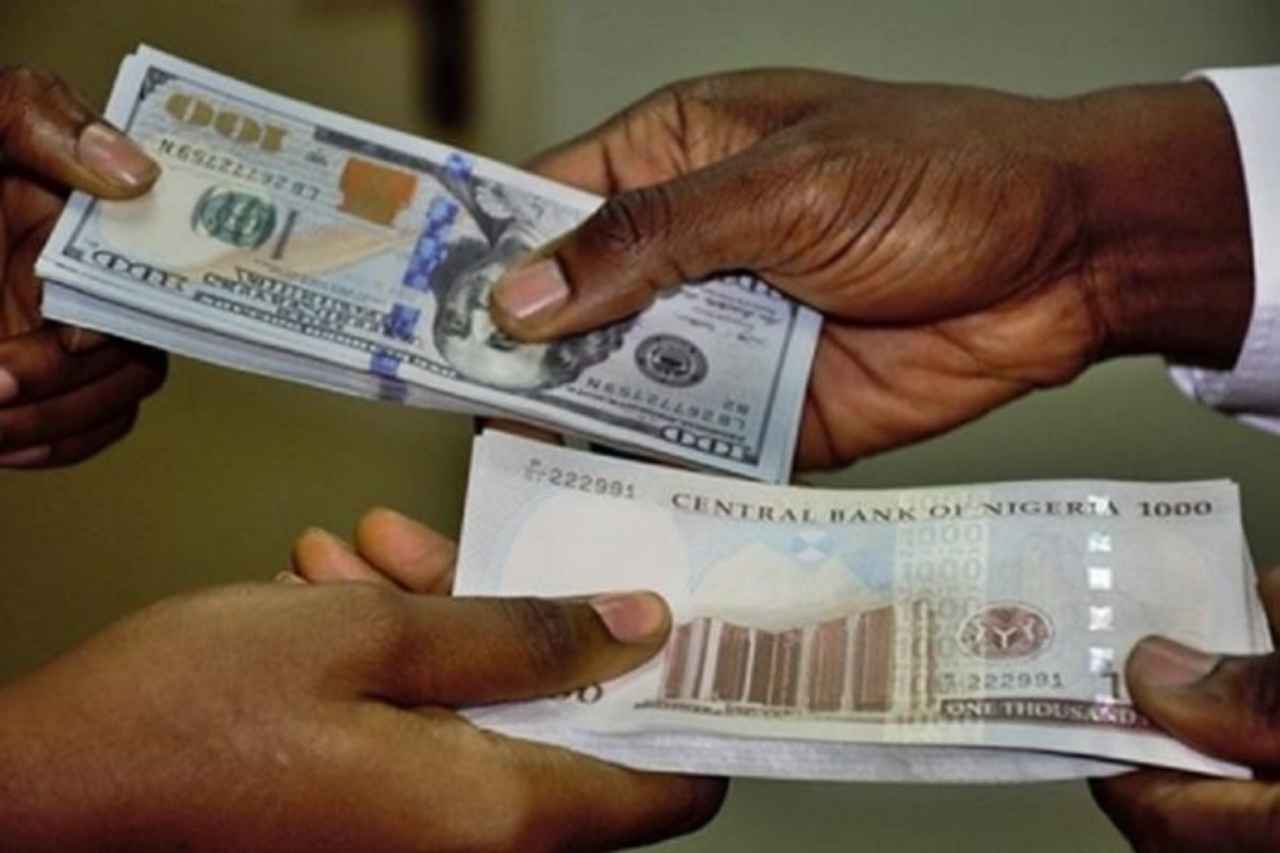
The naira closed out the trading week on a note of cautious calm, settling at ₦1,362.55 to the dollar in the official market on Thursday, a performance that, while modest, underscores a currency finding its footing after months of turbulence.
Central Bank of Nigeria figures show the naira has been on something of a mini winning streak. It opened the week at ₦1,364.83 but by Tuesday had strengthened to ₦1,362.55.
There was a brief wobble midweek; the currency slipped to ₦1,363.85 on Wednesday, shedding roughly ₦1.29 from Tuesday’s close before recovering to ₦1,362.55 on Thursday.
Taken together, the week’s movements paint a picture of a currency oscillating in a tight, roughly three-naira band rather than making any decisive move in either direction.
That stability, however, looks very different once you step outside the banking halls and into Lagos’s parallel currency markets. There, dollars changed hands on Thursday morning at around ₦1,410 to buy and ₦1,425 to sell, according to Bureau de Change quotations and market trackers.
That leaves a gap of roughly ₦62 between the official and street rates, a spread that has actually widened slightly through the week, having stood at around ₦52 as recently as Wednesday, when the parallel rate traded near ₦1,415.
The persistence of that gap speaks to a currency market still operating on two tracks. On one side sits the Nigerian Foreign Exchange Market (NFEM), the CBN-supervised window where banks and licensed dealers transact.
Its benchmark rate is not set by fiat but calculated as a volume-weighted average of actual deals struck in the official market each day a mechanism designed to reflect genuine supply and demand among authorised participants, and one that now serves as the reference point for all sanctioned forex transactions in Nigeria.
On the other side is the parallel or “black” market, where rates are set independently by street dealers responding to a different, often more urgent, set of pressures: travellers needing cash in hand, importers unable or unwilling to navigate official channels, and retail users locked out of the banking system’s forex allocations altogether.
Analysts tracking the market point to two forces pulling in opposite directions. On the official side, they credit improving dollar liquidity and sustained central bank intervention for the relative calm; the CBN appears to be supplying enough foreign currency into the regulated window to keep swings modest.
But that same stability hasn’t trickled down to the informal market, where robust demand from importers, travellers and other retail buyers continues to keep rates elevated well above the official benchmark.
The net effect is a currency that looks stable on paper and is, for the banks and businesses that can access the official window, while ordinary Nigerians turning to street dealers continue to pay a meaningfully steeper price for their dollars.
Whether that ₦62 gap narrows or widens further will likely hinge on how long the CBN can sustain its interventions, and whether informal-market demand eases in the weeks ahead.
WHAT YOU SHOULD KNOW
The naira is stable in name only. While the official rate held firm near ₦1,362.55/$1 this week thanks to CBN interventions and improved liquidity, everyday Nigerians relying on the parallel market are still paying a ₦62 premium per dollar a gap that’s actually widening, not shrinking.
The real story isn’t the naira’s strength; it’s the growing divide between what banks pay and what ordinary people pay for the same dollar.