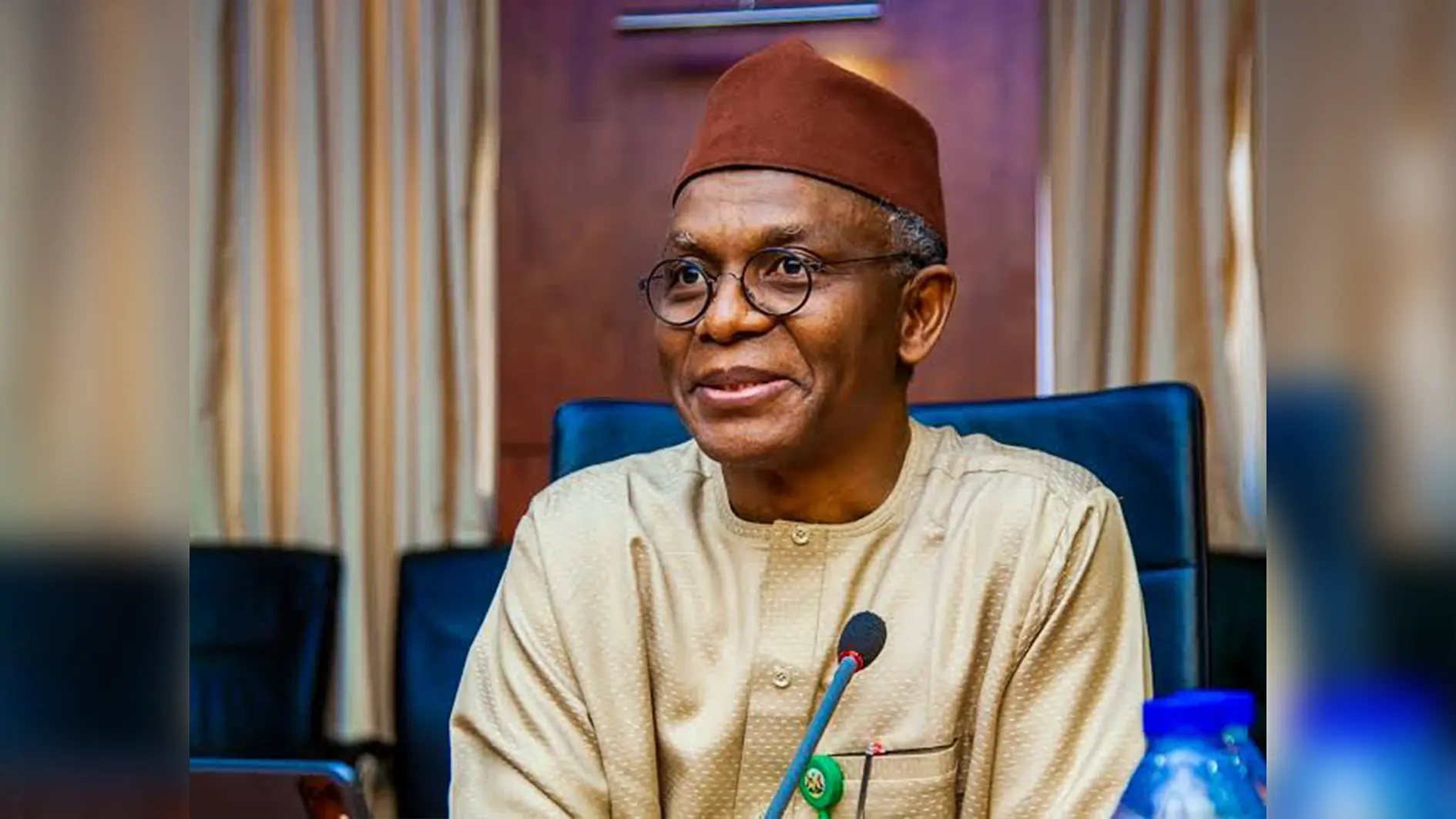
The Department of State Services (DSS) formally closed its case against former Kaduna Governor El-Rufai at the Federal High Court in Abuja on Tuesday, marking a defining moment in the high-profile wiretapping trial.
The announcement by DSS counsel Oluwole Aladedoye that the agency had concluded the presentation of its evidence and would not be calling further witnesses drew immediate and calculated response from El-Rufai’s formidable legal team.
Lead counsel Paul Erokoro, a Senior Advocate of Nigeria with decades of high-profile courtroom experience, wasted no time signalling his intention to move a no-case submission, a procedural application that, if successful, would effectively collapse the prosecution’s case before the former governor is ever required to utter a word in his own defence.
The no-case submission is not merely a procedural formality in Nigerian jurisprudence. It is a pointed legal sword, employed when the defence believes the prosecution has shot its last arrow and missed.
By filing such an application, Erokoro is essentially telling Justice Joyce Abdulmalik and the wider legal community that everything the DSS has laid before this court amounts to legally insufficient grounds to put El-Rufai to his defence.
Should Justice Abdulmalik agree, the charges would be dismissed outright. Should she disagree, El-Rufai would then be required to open his defense, a prospect his legal team is clearly keen to avoid.
Both sides were granted two weeks to file and respond to the application, respectively, with the matter adjourned until September 22 for the formal adoption of arguments.
Beyond the headline drama of the no-case submission, Tuesday’s proceedings revealed a secondary but equally telling skirmish, a fight over bail conditions that underscored the tensions simmering between the defence and the prosecution.
El-Rufai’s legal team moved the court to revisit bail conditions they described as punishing and impractical. At the heart of their grievance is the requirement that sureties be Grade Level 17 civil servants, the apex of Nigeria’s federal public service, holding landed properties in the exclusive Abuja neighborhoods of Maitama or Asokoro, two of the most expensive real estate addresses in the country.
Added to this, the court had mandated attestation letters from the Kaduna State Traditional Council, a requirement the defense characterized as logistically burdensome and unnecessarily restrictive.
The implicit argument was clear: bail conditions, however well-intentioned, must not become a backdoor means of detention. If the requirements are so exacting that they cannot practically be met, the accused is effectively denied the freedom that bail is meant to guarantee.
The DSS, however, was unmoved. Prosecution counsel pushed back firmly, insisting that Level 17 civil servants do exist and that the conditions were neither impossible nor designed to be punitive. The agency urged the court to leave the terms undisturbed.
Justice Abdulmalik sided with the prosecution. In a measured ruling, she held that the court remained unconvinced by the defence’s arguments and noted that civil servants meeting the prescribed qualifications could be found. The existing bail conditions, she ruled, would stand.
The no-case submission expected to be filed and argued on September 22 will demand that Justice Abdulmalik scrutinise every piece of evidence, every witness testimony, and every exhibit tendered by the DSS and ask a single fundamental question: has the prosecution established a prima facie case worthy of a defence response?
Legal observers monitoring the proceedings note that the outcome of that application carries enormous implications not merely for El-Rufai personally but for the broader question of accountability and due process in Nigeria’s increasingly contested political and legal landscape.
For now, a former governor who once wielded considerable power in Nigeria’s Northwest sits waiting, his fate hinging on the sufficiency or lack thereof of the state’s evidence against him.
WHAT YOU SHOULD KNOW
The wiretapping trial of former Kaduna Governor Nasir El-Rufai has reached a critical juncture. With the DSS formally closing its prosecution.
El-Rufai’s legal team is now preparing a no-case submission, a move that could end the trial entirely without him mounting any defence. The court rejected his bid to ease stringent bail conditions, but that is a secondary concern.
The real question, to be answered on September 22, is whether the DSS presented enough credible evidence to justify the case going further. If the answer is no, El-Rufai walks free. If yes, the trial enters an even more intense phase. Everything now rests on the strength or weakness of the prosecution’s evidence.