The National Democratic Congress (NDC) has announced that only aspirants who successfully scale through the party’s primaries will be required to pay nomination fees and complete documentation formalities.
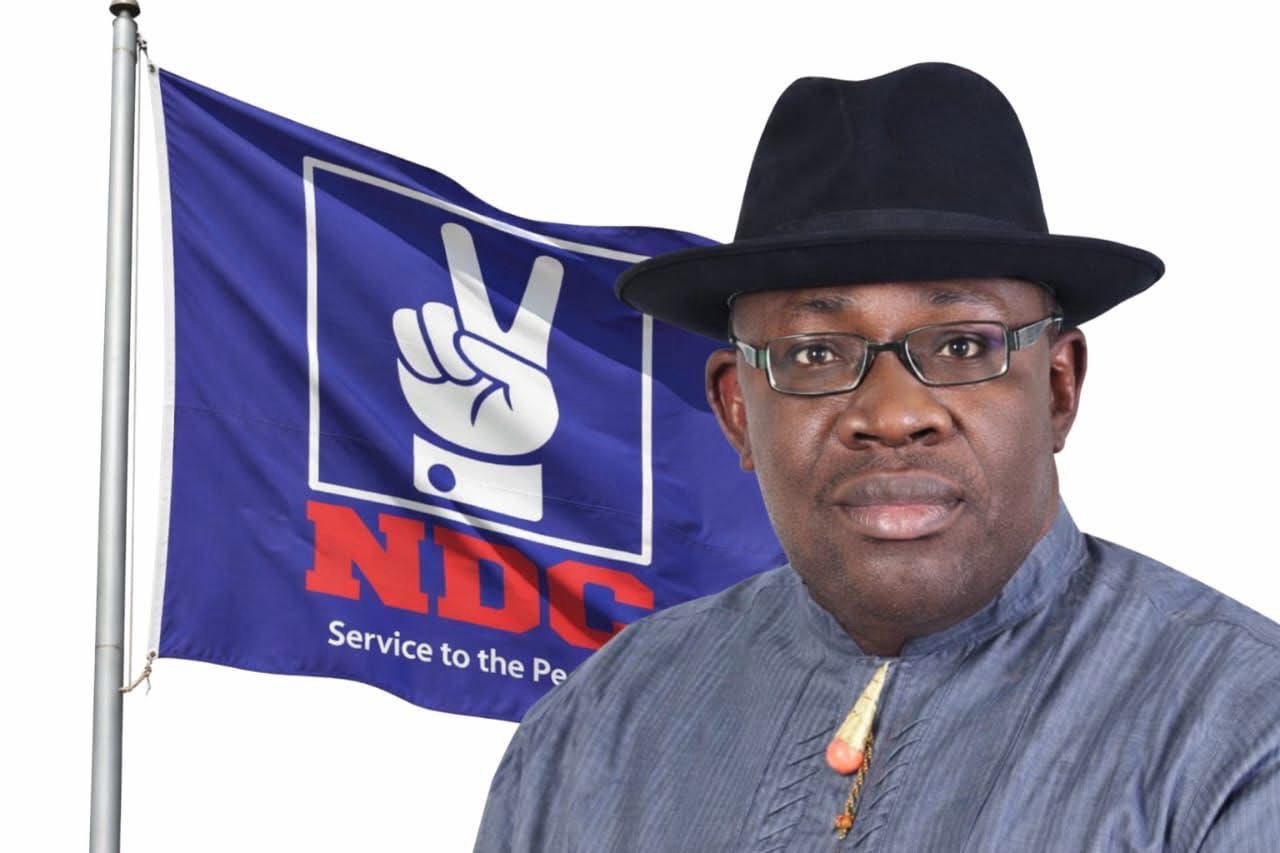
The disclosure was made by the party’s national leader and serving Bayelsa State senator, Seriake Dickson, in an official statement posted on his verified X (formerly Twitter) handle on Wednesday, signaling a significant procedural shift in how the party intends to manage its pre-election activities ahead of the forthcoming general elections.
According to Dickson, the policy was not a unilateral directive but rather a resolution reached at a high-level joint meeting bringing together some of the party’s most influential figures.
In attendance were NDC National Chairman Cleopas Moses, the party’s presidential aspirant Peter Obi, members of the National Working Committee (NWC), and the selection committee, a gathering that underscores the weight and consensus behind the decision.
“Following a briefing at the joint meeting of the Selection Committee and the Screening Committee, and in view of the constraints of time, it was decided that all those who purchased Expression of Interest Forms would be allowed to participate in the primaries in their various constituencies,” Dickson stated.
The decision to allow all Expression of Interest Form holders to participate in the primaries before any financial commitment is seen by analysts as a deliberate effort to lower the entry barrier for grassroots aspirants, particularly young and less financially buoyant candidates who may otherwise be priced out of the process at the documentation stage.
With the primaries scheduled to be held on “May 28 and 29,” the NDC appears to be moving with urgency. Dickson confirmed that teams comprising senior party officials have already been assembled and deployed to every state in the federation to conduct the exercise, with directives to work in collaboration with local stakeholders and party leaders on the ground.
“The teams for the primaries have been selected, comprising senior officials of the party, and have been deployed to every state to conduct the exercise with the support of stakeholders and local leaders. We wish them success in this important assignment,” the statement read.
The tight two-day window for the primaries across all 36 states and the Federal Capital Territory signals an ambitious logistical undertaking, one that will test the party’s organizational capacity and administrative coordination at the grassroots level.
Beyond the procedural mechanics, Dickson used the occasion to reaffirm the NDC‘s identity as a party committed to inclusion. The former two-term Bayelsa State governor emphasized that the party is “women- and youth-friendly,” urging primary teams not to overlook aspirants from these demographics.
However, Dickson was equally pragmatic, instructing primary teams to keep a sharp eye on electability, directing them to pay particular attention to aspirants with the demonstrated capacity to win elections come voting day.
This dual mandate, on one hand, and electoral viability on the other, reflects the delicate balancing act the party leadership is navigating as it prepares to field competitive candidates across various offices.
The primaries, as outlined by Dickson, will follow a tiered geographical structure. Direct primaries for State House of Assembly positions will be conducted at the constituency level, bringing the process closest to the people.
Meanwhile, primaries for higher offices—including the House of Representatives, Senate, governorship, and presidential elections will be held at local government headquarters, ensuring a broader but still organized participation base.
Aspirants have been reminded to come with their Expression of Interest Forms, which will serve as their entry document into the primaries.
Recognizing that no primary process is without its tensions and disputes, Dickson announced the inauguration of a formal appeal panel to handle complaints arising from the conduct of the primaries.
The establishment of such a body is a critical safeguard, one that could prove pivotal in preserving internal party cohesion in the aftermath of what is expected to be a fiercely contested exercise.
The NDC’s approach, separating participation from financial obligation until after results are determined, is a noteworthy departure from the practices of some of Nigeria’s older parties, where nomination fees have historically been criticized as a tool for gatekeeping.
With Peter Obi, the Labour Party’s 2023 presidential candidate, who has since pitched his tent with the NDC at the top of the ticket, the party is positioning itself as a formidable third force in Nigerian politics.
WHAT YOU SHOULD KNOW
The NDC, under the leadership of Seriake Dickson and with Peter Obi as its presidential aspirant, has launched a two-day nationwide primary exercise aimed at selecting candidates across all levels of government.
This policy, backed by the party’s top hierarchy, signals the NDC’s intent to build a more inclusive, grassroots-driven political platform. With teams deployed across all states and an appeal panel in place, the party is making a clear statement: it is organized, it is serious, and it is positioning itself as a credible alternative force in Nigerian politics.