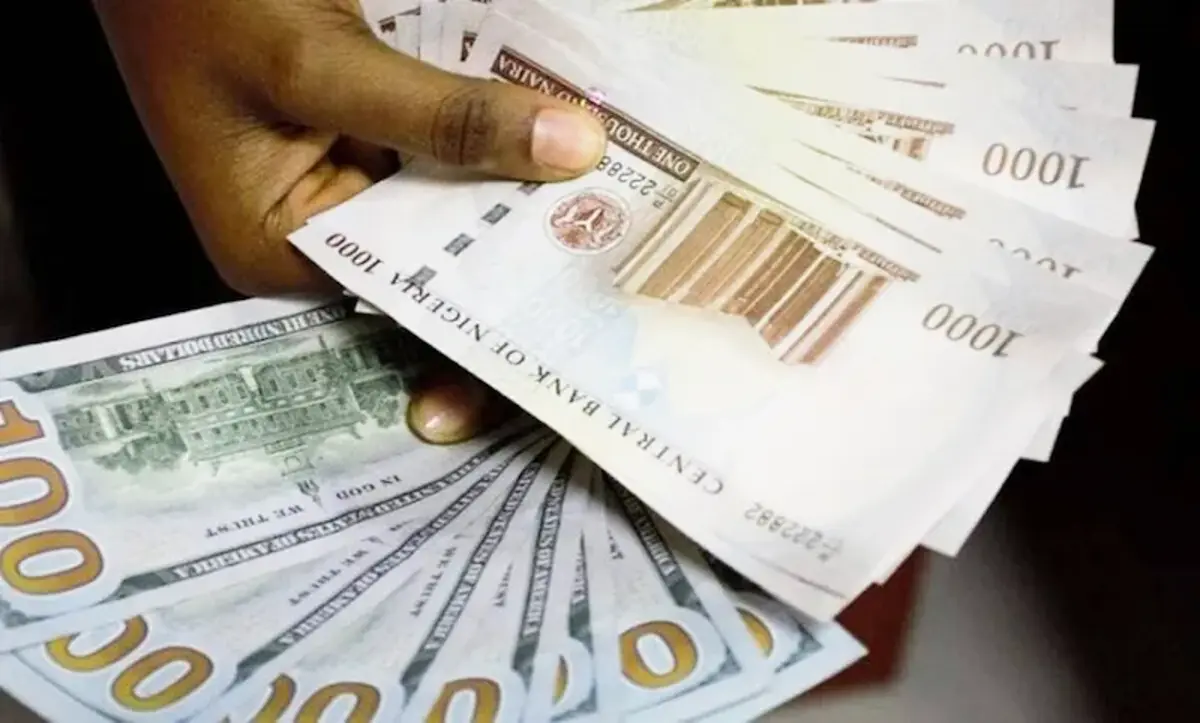
The naira steadied at approximately ₦1,371 to the dollar at the Nigerian Foreign Exchange Market (NFEM) on Monday, with fresh CBN data signaling a market slowly stabilizing after months of turbulence.
Intraday trading recorded a narrow band of movement, oscillating between ₦1,369 and ₦1,374 per dollar, a range that, while modest in its spread, carries significant symbolic weight for a currency that has weathered considerable pressure over the past two years. For market observers, that tightening corridor is no accident.
The relative calm observed on Monday is widely seen as a direct consequence of deliberate and sustained interventions by the CBN, which has, in recent weeks, ramped up dollar supply to authorized dealers in a bid to close the gap between official and parallel market rates and restore confidence in the formal exchange window.
“What we’re seeing is the CBN’s strategy beginning to translate into tangible outcomes,” said one Lagos-based currency analyst who monitors the NFEM closely. “When liquidity improves and dealers have access to an adequate dollar supply, the speculative pressure that typically drives volatility begins to ease.”
Indeed, the naira has now maintained relative stability within the ₦1,360 to ₦1,380 band across several recent trading sessions, a consistency that was largely absent in earlier periods marked by sharp, unpredictable swings.
That steadiness, analysts argue, is itself a form of progress, even if the exchange rate remains far above levels that importers and manufacturers would consider comfortable.
Despite the encouraging signs, demand for foreign exchange remains robust across multiple segments of the economy. Importers restocking inventories, manufacturers sourcing raw materials priced in dollars, and individuals seeking forex for international travel and business transactions continue to place meaningful pressure on available supply.
This persistent demand underscores the structural challenges that no single round of intervention can fully resolve. Nigeria’s heavy dependence on imports for consumer goods, industrial inputs, and energy products means that the appetite for dollars remains a constant undercurrent in the market, one that the CBN must continually work against to maintain the current semblance of stability.
Looking beyond the immediate trading session, market watchers have flagged three principal variables that will determine the naira’s trajectory in the days and weeks ahead.
Oil prices remain the most consequential. As Africa’s largest crude producer, Nigeria’s foreign exchange earnings are inextricably linked to global oil markets. Any sustained dip in crude prices would tighten the supply of petrodollars flowing into the economy, placing renewed strain on the CBN’s ability to defend the naira at current levels.
Foreign reserve levels are equally critical. A well-stocked reserve chest gives the CBN the ammunition to intervene decisively whenever speculative attacks or demand surges threaten to destabilize the market. Conversely, a drawdown in reserves could constrain the apex bank’s options and embolden those who bet against the currency.
Investor confidence, perhaps the most intangible of the three, may ultimately prove the most consequential. Nigeria has in recent months sought to reassure foreign portfolio investors and multinationals of its commitment to a more transparent and liquid forex regime.
Should that confidence hold and should the CBN’s reform narrative continue to gain traction, renewed capital inflows could provide a meaningful boost to dollar supply at the official window.
For now, the mood among currency traders and analysts is one of cautious optimism. Monday’s figures represent neither a breakthrough nor a crisis but in a market as historically volatile as Nigeria’s foreign exchange space, stability itself is often the most coveted commodity.
The CBN, for its part, has not indicated that it intends to ease its vigilance. With inflation still elevated, the import bill still substantial, and global financial conditions still uncertain, the battle for a stable naira remains very much a work in progress.
WHAT YOU SHOULD KNOW
The naira is showing encouraging signs of stability, trading around ₦1,371 per dollar at the official window, a direct result of the CBN’s deliberate efforts to improve liquidity and dollar supply.
While demand from importers, manufacturers, and individuals continues to exert pressure, the currency has held within a relatively tight band in recent sessions.
However, this stability remains fragile. The naira’s fate in the coming days will hinge on three critical factors: global oil prices, foreign reserve levels, and investor confidence.