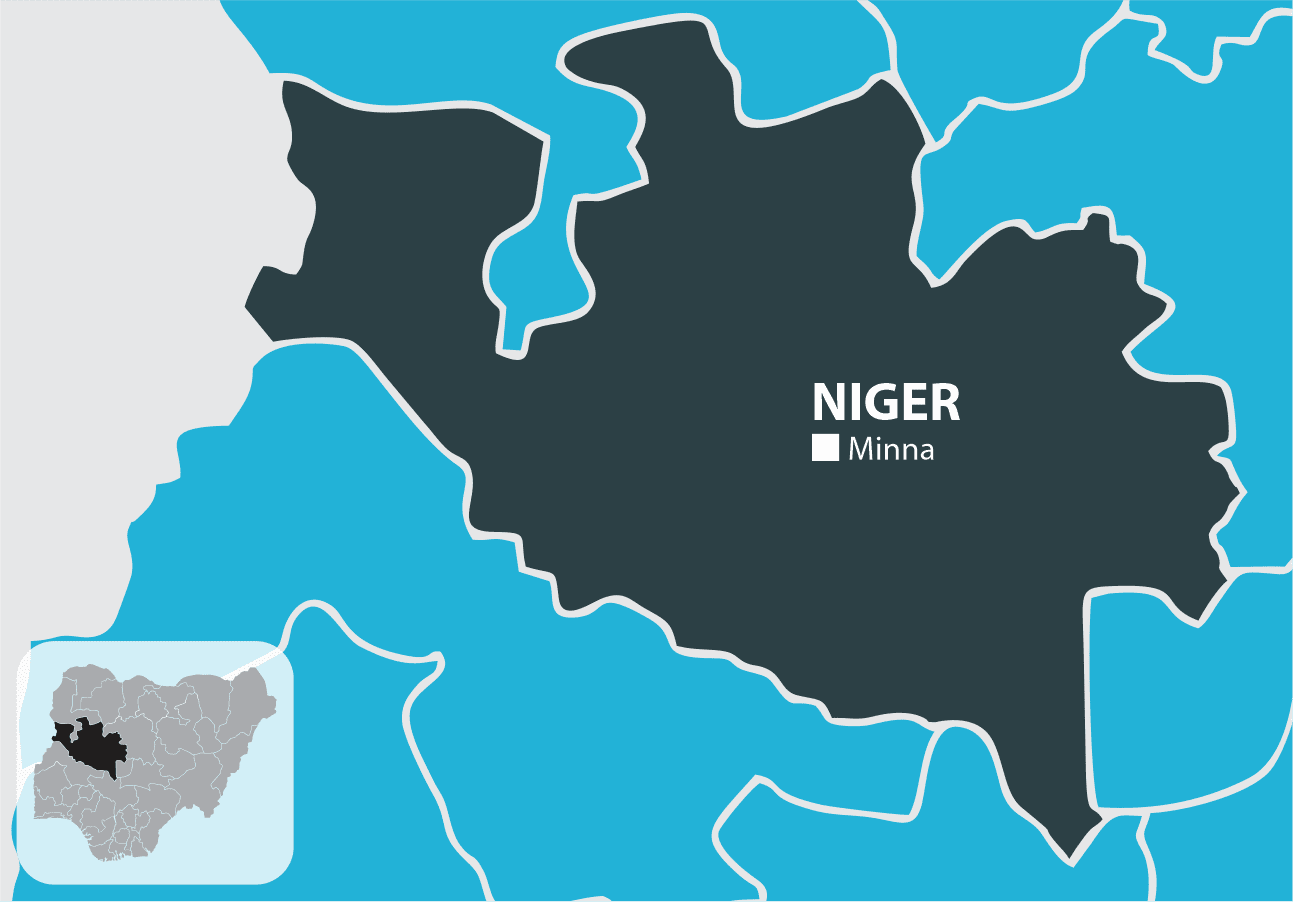
At least a dozen civilians are feared dead after a Nigerian military airstrike struck the rural settlement of Guradnayi, near Kusasu in Shiroro Local Government Area of Niger State, in the early hours of Sunday morning.
The strike, which residents say occurred around 5 a.m., came as military aircraft pursued a column of armed men on motorcycles moving through the area. Witnesses say the aircraft first dropped a bomb near the river in Kusasu before a second strike hit Guradnayi, with devastating consequences for the civilians sheltering there.
A resident of Kusasu who lost a family member in the incident confirmed the scale of the tragedy in blunt terms.
“It happened around 5 a.m.,” he said. Twelve people were killed in his house. The rest were Kusasu people who were fleeing from the terrorists.”
The devastating detail buried in that account is this: many of those killed were not combatants holding ground; they were ordinary villagers on the run, caught between an armed group they were fleeing and a military operation closing in from above.
The resident confirmed that one of the dead was his cousin’s son, a revelation that speaks to the intimacy of grief in communities where nearly everyone lost someone they know.
The total death toll remains unconfirmed, with sources indicating the number of civilian fatalities could exceed the twelve reported in the single residence. Multiple households in the area were reportedly in the path of the operation.
The sequence of events described by witnesses follows a pattern that has become tragically familiar in Shiroro and its surrounding local government areas.
Armed men, widely believed to belong to a bandit or terrorist group that has terrorized communities across Shiroro for years, swept through Kusasu on motorcycles, forcing residents into chaotic flight. Nigerian Air Force aircraft, tracking the movement of the armed column, released ordnance along the suspected route.
It is a scenario that military strategists and human rights observers have long warned creates an unacceptable risk of civilian harm: fast-moving combatants embedded in or near civilian populations and aerial assets responding under time pressure in low-visibility conditions.
“The military first threw a bomb near the river in Kusasu,” one eyewitness recounted. “The second bomb was dropped at Guradnayi. “That second bomb, according to accounts gathered from multiple residents, landed on a structure filled with people seeking refuge, not combatants mounting a defense.
Even as communities in Shiroro count their dead, the armed group at the center of Sunday’s operation has not been neutralized. A security source confirmed that the fighters crossed from Kusasu into the neighboring Munya Local Government Area, where they remain active.
“As I speak to you now, they are operating in Kabul near Kuchi,” the source said, speaking on condition of anonymity. “There’s no confirmed report of abduction or killings yet, but they have rustled many cattle from communities in Munya.”
The cattle rustling, often dismissed as a lesser crime in the hierarchy of insurgent violence, carries profound economic consequences for rural families whose livestock represent both their livelihood and their savings.
For communities already traumatized by years of displacement, kidnapping, and now airstrikes, the loss of cattle can be the final blow that pushes a family into destitution.
Perhaps most damning is what locals say has happened, or rather, has not happened in the aftermath of previous strikes. Residents of Shiroro say this is not the first time military airstrikes have claimed civilian lives in the area. Earlier incidents, they allege, were never fully investigated, no accountability was established, and no compensation was offered to bereaved families.
That pattern, if accurate, suggests a troubling institutional response: operational action without adequate safeguards and silence where transparency is demanded.
The Nigerian military has, in recent years, demonstrated growing operational capacity against armed groups in the northwest and north-central regions. Airstrikes have been credited with disrupting bandit camps and interdicting fighters in remote terrain.
But capacity without accountability is a dangerous combination, and Sunday’s events in Guradnayi put the question of proportionality, targeting protocols, and civilian protection squarely back on the table.
Who authorized the strike? What intelligence determined the target? Were civilians in the area accounted for before ordnance was released? And critically, what happens now to the families of the dead?
Niger State Government officials had equally not commented publicly on the incident as of press time.
The people of Guradnayi and Kusasu are not waiting for press conferences. They are, right now, burying their dead.
WHAT YOU SHOULD KNOW
A military airstrike targeting armed men on motorcycles in Shiroro, Niger State, has killed at least 12 civilians, most of them villagers fleeing the very same armed group the military was pursuing.
The tragedy underscores a deadly flaw in aerial counterterrorism operations: when fast-moving combatants pass through civilian areas, it is ordinary people who pay the ultimate price.
What makes this incident harder to stomach is that it is not an isolated case. Locals say previous airstrikes in Shiroro also claimed civilian lives and were never investigated, never resolved, and never compensated.