Lagos State has been ranked the leading subnational entity for ease of doing business in the country, according to the 2025 Subnational Ease of Doing Business Report released by the Presidential Enabling Business Environment Council (PEBEC).
The report was formally unveiled on Friday, during the Reform and Diplomatic Roundtable 2026 held in Abuja. The event, organised by PEBEC in collaboration with UK International Development and the Nigeria Economic Stability and Transformation (NEST) Programme, brought together diplomatic missions, strategic partners, and state representatives to spotlight reform successes and attract targeted investments.
Lagos secured the top spot with a strong performance across multiple pillars, demonstrating a potent mix of regulatory readiness, infrastructure development, and institutional transparency. It was followed by Kaduna in second place, Oyo third, the Federal Capital Territory (FCT) fourth, Ogun fifth, Enugu sixth, Plateau seventh, Ekiti eighth, Kano ninth, and Nasarawa tenth.
This ranking underscores a broader shift in Nigeria’s economic narrative: while federal-level reforms set the tone, real progress for the millions of businesses operating daily hinges on actions taken at the state level, where local bottlenecks in permitting, infrastructure, taxation, and service delivery are most acutely felt.
The report, which serves as both a scorecard and a practical roadmap, highlights that Nigeria is home to over 39 million Micro, Small and Medium-sized Enterprises (MSMEs). How effectively states address the daily frictions these businesses encounter will increasingly determine the country’s overall economic resilience and growth trajectory.
Unlike earlier assessments that sometimes relied heavily on perception, this report draws primarily on secondary data and administrative datasets. It evaluates states through a robust framework of 16 key indicators, further disaggregated into 36 operational sub-indicators.
These cover critical areas such as:
– Access to electricity
– Infrastructure quality
– Digital connectivity
– Land administration
– Justice delivery and contract enforcement
– Taxation
– Trade logistics
– Investor support
– Crisis resilience
– Workforce development
The methodology emphasises not just the existence of policies on paper, but the actual adoption of technology, automation, and digitalisation in public service delivery — reflecting how businesses experience government processes on the ground.
Lagos stood out for its advanced business environment, including relatively reliable electricity supply in key commercial areas, functional land administration systems, and efficient commercial courts that support faster contract enforcement.
The state also benefits from strong market access, a deep pool of skilled workforce, and world-class infrastructure assets such as major airports and expanding rail networks.
However, the report is not without constructive criticism. It flagged persistent challenges in Lagos, including the nuisance of touting and loitering around key business and logistics hubs. “The presence of unauthorized individuals loitering around key business and logistics touchpoints creates an environmental nuisance and introduces significant security and safety concerns for commercial operators and the public,” the report noted. This issue disrupts the predictable flow of trade and transport activities.
Other gaps identified include weak investor aftercare systems and uneven digital connectivity, particularly in non-urban parts of the state.
A critical analysis by Nairametrics revealed clear geographic disparities. The South-West dominated the top 10, contributing four states (Lagos, Oyo, Ogun, and Ekiti). The North-Central followed with three (FCT, Plateau, and Nasarawa), the North-West with two (Kaduna and Kano), and the South-East with one (Enugu). Notably, no state from the North-East or South-South regions made the top 10 list.
Enugu State, the lone South-East representative at sixth position, recorded strengths in digital connectivity, electricity access, workforce development, and social infrastructure. Yet it shares some of the broader challenges seen elsewhere, such as limited investor aftercare and constraints in access to credit.
Overall, states that have pushed reforms have reportedly achieved tangible gains, including up to 40% reductions in business registration timelines and over 30% improvements in land administration efficiency in some cases.
PEBEC Director-General Princess Zahrah Mustapha Audu, speaking at the roundtable, emphasised that the assessment provides an evidence-based tool for tracking progress and prioritising high-impact interventions.
The event itself was designed to connect global capital and diplomatic partners directly with top-performing states, signalling that credible reforms are opening doors for investment.
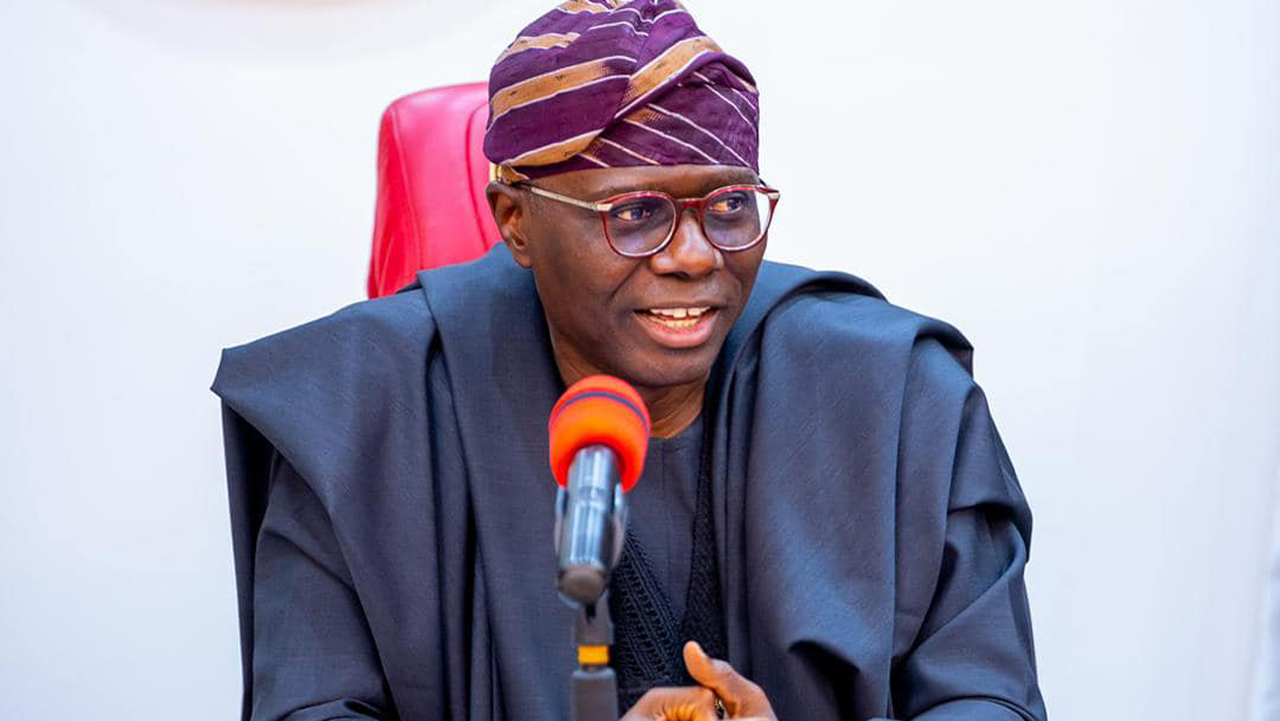
For Lagos, the number one ranking validates years of deliberate policy focus under Governor Babajide Sanwo-Olu’s administration. A representative at the event attributed the achievement to sustained reforms in regulatory processes and service delivery.
As Nigeria grapples with the need to diversify its economy beyond oil and empower its vast MSME sector, this subnational ranking sends a clear message: competition among states to create friendlier business environments is intensifying — and investors are taking note of where the bottlenecks are being cleared fastest.
The full report is expected to guide both federal and state governments in refining their reform strategies, with particular attention to closing the identified gaps in security, aftercare, and equitable digital access.
For businesses and potential investors, it offers a data-rich snapshot of where opportunities — and remaining challenges — lie across Nigeria’s diverse states.
WHAT YOU SHOULD KNOW
Lagos State has emerged as Nigeria’s top subnational entity for ease of doing business, according to the 2025 PEBEC Subnational Report unveiled on March 28, 2026.
With over 39 million MSMEs across the country, this ranking shows that real economic progress and resilience now depend heavily on what state governments deliver on the ground.
Lagos led the way thanks to its strengths in electricity, contract enforcement, skilled workforce, and major infrastructure, though challenges like touting and uneven digital access remain.
The uneven performance across geopolitical zones further underscores that targeted, evidence-based reforms at the state level are essential for Nigeria’s broader growth.