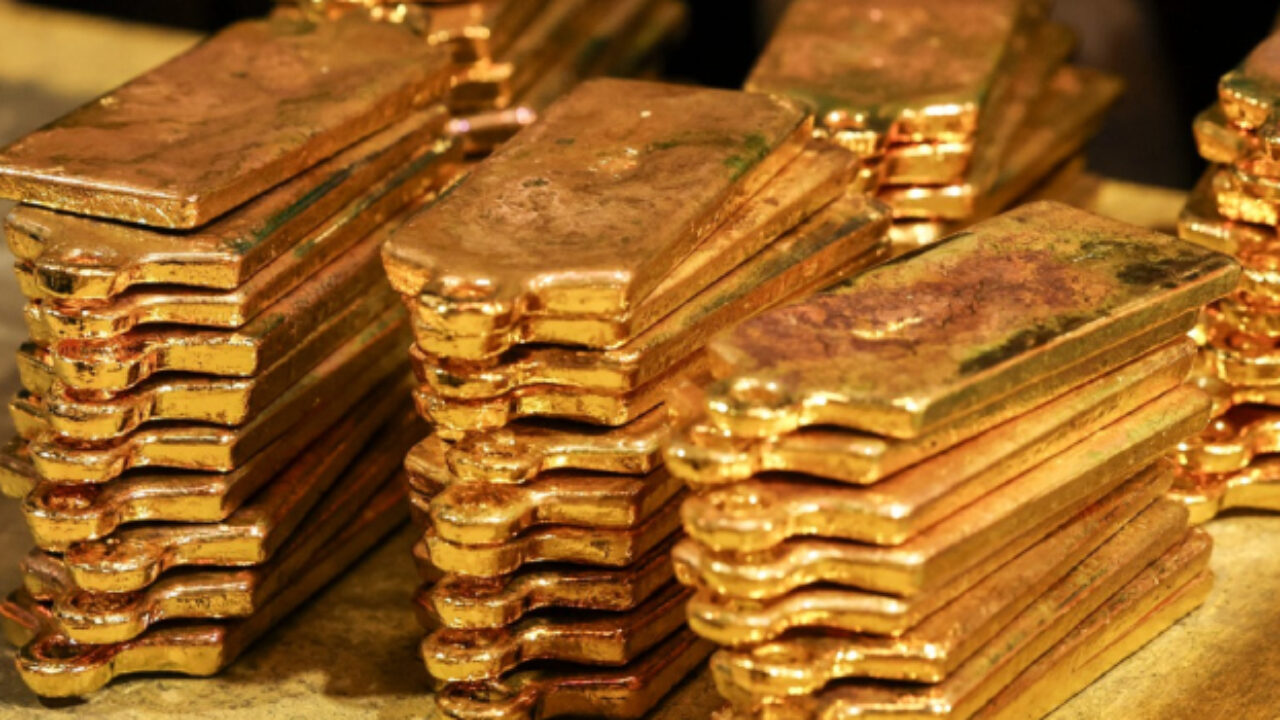
Gold staged a modest recovery on Friday, climbing 2 percent to $4,466.38 an ounce in spot trading by 06:37 GMT, as a softer U.S. dollar and opportunistic bargain-hunting lifted the metal off recent lows.
Yet the precious-metal benchmark remained on course for its fourth consecutive weekly decline, down roughly 0.5 percent for the week, underscoring how deeply the month-long U.S.-Israeli conflict with Iran has reshaped global markets.
U.S. gold futures for April delivery mirrored the move, rising 1.9 percent to $4,461 an ounce. The dollar’s retreat made dollar-denominated bullion more attractive to foreign buyers, providing the immediate catalyst for the day’s gains. But the broader picture is one of relentless pressure: since the outbreak of hostilities on February 28, gold has shed about 16 percent of its value, while the greenback has strengthened more than 2 percent over the same period.
“For weeks, gold has been treated as a liquidity asset sold to cover volatility and margin calls elsewhere,” said Tim Waterer, chief market analyst at KCM Trade. “But at current levels, it is now looking more like a value proposition for investors, which is why it’s back in favor today.
However, hawkish central banks wary of persistent oil-driven inflation continue to act as a heavy lid on gold’s ambitions to the upside, keeping any rally firmly in check.”
The dominant headwind is energy. Brent crude held firm above $105 a barrel after the conflict effectively severed shipments through the Strait of Hormuz. This narrow chokepoint normally carries roughly one-fifth of the world’s crude oil and liquefied natural gas. Higher fuel costs are already rippling through transport and manufacturing supply chains, amplifying inflationary pressures worldwide.
That dynamic presents a cruel paradox for gold. Traditionally, rising inflation enhances the metal’s allure as a store of value and inflation hedge. Yet in the current environment, the very same oil shock is hardening expectations for tighter monetary policy—and higher interest rates act as a powerful brake on non-yield assets such as bullion.
Market pricing now reflects that reality with brutal clarity. Traders no longer anticipate any U.S. Federal Reserve rate cuts in 2026 and assign a 35 percent probability of a rate hike by year-end, according to the CME Group’s FedWatch Tool. Before the conflict erupted, the consensus had pointed to at least two cuts. The shift has dramatically raised the opportunity cost of holding gold.
Compounding the uncertainty is the diplomatic backdrop. U.S. President Donald Trump announced Friday that Washington would extend its pause on strikes against Iran’s energy facilities through April, adding that talks with Tehran were proceeding “very well.” An Iranian official quickly pushed back, dismissing the U.S. proposal to end the war as “one-sided and unfair.”
With no immediate resolution in sight and oil markets braced for prolonged disruption, investors appear caught between two impulses: the instinct to seek safety in gold on one hand and the cold arithmetic of higher-for-longer interest rates on the other.
Friday’s rebound offered a brief reprieve, but the path of least resistance for the yellow metal still points downward unless either the oil shock eases or central banks blink.
WHAT YOU SHOULD KNOW
A weaker dollar and bargain hunting drove gold’s modest 2% rebound on Friday, but the metal remains locked in a four-week decline, down 16% since the U.S.-Israeli conflict with Iran began.
Surging oil prices above $105/barrel, triggered by disruptions in the Strait of Hormuz, are stoking persistent inflation fears. This is hardening expectations for higher global interest rates (with no Fed cuts now priced in for 2026 and a 35% chance of a hike), which continue to cap gold’s upside despite its traditional role as an inflation hedge.
Until the Middle East conflict eases or central banks signal dovishness, any rallies in gold are likely to be short-lived.