Less than two weeks after a Russian school videographer stood on the world’s most celebrated film stage to accept an Academy Award, a court in the very region where his story was filmed has moved to silence it.
A judge at the Central District Court in Chelyabinsk ruled on Thursday to ban “Mr. Nobody Against Putin” from Russian streaming platforms, upholding a request from the state prosecutor’s office to have the film removed from three online video platforms, including those operated by VKontakte and Yandex, “in the interests of an indefinite number of persons.”
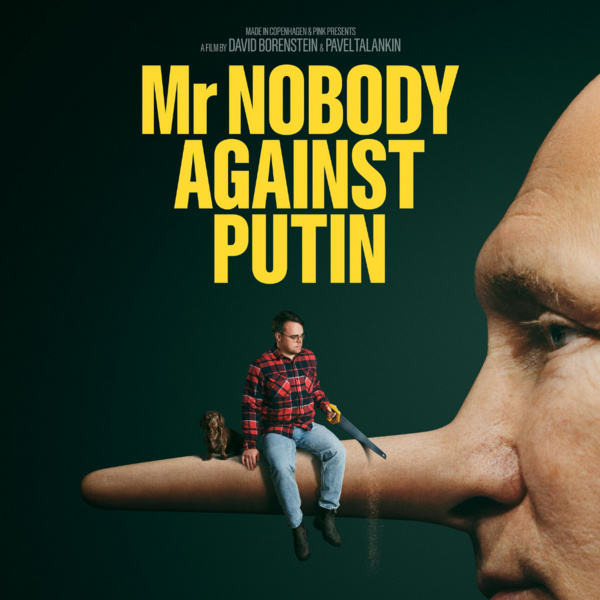
The ruling marks the first known use of the courts to formally restrict access to the film inside Russia — though, in a sign of the limits of such measures, bootleg copies are already widely circulating online within the country.
The documentary follows Pavel “Pasha” Talankin, the videographer and events coordinator at Karabash Primary School No. 1, a poor mining town near the Ural Mountains.
Talankin began seriously documenting his activities after the 2022 Russian invasion of Ukraine, when the government began requiring schools to hold regular “patriotic displays” and use state-written curriculum to justify the invasion to students.
What makes the film extraordinary is not just what Talankin captured but how. At the same time, the government instituted a requirement to upload footage of these displays to a state-run portal to prove compliance, inadvertently giving Talankin cover to film meetings, lessons, and visitors to the school without attracting suspicion. The regime, in effect, handed its own critic the tools of exposure.
He secretly collaborated with American filmmaker David Borenstein to smuggle the footage out of the country before fleeing Russia himself. Talankin left Russia in June 2024 carrying the recorded material on seven hard drives. He is now based in the Czech Republic.
The film had its world premiere at the World Cinema Documentary section of the 2025 Sundance Film Festival, where it won the Special Jury Award, and went on to win Best Documentary at the 79th British Academy Film Awards and Best Documentary Feature Film at the 98th Academy Awards.
Accepting the award, Talankin called for an end not only to the war in Ukraine but also to other military conflicts in the world, saying through an interpreter: “In the name of our future, in the name of all of our children, stop all of these wars now.”
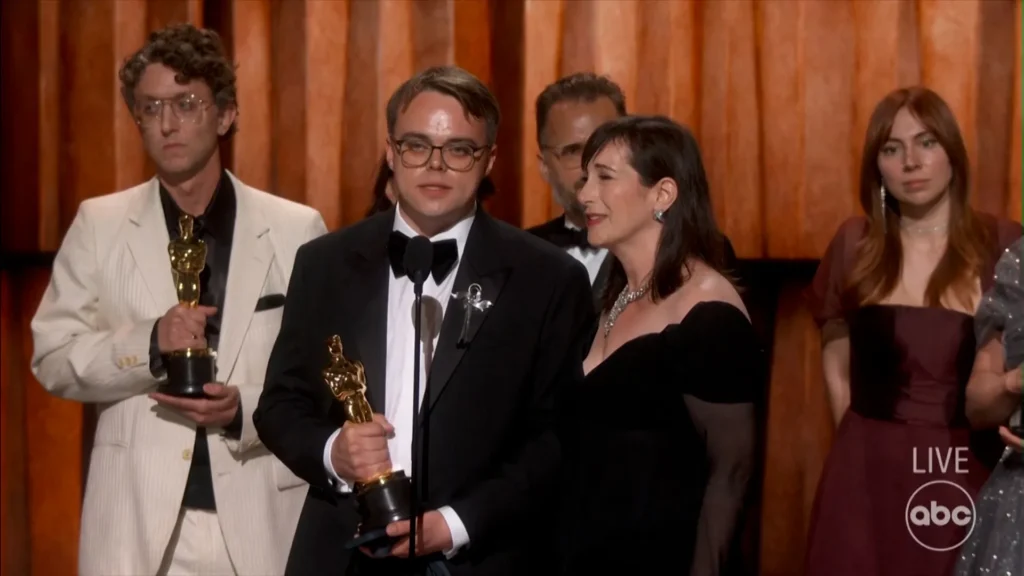
The Kremlin’s initial response was one of studied indifference. The Kremlin said it had not seen the film and therefore could not comment on its Oscar win. In Russia, state news agencies covered the 2026 Academy Award ceremony without mentioning “Mr. Nobody Against Putin,” while major state broadcasters ignored the event altogether.
That silence did not last long.
The legal assault on the film escalated swiftly. Russia’s Human Rights Council—a government-aligned body—slammed the production, claiming that “images of minors were used without obtaining the consent of their parents.” ” The Council further argued that the recordings were strictly intended as an “internal record of school activities” and alleged that the material had been misappropriated for commercial gain.
Then came the court ruling. Prosecutors argued that the film gives a negative portrayal of the Russian government and the full-scale invasion of Ukraine, and that it shows extremist and terrorist symbols, including the pro-peace white-blue-white flag that Russia’s Supreme Court has banned.
According to prosecutors, the white-blue-white flag is associated with the “Freedom of Russia” Legion, which is fighting alongside Ukrainian forces against occupying Russian troops. For carrying that symbol on screen, the film now stands accused of promoting terrorism on Russian soil.
The case against the film cannot be separated from a broader campaign by Moscow to control the narrative of the war—beginning in its own schools. Some of the film’s most striking scenes show a guest lesson from members of the paramilitary Wagner Group. As one of Putin’s television speeches captured in the film makes chillingly clear: war, in the Kremlin’s view, is won by teachers, not soldiers.
Talankin had been a beloved mentor, prankster, and nonconformist at his school, known for hanging up democracy posters and offering a haven in his office for students who felt out of place. But after the invasion, his role transformed — he was suddenly required to document state-sanctioned propaganda events, a duty he turned into an act of resistance.
The irony of Thursday’s ruling is plain: a court in the same Chelyabinsk region featured in the film has now given it fresh global headlines, just as Russian viewers — curious after weeks of international coverage of the Oscars — are actively seeking it out.
Speaking after the Academy Awards, Talankin said he believes the debate around the film is already changing Russian society.
Whether a court order can silence a film that has already won the world’s most prestigious documentary prize — and whose bootleg copies are spreading freely online — remains very much in doubt. What is certain is that the Kremlin’s effort to control history, in classrooms and courtrooms alike, is itself now part of the story.
WHAT YOU SHOULD KNOW
A Russian court’s attempt to ban Mr. Nobody Against Putin — an Oscar-winning documentary exposing state-sponsored war propaganda in Russian schools — has done little more than amplify the very message Moscow wanted suppressed.
The film, built on two years of footage secretly recorded and smuggled out of Russia by a courageous school videographer, lays bare how the Kremlin is weaponizing children’s education to sustain public support for its war in Ukraine.
The ban is largely symbolic: bootleg copies continue to circulate freely inside Russia. In trying to silence the film, the Russian government has only ensured more people will seek it out.