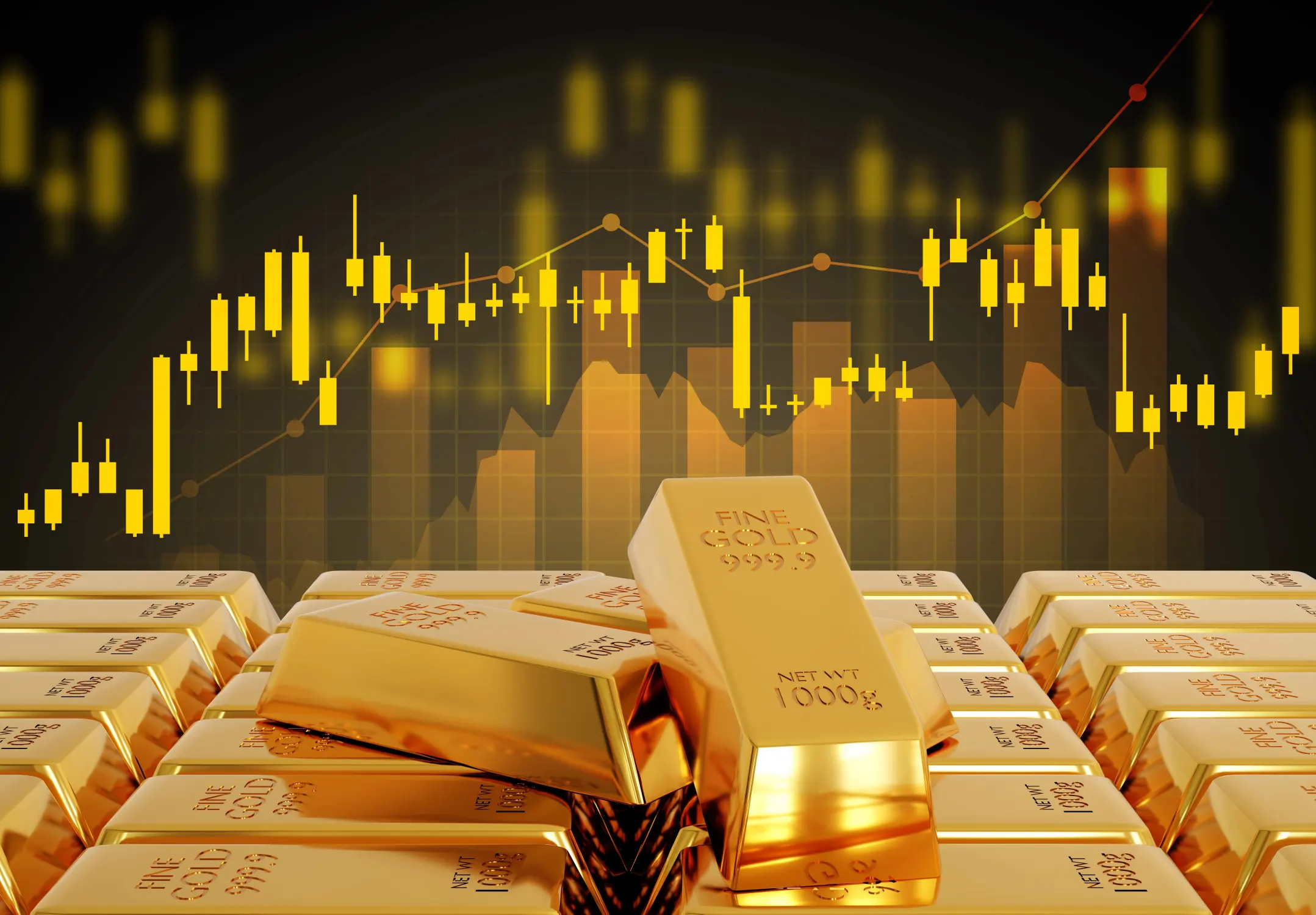
The global gold market is in a historic freefall, plunging over 8% on Monday to a four-month low. This brutal, multi-day sell-off has rapidly erased the safe-haven asset’s value.
The current freefall follows what analysts are calling the worst weekly performance for bullion in over four decades. As of 07:57 GMT, spot gold was trading down 6.3% at $4,203.21 per ounce, though the session saw even darker depths earlier in the morning when prices bottomed out at $4,097.99.
While gold traditionally serves as a sanctuary during times of war, the escalating conflict in the Middle East is currently acting as a double-edged sword. With the Iranian crisis entering its fourth week and Tehran threatening to retaliate against Gulf energy infrastructure, the economic narrative has shifted from “safety” to “inflationary shock.”
The primary catalyst for the decline isn’t the conflict itself, but the fiscal response it necessitates.
Energy Costs: Oil remains stubbornly above $110 a barrel, fueled by the closure of the Strait of Hormuz.
Inflationary Spike: These soaring energy costs are driving up transport and manufacturing expenses globally.
The Yield Trap: While inflation usually helps gold, it is currently forcing central banks to rethink their strategy. Market expectations have pivoted violently from potential rate cuts to the likelihood of further interest rate hikes by the U.S. Federal Reserve.
“Expectations have pivoted from rate cuts to potential rate hikes, which have tarnished gold’s appeal from a yield point of view,” noted Tim Waterer, chief market analyst at KCM Trade.
The sell-off is being further exacerbated by a “liquidity crunch” in broader financial markets. As Asian shares and global equities face downward pressure, investors are being forced to liquidate their gold positions—one of the most liquid assets available—to cover margin calls on other losing trades.
According to BMI, a unit of Fitch Solutions, the narrative is now being dominated by a firmer U.S. dollar and a receding probability of Fed easing. The CME FedWatch tool now suggests that a rate hike in 2026 is more likely than a cut, a complete reversal from sentiment just a month ago.
Gold is not the only casualty of this macroeconomic shift. The entire precious metals sector saw red on Monday:
Silver: Dropped 6.1% to $63.66 per ounce.
Platinum: Slipped 6.4% to $1,799.25.
Palladium: Shed 3.6% to $1,352.75.
With gold now down roughly 25% from its record peak of $5,594.82 set in late January, the market is bracing for further volatility. As the U.S. dollar strengthens, the “glitter” of non-yielding assets continues to fade in the eyes of investors seeking yield over safety.
WHAT YOU SHOULD KNOW
Gold is currently losing its status as a “safe haven” because the threat of high interest rates is overshadowing geopolitical fear.
While the Middle East conflict usually drives investors toward gold, the resulting surge in oil prices has stoked such intense inflation concerns that the market now expects the Federal Reserve to raise interest rates rather than cut them.
Because gold provides no yield, it cannot compete with the rising returns of the U.S. dollar and Treasury bonds, leading to a massive liquidation, further fueled by investors selling gold to cover losses in the crashing stock market.