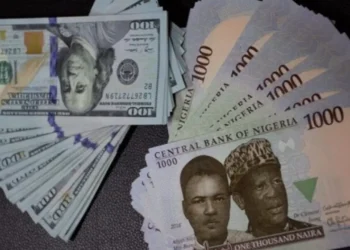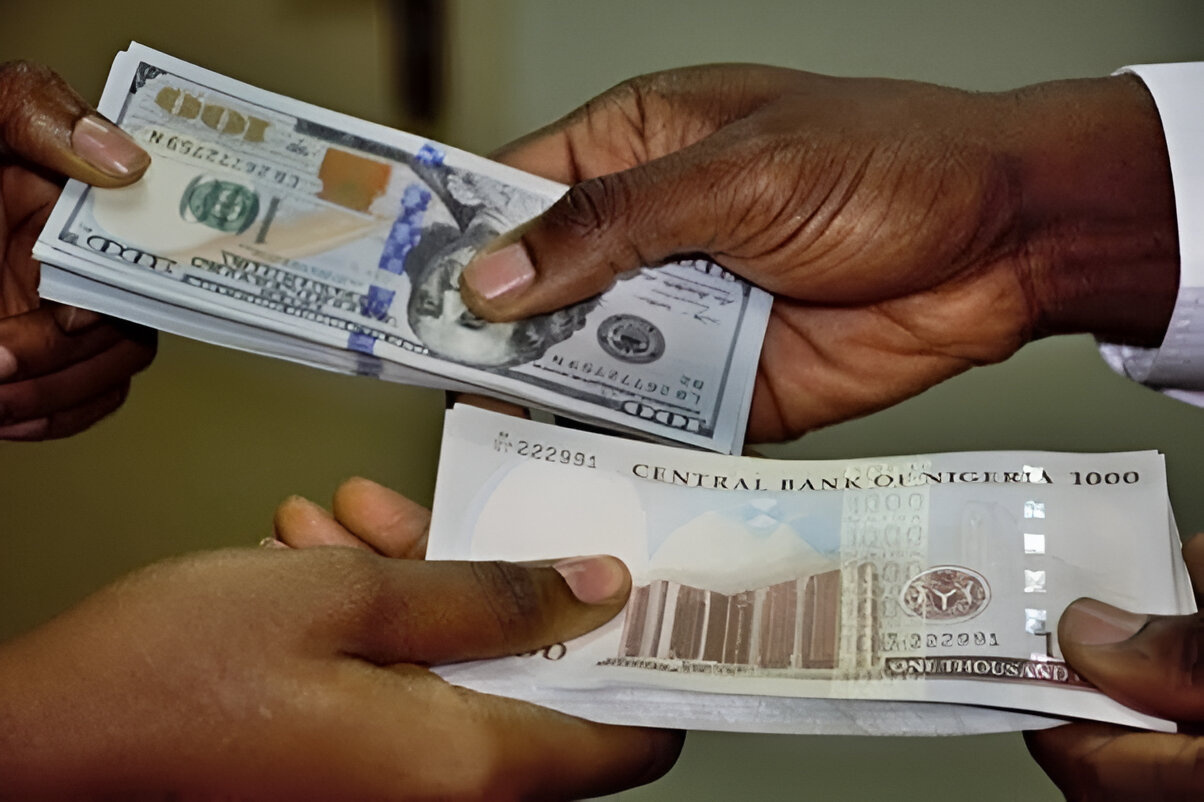
The Nigerian Naira continued its resilient streak against the U.S. Dollar on Monday, closing at ₦1,355/$ in the official market.
This latest gain marks the local currency’s strongest performance since late February, signaling a cooling of the volatility that has long defined the foreign exchange landscape.
According to official data from the Central Bank of Nigeria (CBN), Monday’s closing rate represents a steady appreciation from Friday’s close of ₦1,363.5/$. The movement caps a remarkably consistent week for the Naira, which has marched steadily upward from a midweek low of ₦1,390.5/$.
Market analysts have noted that the currency’s trajectory over the last five trading sessions suggests a newfound “floor” for the Naira. The week-on-week progression highlights a controlled recovery:
Exchange Rate (₦/$) From Past Week
Tuesday: ₦1,390.5
Wednesday: ₦1,373.5
Thursday: ₦1,370.0
Friday: ₦1,363.5
Monday: ₦1,355.0
During Monday’s intraday trading, the Naira showed signs of significant stability, fluctuating within a narrow band between ₦1,365.35 and ₦1,354, avoiding the wild swings that previously spooked foreign investors.
Central to the naira’s defense is Nigeria’s ballooning “war chest” of external reserves. The CBN reported that net foreign exchange reserves climbed to $34.80 billion at the end of 2025.
By February 2026, gross external reserves surged further to $50.45 billion, bolstered by a combination of robust oil earnings and a steady clip of foreign capital inflows.
CBN Governor Olayemi Cardoso emphasized that the apex bank’s 2026 macroeconomic outlook remains bullish. Projections suggest reserves could touch $51.04 billion by year-end, providing the bank with the liquidity necessary to intervene and absorb market shocks.
“Our ongoing monetary and foreign exchange reforms are not just reactive measures; they are designed to rebuild the foundation of investor confidence and ensure deep market liquidity,” Governor Cardoso stated.
While the domestic picture looks bright, the naira’s performance is unfolding against a backdrop of cautious global sentiment. In early Asian trading, major currencies like the Euro and the British Pound dipped slightly, falling 0.12% and 0.1%, respectively, as the U.S. Dollar Index held firm at 99.913.
Global investors are currently walking a tightrope, weighing geopolitical tensions in the Middle East, specifically involving Iran, against the potential for energy market disruptions.
Additionally, market participants are eyeing the Australian dollar, which weakened slightly ahead of a critical interest rate decision by the Reserve Bank of Australia.
For Nigerian businesses and consumers, the ₦1,355/$ mark is more than just a number; it is a psychological win. If the CBN can maintain this liquidity-driven stability, the “steady recovery trend” may well transition from a temporary rally into a long-term stabilization of the Nigerian economy.
WHAT YOU SHOULD KNOW
The Naira’s recovery to ₦1,355/$, its strongest level since February, is primarily driven by a significant surge in foreign reserves, which now stand at over $50 billion.
While global geopolitical tensions and a steady U.S. dollar continue to create a cautious international climate, the Central Bank’s aggressive monetary reforms and increased oil earnings have provided the liquidity necessary to stabilize the local currency.
For the average observer, this indicates that Nigeria’s “financial war chest” is currently robust enough to defend the Naira against extreme volatility.