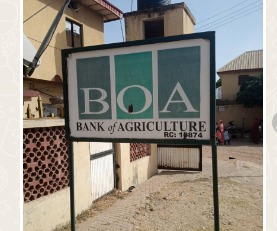
The Federal Government of Nigeria has taken a significant step to boost the agricultural sector by approving a N250 billion credit facility for the Bank of Agriculture (BOA), aimed squarely at empowering smallholder farmers nationwide.
This initiative, announced by the Minister of Agriculture and Food Security, Senator Abubakar Kyari, during the Quarterly Citizens and Stakeholders Engagement Session in Abuja on Friday, offers farmers access to affordable loans at a single-digit interest rate, a critical relief in a sector long hampered by high borrowing costs and limited financial inclusion.
Senator Kyari positioned the facility as a cornerstone of the administration’s multifaceted strategy to fortify food security and agricultural resilience. It forms part of broader efforts to enhance insurance coverage, expand financing options, and strengthen key institutions such as the Nigerian Agricultural Insurance Corporation (NAIC), the National Agricultural Quarantine Service (NAQS), and the BOA itself.
“This grant aims to support food production, enhance mechanization, and improve the livelihoods of farmers,” Kyari stated, underscoring its alignment with the Ministry’s goals of creating sustainable livelihood opportunities, driving wealth creation, and accelerating sector-wide growth.
Over the past two years, NAIC has provided risk coverage totaling N700 billion to more than 199,000 farmers, demonstrating tangible progress in protecting producers against losses from climate events, pests, and other uncertainties. The new N250 billion facility builds on this momentum, targeting increased productivity through better access to modern equipment, quality inputs like seeds and fertilizers, and improved market linkages.
Smallholder farmers, who account for over 90% of Nigeria’s agricultural output, remain the backbone of the nation’s food system yet face persistent barriers, including inadequate capital and outdated practices. The facility, channeled through the BOA, seeks to address these systemic challenges head-on.
This latest intervention complements earlier high-profile moves. In September 2025, the BOA secured a landmark $1 billion intervention fund in partnership with the African Export-Import Bank (Afreximbank).
That agreement, formalized during the Intra-African Trade Fair (IATF) in Algiers, established frameworks for the National Smallholder Farmers Fund approved under President Bola Ahmed Tinubu to provide affordable credit across the agricultural value chain, from production to processing and market access.
The government has also recorded notable gains in input distribution and regulatory reforms. More than 1.9 million bags of fertilizer have reached nearly 1 million farmers, while strengthened oversight in the fertilizer supply chain has promoted greater transparency and reduced inefficiencies.
Senator Kyari highlighted additional transformative efforts, including praise for the Agricultural Research Council of Nigeria (ARCN) in advancing crop varieties and production techniques. The distribution of 40 million cocoa seedlings stands out as a strategic push to revive Nigeria’s cocoa industry—one of its traditional export earners—through long-term plantation development and increased output.
The National Agricultural Development Fund (NADF) has further supported sector sustainability by financing diverse initiatives over the past two years.
As Nigeria grapples with inflation, climate vulnerabilities, and the imperative to reduce food import dependence, these coordinated interventions signal a renewed commitment to agriculture as an engine of economic diversification and national stability.
WHAT YOU SHOULD KNOW
The Federal Government of Nigeria has approved a ₦250 billion low-interest credit facility through the Bank of Agriculture, specifically to empower smallholder farmers, the group responsible for over 90% of the country’s food production.