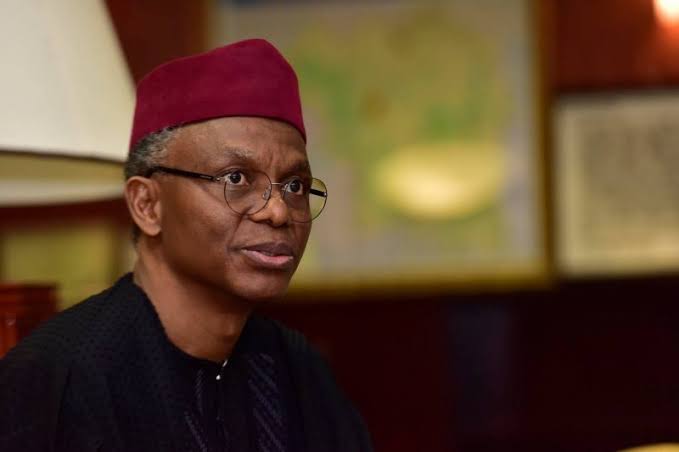
The Independent Corrupt Practices and Other Related Offences Commission has presented a detailed list of documents and electronic devices were recovered from the Abuja residence of former Kaduna State Governor, Nasir El-Rufai.
The anti-graft agency filed the details before the Federal Capital Territory High Court while opposing a N1bn fundamental rights suit instituted by the former governor.
El-Rufai had gone to court to challenge what he described as his unlawful arrest, detention and the search of his home last month.
In its response, the ICPC stated that its officers acted on a search warrant issued on February 18 and executed on February 19 at 12 Mambilla Street, Asokoro, Abuja, between 1:37pm and 3:56pm.
The commission said the operation was carried out in the presence of officers of the Nigeria Police Force and was witnessed by El-Rufai’s wife, Hadiza, and his son, Mohammed.
According to the court filings, the documents recovered from the residence include investor account statements, asset declaration forms, certificates of registration for business entities, corporate compliance records, client Know-Your-Customer files, documents linked to the African Democratic Congress welfare secretary, records of domestic loans approved by the Kaduna State House of Assembly from 2015 to 2023, records of foreign loans approved by the same House within the same period, and interim investigation reports involving El-Rufai and some associates.
The commission also listed Ecobank Nigeria Plc share certificates, land documents, student financial services papers, valuation reports, deeds of assignment, irrevocable Powers of Attorney for multiple properties, Afri-Venture Capital Company documents, payment mandates, and media and publicity materials from the Office of the former governor.
In addition to the paperwork, the ICPC said several electronic devices were seized. These include nine flash drives, one memory card, seven hard drives, Apple MacBook Pro laptops, Elumac Book Pro laptops, Blackberry phones, Nokia N95 phones, Toshiba phones, Samsung IDEOS phones, Google IDEOS phones, 18 other unspecified electronic devices, and a Remarkable tablet with its chargers.
The agency informed the court that all the items were documented and sealed for forensic examination. It explained that a detailed Device Documentation Form was prepared to record the serial numbers, types, storage capacity and accessories of each gadget recovered.
The commission added that the documentation process was witnessed by Hadiza El-Rufai, Mohammed El-Rufai, Ajibade Abiodun and Asjuquo J.E.
The ICPC, however, noted that El-Rufai indicated in the documentation that he did not grant consent for access to any of the electronic devices found in his home.
The commission stated that the materials would undergo forensic analysis as part of ongoing investigations into alleged corruption and concealment of assets.
Reacting to the development, the former governor’s family accused the commission of attempting to treat his silence during interrogation as proof of wrongdoing. In a statement signed by his son, Bello El-Rufai, a member of the House of Representatives, the family maintained that if there was evidence against him, he should be charged to court, adding that the investigation had lasted for more than two years.
They insisted that his silence was within his constitutional rights and not an admission of guilt. The family also disagreed with the commission’s account of the items seized, claiming that only personal belongings such as old mobile phones, flash drives and laptops were taken from the property.
They further argued that the search warrant used for the operation was invalid and had been obtained improperly, stating that their lawyers had challenged it before a competent court.