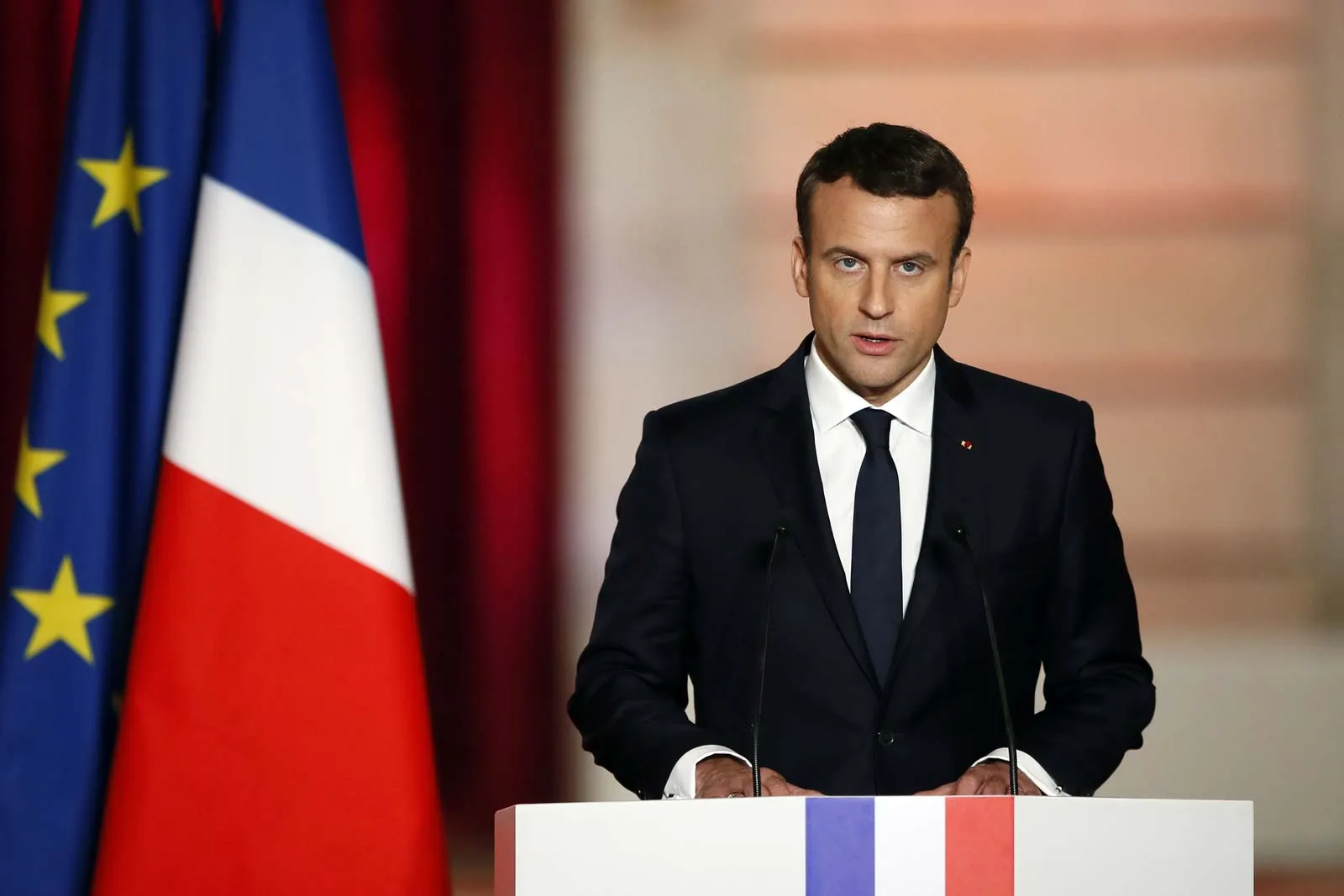
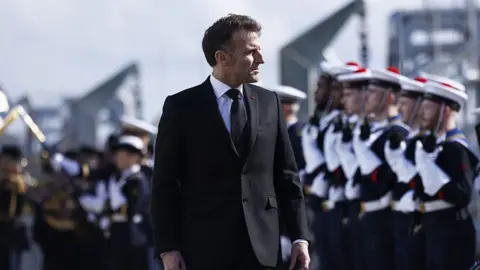
President Emmanuel Macron announced Monday that France will expand its nuclear arsenal and could deploy nuclear-armed aircraft to allied European countries for the first time, as part of a new “forward” deterrence strategy.
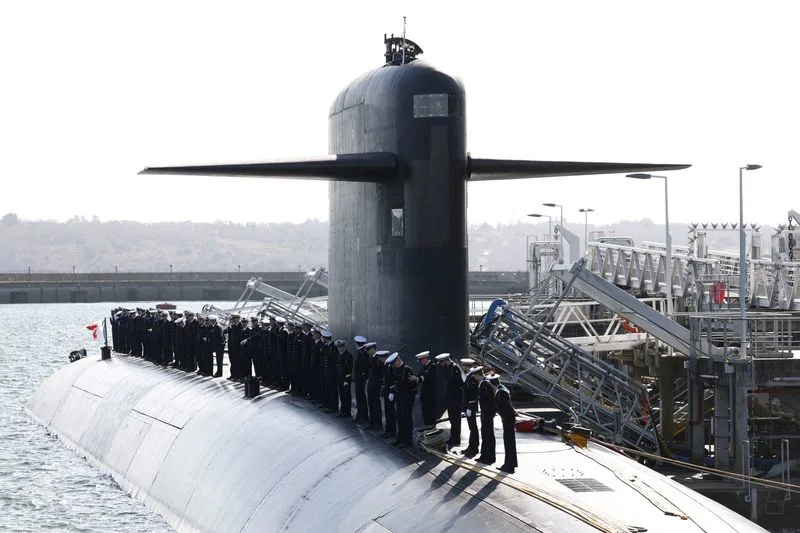
Speaking from the Île Longue nuclear submarine base, Macron said eight European nations—including Germany, Poland, Sweden, and Britain—had agreed to participate in the initiative aimed at strengthening continental security.
Nuclear Steering Group With Germany
In a joint statement issued after Macron’s speech, France and Germany confirmed the creation of a “nuclear steering group”, stressing that the arrangement would “add to, not substitute for, NATO’s nuclear deterrence.”
“We are currently experiencing a period of geopolitical upheaval fraught with risks,” Macron said, referencing the wider instability triggered by US and Israeli strikes against Iran.
“We must strengthen our nuclear deterrent in the face of multiple threats, and we must consider our deterrence strategy deep within the European continent, with full respect for our sovereignty,” he added.
Macron said the participating countries—also including the Netherlands, Belgium, Greece, and Denmark—could temporarily host French “strategic air forces,” allowing nuclear-capable aircraft to disperse across Europe in order to “complicate the calculations of our adversaries.”
He emphasised that France would retain full control over nuclear decision-making.
Complementary to NATO
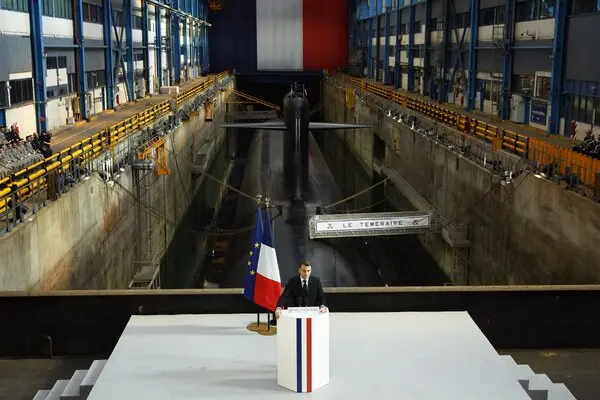
Macron stressed the new framework would operate alongside the North Atlantic Treaty Organization (NATO), not replace it.
“The forward deterrence we are proposing is a separate effort, which has its own value and is fully complementary to NATO’s, both strategically and technically,” he said.
The move comes as Russia’s war in Ukraine continues and some European leaders express concern over Washington’s long-term commitment to Europe’s security under US President Donald Trump.
France maintains the world’s fourth-largest nuclear arsenal, estimated at around 290 warheads. Britain remains the only other nuclear-armed European power.
Macron also announced that France would increase the number of nuclear warheads but would no longer publicly disclose details about its stockpile.
European Reactions
Polish Prime Minister Donald Tusk said Warsaw was in talks with France and other partners on next steps.
“We are arming up together with our friends so that our enemies will never dare to attack us,” Tusk wrote on X.
Swedish Prime Minister Ulf Kristersson welcomed the initiative, saying Sweden viewed it positively.
“Naturally, we would most like to see a world completely free of nuclear weapons,” he said. “But as long as Russia has these weapons and threatens its neighbours, democracies must be able to deter attacks and safeguard our own security and freedom.”
Political Uncertainty
The announcement also comes ahead of France’s next presidential election, where the far-right National Rally party led by Marine Le Pen is seen as a strong contender.
Analysts warn that a shift in leadership could affect the long-term credibility of the initiative, particularly if a future government reconsiders France’s current strategic posture.
What you should know
President Emmanuel Macron has unveiled a plan to expand France’s nuclear deterrence and potentially deploy nuclear-capable aircraft to allied European countries.
The initiative, backed by eight European nations, is designed to complement NATO amid heightened geopolitical tensions, particularly from Russia.
France will retain sole authority over nuclear decisions while increasing its warhead numbers.