The Central Bank of Nigeria (CBN) is set to convene its 304th Monetary Policy Committee meeting on February 23-24, 2026, at a critical juncture for Africa’s largest economy, as policymakers continue their battle against stubborn inflation and foreign exchange market instability.
The two-day gathering, scheduled to take place at the CBN’s headquarters in Abuja, will see Governor Yemi Cardoso and his team of deputy governors, board members, and external experts deliberate on the monetary direction needed to steer Nigeria through ongoing macroeconomic headwinds.
According to a circular published on the apex bank’s website on Monday, proceedings will commence at 10:00 a.m. on February 23 in the MPC Meeting Room on the 11th floor of the CBN Head Office, with the second day’s session starting at 8:00 a.m.
The upcoming meeting arrives against the backdrop of an extended period of tight monetary policy. At its November 2025 session, the MPC maintained the benchmark Monetary Policy Rate at 27 percent—a historically elevated level that reflects the central bank’s determination to squeeze inflation out of the system, even at the cost of higher borrowing expenses for businesses and consumers.
This hawkish posture marks a continuation of the restrictive policy framework that has defined the CBN’s approach throughout much of 2025. The central bank has repeatedly emphasized that monetary discipline remains essential to restoring price stability and rebuilding investor confidence in Nigeria’s economic fundamentals.
“The committee has been consistent in its messaging that macroeconomic stability must take precedence,” noted one banking sector analyst who requested anonymity. “While the business community has expressed concern about elevated interest rates constraining growth, the CBN appears convinced that allowing inflation to run unchecked would pose even greater risks.”
The only notable policy shift in recent months came during the 302nd MPC meeting in September 2025, when the committee delivered a modest 50-basis-point rate cut, lowering the MPR from 27.5 percent to 27 percent. That decision was accompanied by a significant recalibration of the asymmetric corridor around the MPR, which was narrowed to +250/-250 basis points from the previous +500/-100 range.
Market observers interpreted those moves as tentative signals that policymakers might be preparing for a gradual normalization of monetary conditions, contingent on sustained improvements in inflation data.
However, subsequent developments appear to have reinforced the case for caution. At the November gathering—the 303rd MPC meeting—the committee opted overwhelmingly for policy continuity, leaving all major parameters unchanged while making only marginal adjustments to the asymmetric corridor, which was set at +50/-450 basis points.
The MPC wields several key instruments to manage monetary conditions and influence credit availability across the Nigerian economy:
The “Monetary Policy Rate” serves as the anchor for interest rate conditions, guiding commercial banks’ lending and deposit rates. At 27 percent, it remains among the highest policy rates in major emerging markets.
The “Cash Reserve Ratio”—currently maintained at 45 percent for deposit money banks and 16 percent for merchant banks—determines the proportion of deposits that commercial lenders must hold with the central bank, effectively limiting the funds available for lending. Additionally, a special 75 percent CRR applies to non-Treasury Single Account public sector deposits, a measure designed to mop up excess liquidity.
The “Liquidity Ratio,” held steady at 30 percent, represents the minimum proportion of liquid assets banks must maintain relative to their deposit liabilities, ensuring financial system resilience.
Together, these tools shape the availability and cost of credit in the economy, with direct implications for investment, consumption, and ultimately, economic growth.
As committee members gather next week, they will be scrutinizing the latest data on consumer price inflation, gross domestic product performance, and foreign exchange market dynamics—metrics that have shown mixed signals in recent months.
Inflation remains the most pressing concern. Despite the CBN’s aggressive tightening campaign, price pressures have proven persistent, driven by structural factors including insecurity affecting agricultural production, high energy costs, and exchange rate pass-through effects.
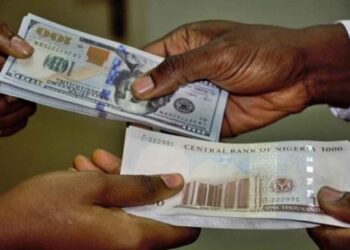
The foreign exchange market, meanwhile, continues to experience volatility, with periodic shortages of hard currency constraining businesses and fueling import costs. The CBN’s efforts to stabilize the naira through both monetary policy and direct market interventions have yielded uneven results.
Financial market participants will be watching closely for any indication that the MPC is prepared to adjust its stance. While some economists argue that a prolonged period of elevated rates risks choking off growth and deepening Nigeria’s economic challenges, others maintain that premature easing could undermine hard-won progress on inflation expectations.
The committee’s communiqué, typically released on the final day of deliberations, will be parsed for clues about the trajectory of monetary policy in the months ahead and the central bank’s assessment of macroeconomic conditions.
For millions of Nigerians struggling with the high cost of living, and for businesses navigating an environment of expensive credit, the decisions taken in that 11th-floor meeting room could have far-reaching consequences for household budgets and corporate balance sheets alike.
The CBN has not indicated whether Governor Cardoso will hold a post-meeting press conference, though such briefings have become standard practice following recent MPC sessions.
WHAT YOU SHOULD KNOW
Nigeria’s Central Bank will hold a critical two-day policy meeting on February 23-24, 2026, to decide whether to maintain its aggressive 27% interest rate, kept at this historically high level to fight persistent inflation and stabilize the volatile naira.
The decision directly impacts every Nigerian: keeping rates high means expensive loans for businesses and continued economic pressure, but cutting rates prematurely could worsen inflation and further weaken the currency.
After only one modest rate cut since September 2025, the CBN faces a difficult balancing act between controlling prices and supporting economic growth. The outcome will shape borrowing costs, business investment, and the cost of living for months to come.