In a bold move that underscores Nigeria’s industrial ambitions despite economic headwinds, BUA Cement Plc announced plans on Monday to construct a massive 3-million-tonne-per-annum cement production line in Sokoto State, marking one of the largest single investments in the country’s manufacturing sector.
The $240 million project, to be executed in partnership with China’s CBMI Construction Co., Ltd., represents more than just an expansion for Nigeria’s second-largest cement producer—it signals the company’s strategic bet on West Africa‘s long-term infrastructure boom and positions it to capture growing demand across the landlocked Sahel region.
The choice of Sokoto for this latest expansion is far from coincidental. Located in Nigeria’s Northwest—a region with significant infrastructure deficits and proximity to Niger, Benin, and other landlocked markets—BUA Cement’s facility operates as the only cement plant in the area, giving it virtual monopoly status in a territory hungry for construction materials.
“This gives BUA an enviable position,” noted industry analysts familiar with the project. “Sokoto isn’t just about serving northern Nigeria—it’s a gateway to export markets that are experiencing their own infrastructure revolutions.”
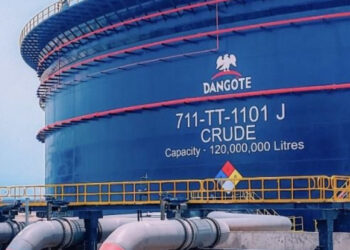
Upon completion, expected within the next 18 to 24 months, the new line will catapult BUA Cement’s total annual production capacity to 20 million tonnes, narrowing the gap with market leader Dangote Cement and intensifying competition in a sector that has become a barometer for Nigeria’s industrial health.
The collaboration with CBMI represents a deepening of ties between BUA and the Chinese engineering giant, which has already delivered 14 million tonnes of production capacity across BUA’s operations in Obu, Edo State, and its existing Sokoto facilities over the past decade and a half.
This track record of execution may prove crucial in a country where large-scale industrial projects often face delays due to infrastructure challenges, regulatory hurdles, and foreign exchange volatility. CBMI’s familiarity with Nigerian operating conditions could expedite delivery timelines and reduce cost overruns—critical factors in maintaining investor confidence.
Perhaps the most innovative aspect of BUA’s expansion lies not in the cement line itself, but in how it plans to power it. The company is constructing a 700-tonne-per-day mini liquefied natural gas (LNG) plant in Kogi State, designed to supply clean energy to both the new Sokoto facility and existing operations.
This integrated approach addresses one of Nigerian manufacturing’s most persistent challenges: unreliable and expensive power. By co-locating energy production with heavy industry, BUA is following a playbook increasingly adopted by forward-thinking Nigerian industrialists—one that promises operational efficiency, cost savings, and reduced carbon emissions at a time when environmental credentials are becoming critical for accessing international financing.
The mini-LNG plant also positions BUA to potentially monetize excess gas production, creating an additional revenue stream while contributing to Nigeria’s broader energy transition goals.
The expansion comes at a pivotal moment for Nigeria’s cement sector. While demand remains robust—driven by population growth, urbanization, and government infrastructure projects—producers face mounting pressures from naira devaluation, rising energy costs, and inflation that has squeezed consumer purchasing power.
BUA’s capacity expansion, however, suggests management’s confidence in sustained long-term demand, particularly as West African governments prioritize infrastructure development under various regional integration frameworks.
The move will intensify competition with Dangote Cement, which has dominated Nigeria’s market for years, and could trigger further consolidation or capacity additions across the sector. For consumers and construction companies, increased capacity could translate to more competitive pricing—welcome relief in an inflationary environment.
As construction commences in Sokoto, all eyes will be on BUA Cement’s ability to execute on schedule and budget while navigating Nigeria’s challenging macroeconomic environment. Success could establish a new blueprint for industrial development in the country—one that prioritizes energy integration, strategic geographic positioning, and partnerships with experienced international contractors.
For West Africa’s infrastructure ambitions, the project represents tangible progress. For BUA Cement, it’s a calculated gamble that the region’s construction boom has only just begun.
The Sokoto facility is expected to begin commercial operations in late 2027, with the mini-LNG plant in Kogi anticipated to come online around the same timeframe.
WHAT YOU SHOULD KNOW
BUA Cement’s $240 million Sokoto expansion is a strategic power play that goes beyond cement production. By building a 3-million-tonne facility in Nigeria’s only North-West cement plant location, paired with its own mini-LNG power plant, BUA is tackling two critical challenges at once: capturing underserved markets across West Africa’s landlocked Sahel region while solving Nigeria’s chronic energy problem through integrated manufacturing.
This project-level energy independence represents the future of Nigerian industrial competitiveness—where success depends not just on production capacity, but on controlling your own reliable, cost-effective power supply.
When complete, BUA’s 20-million-tonne total capacity will intensify rivalry with Dangote Cement and potentially lower prices for consumers, but the real innovation is the self-sufficient energy model that other manufacturers will likely replicate.