• About Us
  • Advertise
  • Privacy & Policy
  • Contact Us
  • Terms and Conditions
Wednesday, April 22, 2026
Verily News
No Result
View All Result
  • News
    • Breaking News
    • Global News
  • Politics
    • Political Analysis
    • Government & Policies
  • Business & Economy
    • DIY and FAQ
    • Product Reviews
  • Entertainment
    • Sports
    • Movie
    • Music
  • Technology
  • Trends
  • Fact-Check
    • Investigative Reports
  • Opinion
  • Share your story
  • News
    • Breaking News
    • Global News
  • Politics
    • Political Analysis
    • Government & Policies
  • Business & Economy
    • DIY and FAQ
    • Product Reviews
  • Entertainment
    • Sports
    • Movie
    • Music
  • Technology
  • Trends
  • Fact-Check
    • Investigative Reports
  • Opinion
  • Share your story
No Result
View All Result
No Result
View All Result
Home Business & Economy

Dangote Blames Nigeria’s Tax Structure for Higher Domestic Cement Prices

December 21, 2025
in Business & Economy
Reading Time: 3 mins read
0
Dangote
Share on FacebookShare on TwitterShare on Linkedin
Spread the love

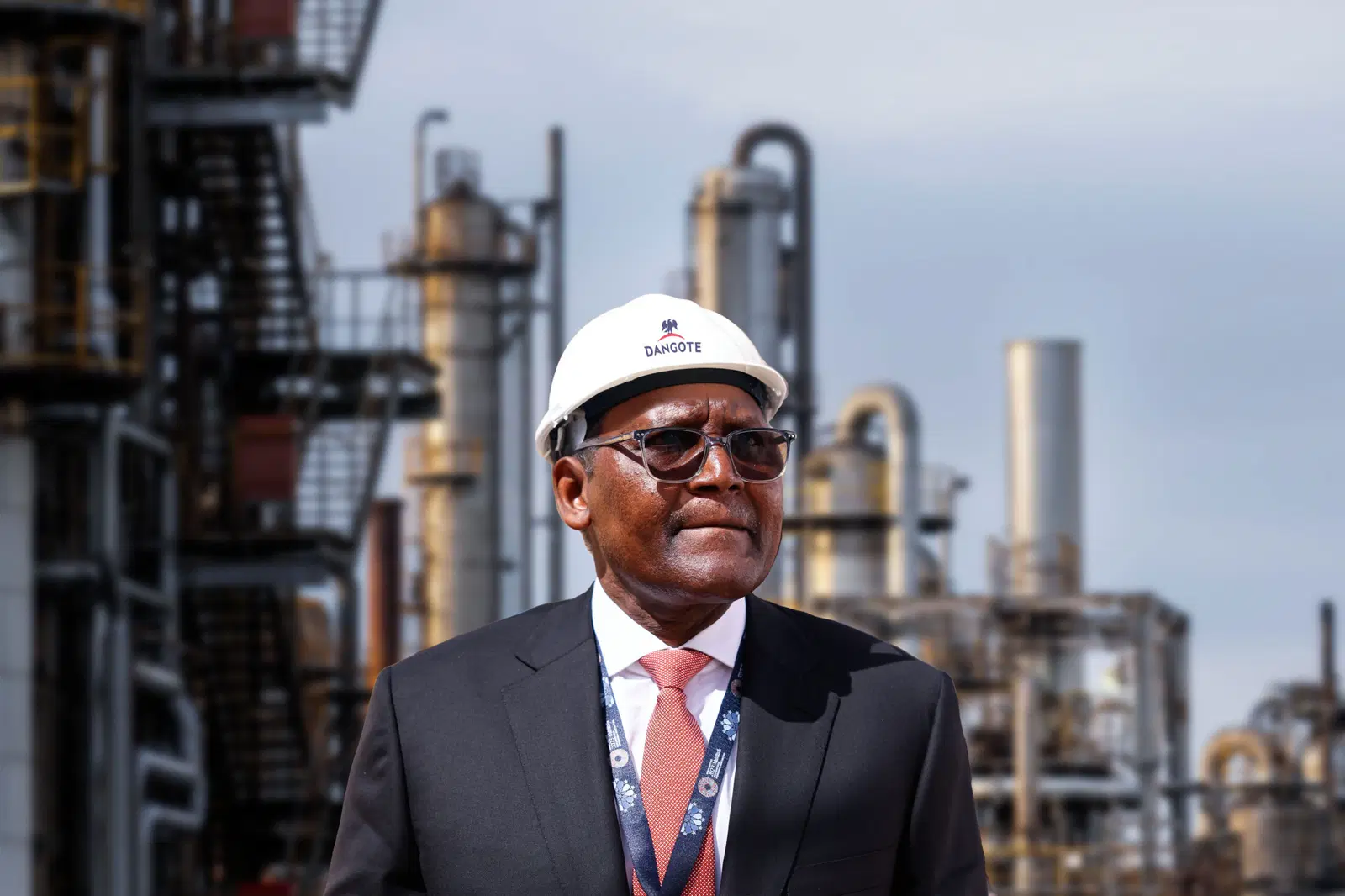
In a candid revelation that has reignited debate over Nigeria’s economic policies, Africa’s richest man, Aliko Dangote, has disclosed that cement produced in his factories sells for less abroad than it does to Nigerian consumers—and he’s pointing directly at the country’s tax regime as the culprit.

Speaking in an exclusive interview with Business Insider Africa, the chairman of Dangote Group laid bare the mathematics behind a pricing paradox that has long frustrated ordinary Nigerians: why locally manufactured cement often costs more at home than similar products exported to international markets.

“When you look at my invoice, the cement I export is cheaper than the one I’m selling domestically, because that’s how exports work,” Dangote explained, detailing a cascade of fiscal obligations that he says fundamentally distort domestic pricing.

According to the industrialist, cement destined for export escapes a punishing gauntlet of taxes and levies that dramatically inflate costs for the domestic market. The list is extensive: a 30% corporate income tax, a 2% education levy, a 1% health levy, a 7.5% Value Added Tax (VAT), and a 10% withholding tax—charges that cumulatively add substantial overhead to production costs for goods sold within Nigeria’s borders.

These exemptions, Dangote argued, are what enable Nigerian cement to compete toe-to-toe with products from established manufacturing powerhouses, including Turkey, Russia, and China, in international markets. But the flip side of this export competitiveness is a domestic market where consumers effectively subsidize the country’s tax collection system through higher prices.

“The consequence of this system is that domestic consumers end up shouldering the burden of structural inefficiencies,” Dangote said, characterizing the situation as symptomatic of deeper policy challenges.

The billionaire’s comments touch a raw nerve in Nigeria, where cement prices have become a lightning rod for broader frustrations about the cost of living and the government’s handling of the economy. For years, Nigerians have questioned why they pay premium prices for a product manufactured on their own soil, while foreign buyers enjoy more favorable terms.

Dangote’s explanation shifts the focus from corporate pricing strategies to government fiscal policy, suggesting that the issue is less about manufacturer profiteering and more about a regulatory and tax environment that makes domestic production prohibitively expensive.

Significantly, the industrialist pushed back against the notion that expanding local manufacturing capacity alone could solve Nigeria’s pricing challenges. Without addressing the underlying tax and regulatory architecture, he suggested, even increased production would fail to deliver meaningful relief to consumers.

The remarks come at a sensitive time for Nigeria’s economy, which continues to grapple with inflation, currency depreciation, and widespread economic hardship. Cement, as a critical construction material, serves as both a barometer of manufacturing costs and a necessity for housing and infrastructure development—making its pricing politically significant.

Dangote’s disclosure may intensify pressure on policymakers to reconsider Nigeria’s tax structure, particularly the differential treatment between export-oriented production and goods for domestic consumption. Critics of the current system argue it perversely incentivizes manufacturers to prioritize foreign markets over local needs, while defenders maintain that export incentives are necessary to generate foreign exchange and remain globally competitive.

For millions of Nigerians struggling with the cost of building materials, however, the technical distinctions may matter less than the bottom line: cement made in their own country remains frustratingly expensive, and according to one of Africa’s most successful industrialists, the government’s tax policies are largely to blame.

The Dangote Group has not announced any plans to adjust its domestic pricing, and government officials have not yet responded to the industrialist’s characterization of the tax burden’s impact on consumer prices.

WHAT YOU SHOULD KNOW

Aliko Dangote has revealed that Nigerian cement costs more at home than abroad, primarily because of Nigeria’s tax structure. Exported cement avoids roughly 50% in combined taxes and levies—including 30% income tax, VAT, education and health levies, and withholding tax—which domestic sales must absorb.

This means Nigerian consumers effectively pay premium prices to cover the government’s tax burden, while foreign buyers get the same product cheaper. Dangote emphasizes that expanding local production alone will not address high prices without reforming the underlying tax and regulatory framework that makes domestic manufacturing expensive.

Tags: Aliko Dangotedangote cement
Share199Tweet124Share35
Previous Post

Morocco Face Home Pressure as AFCON Begins With Eyes on Long-Awaited Glory

Next Post

Peter Obi Faults House of Reps Over Failure to Criminalise Vote-Buying at Party Primaries

Related Posts

Dangote

Dangote Begins Crude Oil Production

by Victoria Ogbadu
April 22, 2026
0

The Dangote Group has moved beyond refining, with its Kalaekule oilfield in the Niger Delta now producing crude, marking Africa's...

Oil

Global Oil Prices Fall

by Victoria Ogbadu
April 21, 2026
0

Crude oil prices tumbled more than $1 during Tuesday’s early trading session, as energy markets pivoted from the immediate shock...

Cash

CBN and NCC Sign New MoU

by Victoria Ogbadu
April 21, 2026
0

The Central Bank of Nigeria (CBN) and the Nigerian Communications Commission (NCC) on Monday signed a landmark Memorandum of Understanding...

Dangote Sugar Plans Massive Rights Issue

Dangote Sugar Plans Massive Rights Issue

by Victoria Ogbadu
April 20, 2026
0

Dangote Sugar Refinery Plc has secured shareholder approval to raise up to ₦500 billion through a Rights Issue, one of...

NPA

NPA Retirees Threaten to Shut Down All Ports (See Why)

by Victoria Ogbadu
April 20, 2026
0

Retired workers of the Nigerian Ports Authority (NPA) have issued a stern warning that could bring the nation’s critical maritime...

Load More
Next Post
Photo of Peter Obi

Peter Obi Faults House of Reps Over Failure to Criminalise Vote-Buying at Party Primaries

Oil

Nigeria's Heirs Energy Secures Major $750m Facility to Boost Oil and Gas Production

Photo of Nigerian Troops

Troops Foil Terror Supply Run, Neutralise Insurgents in Coordinated Night Ambush

Photo of NAFDAC logo and the Director General

NAFDAC Raises Alarm Over Recall of Indomie Vegetable Flavour Noodles

Trump

Democrats Accuse Trump of Shielding Himself as Fresh Controversy Erupts Over Epstein Files Release

Abducted Papiri Schoolchildren

All Abducted Niger Schoolchildren Freed as Security Agencies Secure Release of Final Group

inflation

Nigeria's FX Reserves Drop for First Time in Six Months as Year-End Pressures Mount

Ogala

Nollywood Actress Doris Ogala Arrested During Live Interview Amid Pastor Romance Scandal

Aston Villa vs Manchester United

Rogers Fires Villa’s Title Charge as United Fall Again at Villa Park

Morocco vs Comoros

Morocco Launch AFCON Campaign with Convincing Win Over Comoros

  • Trending
  • Comments
  • Latest
cbn governor olayemi cardoso

CBN Approves Merger Between Two Banks

February 23, 2026
2027: APC Governors Endorse Next Senate President After Akpabio

APC Governorship Candidate Joins ADC

March 16, 2026
NNPC Increases Petrol Price

NNPC Reduces Fuel Price

March 17, 2026
Kenya Airways

Viral video: Drama at Airport as Nigerian Woman Clashes with Kenya Airways Over Visa Issue

0
NLC

NLC Suspends Nationwide Protest Over Telecom Tariff Hike

0
VeryDarkMan

VeryDarkMan Vows to Uncover Truth in Mercy Chinwo and Ex-Manager’s Controversy

0
Tinubu

Tinubu Approves New Appointments

April 22, 2026
House of Representatives

Opposition Suffers Fresh Defections

April 22, 2026
Dangote

Dangote Begins Crude Oil Production

April 22, 2026
Verily News

Copyright © 2025 Verily News.

Navigate Site

  • About Us
  • Advertise
  • Privacy & Policy
  • Contact Us
  • Terms and Conditions

Follow Us

No Result
View All Result
  • News
    • Breaking News
    • Global News
  • Politics
    • Political Analysis
    • Government & Policies
  • Business & Economy
    • DIY and FAQ
    • Product Reviews
  • Entertainment
    • Sports
    • Movie
    • Music
  • Technology
  • Trends
  • Fact-Check
    • Investigative Reports
  • Opinion
  • Share your story

Copyright © 2025 Verily News.

This website uses cookies. By continuing to use this website you are giving consent to cookies being used. Visit our Privacy and Cookie Policy.
Get Breaking News Alerts on WhatsApp